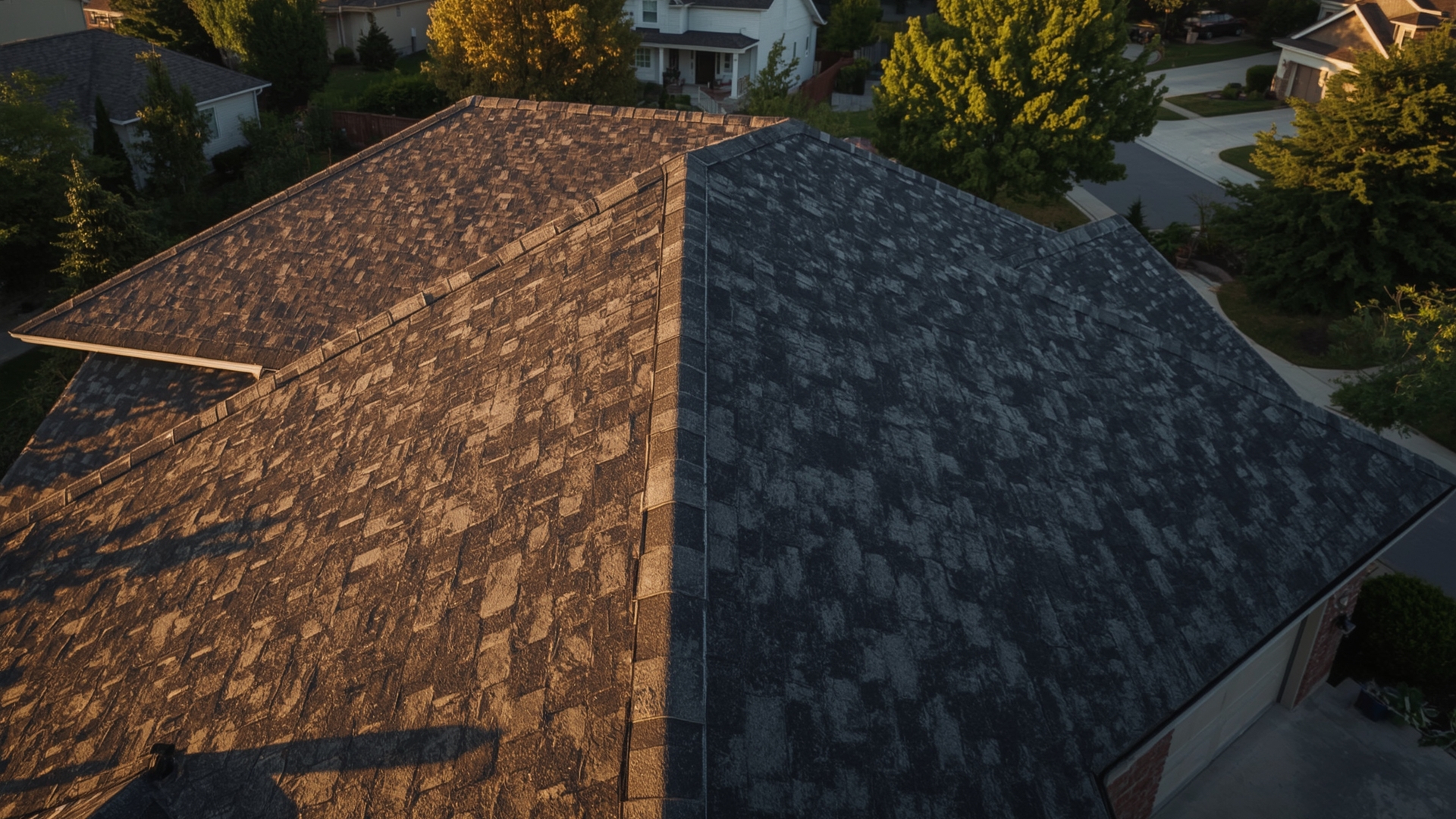
Synthetic roofing shingles look like natural slate, cedar shake, or wood. But they’re made from engineered materials like polymer, rubber, or composite blends. They weigh less, last longer, and often qualify for insurance discounts that natural materials don’t.
The challenge is knowing which type fits your home, budget, and climate. Polymer composite, rubber slate, and synthetic cedar all behave differently. And the comparison to standard asphalt isn’t always straightforward.
This guide covers all three synthetic shingle types in detail — materials, cost, performance ratings, and when each one makes sense.
Key Takeaways
- Three main types: Polymer composite, rubber slate, and synthetic cedar shake are the primary synthetic shingle categories.
- Impact ratings matter: Most synthetic shingles carry a UL 2218 Class 4 rating — the highest impact resistance available.
- Cost range: Synthetic shingles typically run $700 to $1,500 per square (100 sq ft installed), compared to $150 to $250 for standard asphalt.
- Lifespan advantage: Synthetic shingles last 30 to 50 years versus 15 to 30 years for three-tab asphalt shingles.
- Insurance savings: Class 4-rated synthetic products can reduce homeowners insurance premiums by 10% to 30% in hail-prone states.
- Weight benefit: Synthetic shingles weigh 50% to 75% less than real slate, making them compatible with standard roof framing.
What Are Synthetic Roofing Shingles?
Quick Answer: Synthetic roofing shingles are manufactured products that mimic natural materials like slate, cedar shake, or wood. They’re made from polymer, rubber, or composite blends and deliver better impact resistance and longer lifespans than most traditional shingle types.
The term “synthetic shingle” covers a broad category. What these products share is that none of them use the raw natural material they’re imitating. A rubber slate shingle looks like quarried stone but contains no stone. A synthetic cedar shingle looks like split wood but contains no wood.
Manufacturers achieve this through molding and pigmenting engineered materials. Some use virgin polymer resins. Others use recycled rubber from tires or post-consumer plastics. The texture, grain, and shadow lines of natural materials get replicated through precision molds.
What Materials Go Into Synthetic Shingles?
The base material varies by product type and manufacturer. The three most common base materials are:
- Polymer resin: A plastic-based material, often polypropylene or polyethylene, sometimes reinforced with fiberglass
- Recycled rubber: Reclaimed rubber from used tires, sometimes blended with plastic content
- Composite blends: Mixtures of polymer, rubber, and sometimes mineral fillers or fly ash
UV stabilizers are added to every formulation to prevent color fading. Most products also include fire-retardant additives to achieve Class A fire ratings.
What Are the Three Main Types of Synthetic Shingles?
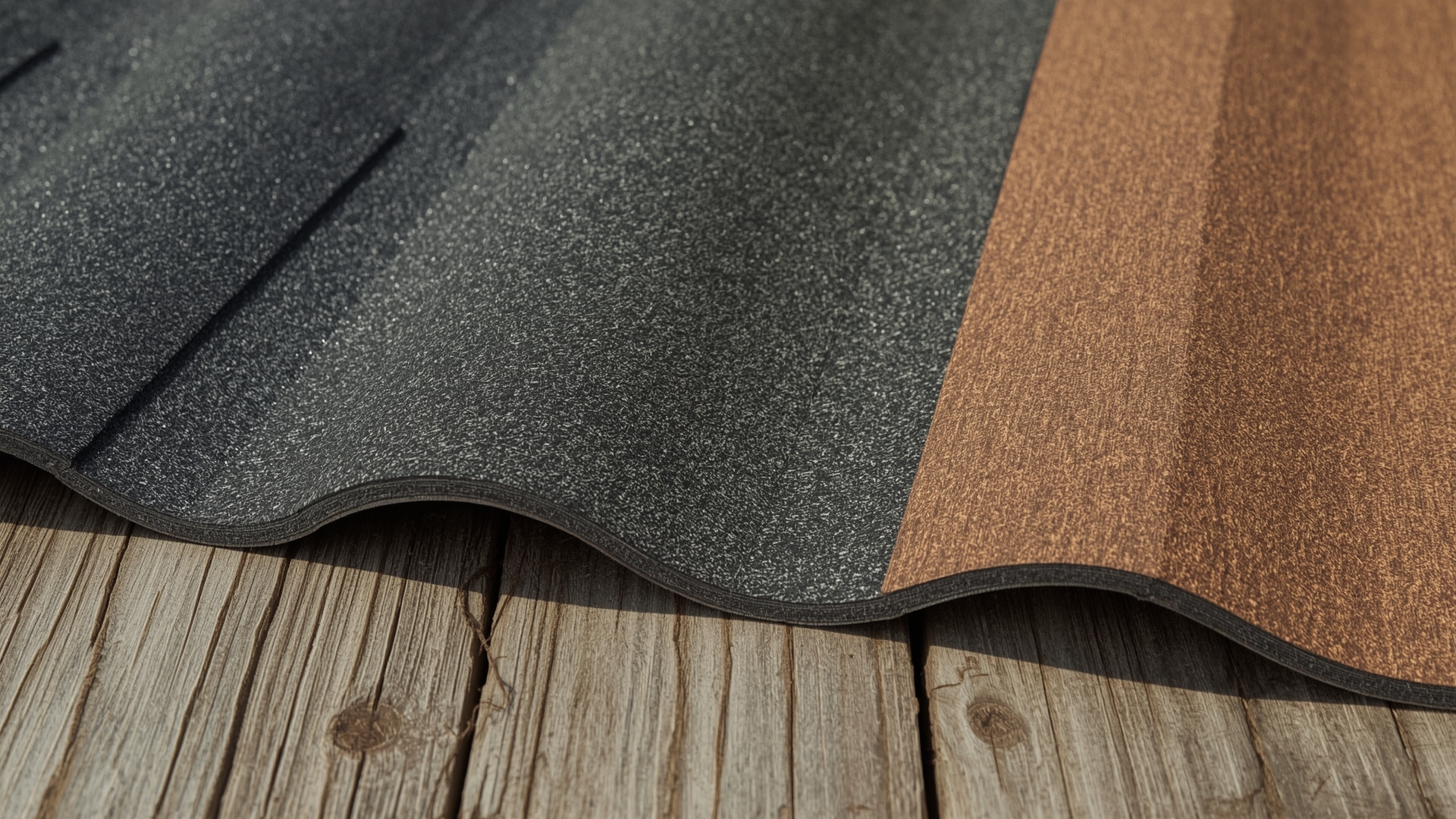
Quick Answer: The three main synthetic shingle types are polymer composite (mimics slate), rubber slate (recycled rubber molded into slate shapes), and synthetic cedar shake (polymer or composite molded to look like split wood). Each has different costs, weights, and ideal use cases.
Polymer Composite Shingles
Polymer composite shingles are made from a blend of plastic resins and reinforcing materials like fiberglass. They most commonly mimic the look of slate tiles. Brands like DaVinci Roofscapes, Brava, and CertainTeed Belmont fall into this category.
These shingles are rigid, dimensionally stable, and hold their shape well in both heat and cold. They’re the lightest synthetic option, typically weighing 70 to 170 pounds per square (100 sq ft). That’s far below real slate, which runs 800 to 1,500 pounds per square.
Rubber Slate Shingles
Rubber slate shingles use recycled rubber as their base. They replicate the texture and layered appearance of natural slate. EcoStar Majestic Slate and Euroshield are well-known rubber slate products.
Rubber is more flexible than polymer. This makes rubber shingles more resistant to cracking in freeze-thaw climates. They also absorb impact well, which is why many rubber slate products achieve UL 2218 Class 4 ratings.
Synthetic Cedar Shake Shingles
Synthetic cedar shake shingles replicate the look of hand-split or sawn cedar wood. They’re made from polymer composite or rubber-polymer blends. Brava Cedar Shake and DaVinci Shake are examples of this category.
Real cedar shake requires regular staining, sealing, and treatment to resist rot and insects. Synthetic cedar needs none of that. It also doesn’t split, warp, or check (develop surface cracks) the way wood does over time.
How Do Synthetic Shingles Compare to Asphalt on Key Performance Factors?
Quick Answer: Synthetic shingles outlast asphalt by 15 to 25 years, resist impact better, and require less maintenance. Asphalt costs significantly less upfront — typically $150 to $250 per square installed versus $700 to $1,500 for synthetic options.
| Attribute | Polymer Composite | Rubber Slate | Synthetic Cedar | Standard Asphalt (3-Tab) | Architectural Asphalt |
|---|---|---|---|---|---|
| Lifespan (years) | 40–50 | 30–50 | 30–50 | 15–25 | 25–30 |
| UL 2218 Impact Rating | Class 4 | Class 4 | Class 3–4 | Class 1–2 | Class 3–4 (select products) |
| Fire Rating | Class A | Class A | Class A | Class A | Class A |
| Weight per Square (lbs) | 70–170 | 150–250 | 100–200 | 200–300 | 250–400 |
| Wind Rating (mph) | 110–130 | 110–120 | 110–130 | 60–90 | 90–130 |
| Installed Cost per Square | $900–$1,500 | $700–$1,200 | $800–$1,400 | $150–$250 | $350–$600 |
What Does the UL 2218 Class 4 Rating Actually Mean?
Quick Answer: UL 2218 is an impact resistance test from Underwriters Laboratories. Class 4 is the highest rating. It means the shingle survived a 2-inch steel ball dropped from 20 feet — simulating large hail — with no cracking or splitting.
The UL 2218 standard has four classes. Class 1 uses a 1.25-inch steel ball. Class 4 uses a 2-inch steel ball dropped twice on the same spot from 20 feet. A shingle must show no cracking or splitting to pass.
This rating matters for two reasons. First, Class 4 shingles genuinely survive hail storms better than lower-rated products. Second, many homeowners insurance carriers offer premium discounts for Class 4-rated roofs, especially in hail-prone states across the Great Plains and Midwest.
How Does Class 4 Certification Affect Insurance Premiums?
The discount amount depends on your insurer and state. In high-risk states like Texas, Colorado, Kansas, and Nebraska, discounts of 20% to 30% are common. In lower-risk states, discounts may be 10% to 15%.
To qualify, you typically need to provide your insurer with the shingle’s UL 2218 Class 4 certification document and a signed statement from your roofing contractor confirming the product was installed. Some insurers also require a specific form from the manufacturer.
What Are the Full Costs of Synthetic Shingles?
Quick Answer: Synthetic shingles cost $700 to $1,500 per square installed. A 2,000 sq ft roof with 20 squares averages $14,000 to $30,000 total. Material quality, roof complexity, and regional labor rates all affect the final number.
| Product Type | Material Cost (per square) | Installation Labor (per square) | Total Installed (per square) | 20-Square Roof Estimate |
|---|---|---|---|---|
| Polymer Composite Slate | $500–$900 | $300–$500 | $900–$1,500 | $18,000–$30,000 |
| Rubber Slate | $350–$700 | $250–$450 | $700–$1,200 | $14,000–$24,000 |
| Synthetic Cedar Shake | $400–$800 | $300–$500 | $800–$1,400 | $16,000–$28,000 |
| Architectural Asphalt (Class 4) | $150–$300 | $150–$250 | $350–$600 | $7,000–$12,000 |
What Factors Drive the Cost Higher?
Roof pitch, complexity, and tearoff all affect final pricing. A steep roof (above 6:12 pitch) adds $50 to $150 per square in labor. Multiple valleys, dormers, or skylights add complexity. Tear-off of existing layers adds $50 to $100 per square.
Premium brands like DaVinci and Brava cost more than mid-tier products from the same category. The difference is typically in the warranty length, color consistency, and UV resistance technology built into the shingle.
What Are the Pros and Cons of Synthetic Shingles?
Quick Answer: Synthetic shingles offer longer lifespans, better impact resistance, lower maintenance, and potential insurance discounts. The main downsides are the high upfront cost, limited installer experience in some regions, and fewer color options than asphalt.
Advantages Worth Knowing
- Impact resistance: Class 4 ratings mean fewer hail claims and less roof damage over time
- Lifespan: 30 to 50 years versus 15 to 30 for asphalt — fewer full replacements over a home’s life
- Low maintenance: No staining, sealing, or moss treatments required (unlike wood or natural slate)
- Weight: Much lighter than real slate, so most homes don’t need structural reinforcement
- Insurance savings: Class 4 certification can reduce premiums significantly in high-hail regions
- Aesthetics: Modern molding creates highly realistic textures that closely mimic natural materials
- Sustainability: Many rubber and composite shingles contain 30% to 95% recycled content
Disadvantages to Consider
- Upfront cost: Three to six times more expensive than standard asphalt per square installed
- Installer availability: Fewer contractors have experience with synthetic shingles compared to asphalt
- Thermal expansion: Some polymer products expand and contract more than asphalt in extreme temperature swings
- Color fade potential: UV degradation can alter color over decades, though UV inhibitors reduce this
- HOA restrictions: Some homeowner associations require specific materials or colors that may limit options
How Do Synthetic Shingles Handle Extreme Weather Conditions?
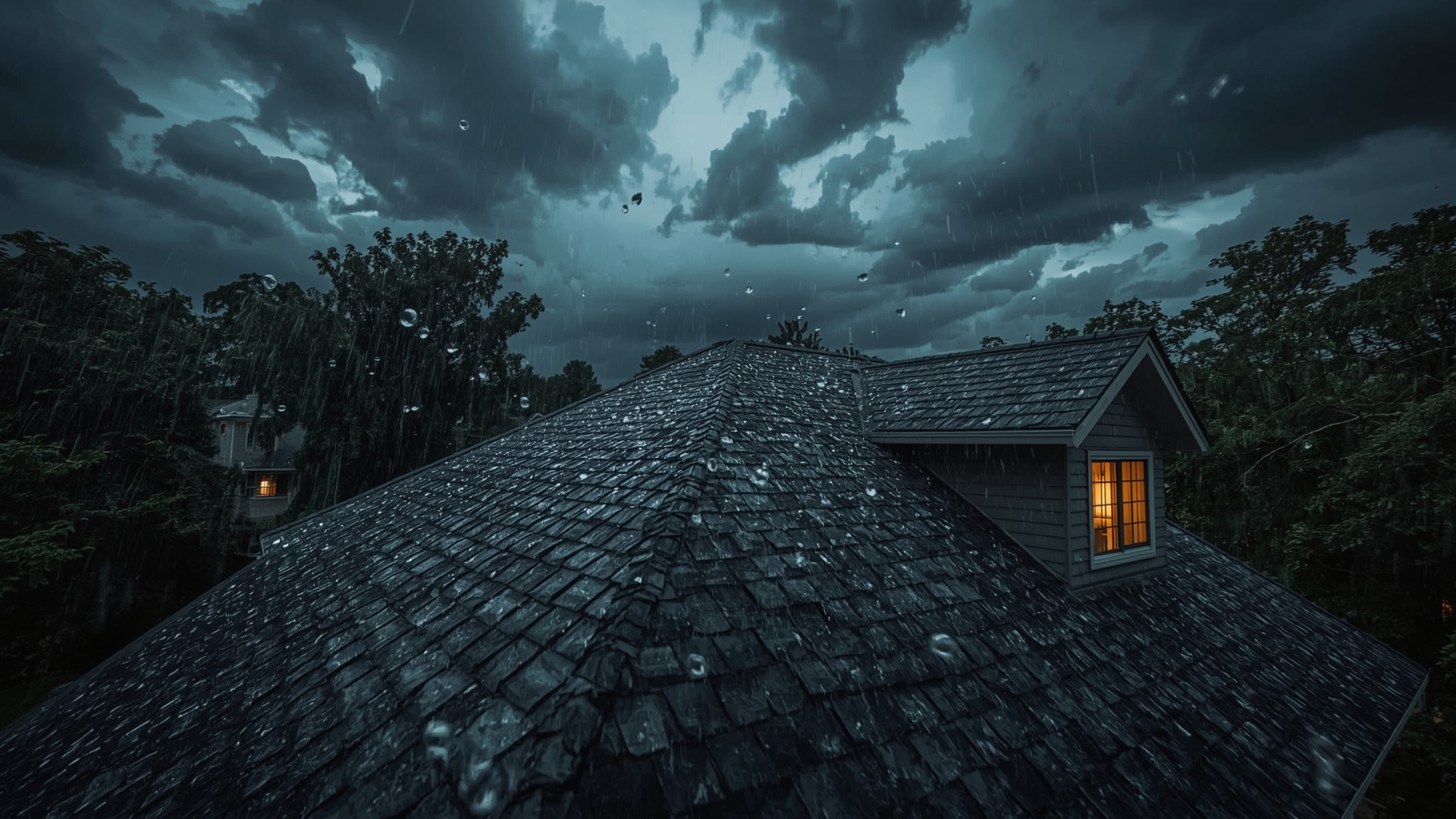
Quick Answer: Synthetic shingles perform well in hail, high winds, and freeze-thaw cycles. Rubber-based products are especially suited to cold climates because rubber stays flexible at low temperatures, reducing cracking during repeated freeze-thaw cycles.
Cold Climates and Freeze-Thaw Performance
Traditional asphalt shingles can become brittle below 40°F. They’re prone to cracking if walked on in cold weather. Rubber-based synthetic shingles stay flexible even at temperatures below 0°F. This makes them a strong choice for Minnesota, Maine, Colorado, and other cold-climate states.
Polymer composite shingles are also cold-resistant, but they expand and contract more than rubber with temperature changes. Over many years, repeated expansion and contraction can loosen fasteners if the product isn’t installed with appropriate spacing allowances.
High Wind Zones
Most synthetic shingles carry wind ratings of 110 to 130 mph. Some premium products are rated up to 160 mph. For comparison, standard three-tab asphalt shingles are often rated for only 60 to 90 mph winds.
The installation method matters here. Most synthetic shingles use a nail-through installation similar to asphalt. Proper nailing patterns and fastener count are specified by the manufacturer and must be followed exactly to maintain the wind rating and warranty.
Hail Performance
Class 4-rated synthetic shingles absorb hail impact without cracking or fracturing. Rubber shingles are particularly effective because rubber deforms on impact and returns to its original shape. Polymer composite shingles are rigid but engineered to distribute impact force across the shingle body.
Which Synthetic Shingle Type Is Best for Different Roof Styles?
Quick Answer: Polymer composite slate shingles suit low-slope to steep roofs on traditional homes. Synthetic cedar shake fits craftsman, colonial, and cottage styles. Rubber slate works on any style but excels where weight is a structural concern or cold-climate flexibility matters most.
| Shingle Type | Best Roof Style | Minimum Pitch | Best Climate Match | Top Brand Examples |
|---|---|---|---|---|
| Polymer Composite Slate | Traditional, Colonial, Tudor | 3:12 | All climates | DaVinci Bellaforte, Brava Slate, CertainTeed Belmont |
| Rubber Slate | Traditional, Farmhouse, Cottage | 4:12 | Cold and freeze-thaw climates | EcoStar Majestic, Euroshield |
| Synthetic Cedar Shake | Craftsman, Coastal, Ranch | 4:12 | Coastal, humid, and mixed climates | DaVinci Shake, Brava Cedar Shake |
What Warranties Do Synthetic Shingles Carry?
Quick Answer: Most synthetic shingles come with 30-year to lifetime limited warranties. Lifetime warranties are common among premium brands like DaVinci and Brava. Warranty coverage typically includes material defects, color fade limits, and wind speed thresholds, but excludes improper installation.
What Warranty Coverage Actually Includes
Manufacturers define warranty terms carefully. Most cover manufacturing defects — meaning the product failed, not the installation. They set specific limits on color change, often expressed as a maximum number of delta E units (a color measurement scale). Wind coverage is usually tied to a specific mph rating and proper fastener pattern.
Transferability is a big deal when selling a home. Many synthetic shingle warranties are transferable to a new homeowner once, typically within the first 30 years. Some brands charge a transfer fee of $100 to $500. DaVinci and Brava both offer transferable lifetime warranties on select products.
What Voids a Synthetic Shingle Warranty
- Installation by a non-certified or non-approved contractor
- Incorrect fastener type or fastener placement
- Using incompatible underlayment products
- Installing below the minimum slope requirement
- Failure to register the warranty within the required window (usually 30 to 90 days after installation)
How Do Synthetic Shingles Compare to Class 4 Asphalt Shingles Specifically?
Quick Answer: Class 4 asphalt shingles like Owens Corning Duration FLEX or GAF Armor Shield II cost $350 to $600 per square installed and carry the same UL 2218 Class 4 rating as synthetics. Synthetics last longer and look more like natural materials, but Class 4 asphalt is a strong budget alternative for impact resistance.
Class 4 asphalt shingles close the impact resistance gap between standard asphalt and synthetic products. They use a rubberized polymer called SBS (styrene-butadiene-styrene) to give the asphalt more flexibility and impact absorption.
The trade-off is lifespan. Class 4 asphalt shingles last 25 to 35 years under typical conditions. Synthetic shingles can reach 40 to 50 years. If you’re planning to stay in your home long-term and want to avoid a future replacement, synthetics may offer a better total cost of ownership despite the higher upfront price.
| Attribute | Synthetic Shingles (avg.) | Class 4 Asphalt (SBS) |
|---|---|---|
| UL 2218 Rating | Class 4 | Class 4 |
| Lifespan (years) | 30–50 | 25–35 |
| Installed Cost per Square | $700–$1,500 | $350–$600 |
| Weight per Square (lbs) | 70–250 | 250–350 |
| Appearance Options | Slate, cedar, wood grain | Shingle texture only |
| Maintenance Requirements | Minimal | Low to moderate |
| Insurance Discount Eligibility | Yes (Class 4 certified) | Yes (Class 4 certified) |
| Recycled Content | 30–95% (rubber products) | Minimal |
What Should You Ask a Roofing Contractor Before Installing Synthetic Shingles?
Quick Answer: Ask whether the contractor is manufacturer-certified for the specific synthetic product, what underlayment they plan to use, and whether they’ll provide the UL 2218 documentation for your insurance company. Experience with synthetic shingles specifically is essential — asphalt installation experience alone isn’t enough.
Certification and Experience Questions
Many synthetic shingle manufacturers run their own contractor certification programs. DaVinci has its “DaVinci Certified Contractor” designation. Brava uses a similar system. Ask any contractor quoting your job whether they hold the specific manufacturer’s certification for the product you’re buying.
Also ask how many synthetic shingle projects they’ve completed in the last 12 months. A contractor who has installed hundreds of asphalt roofs but only two or three synthetic projects may not have enough experience to handle the installation correctly — especially at valleys, ridges, and penetrations.
Documentation and Insurance Questions
- Will you provide a written copy of the UL 2218 Class 4 product certification?
- Will you sign an installation confirmation letter for my insurance company?
- What underlayment product will you use, and is it approved under the manufacturer’s system warranty?
- Will you register the warranty with the manufacturer after installation?
- Is your workmanship warranty separate from the product warranty, and how long does it last?
Are Synthetic Shingles Worth the Cost?
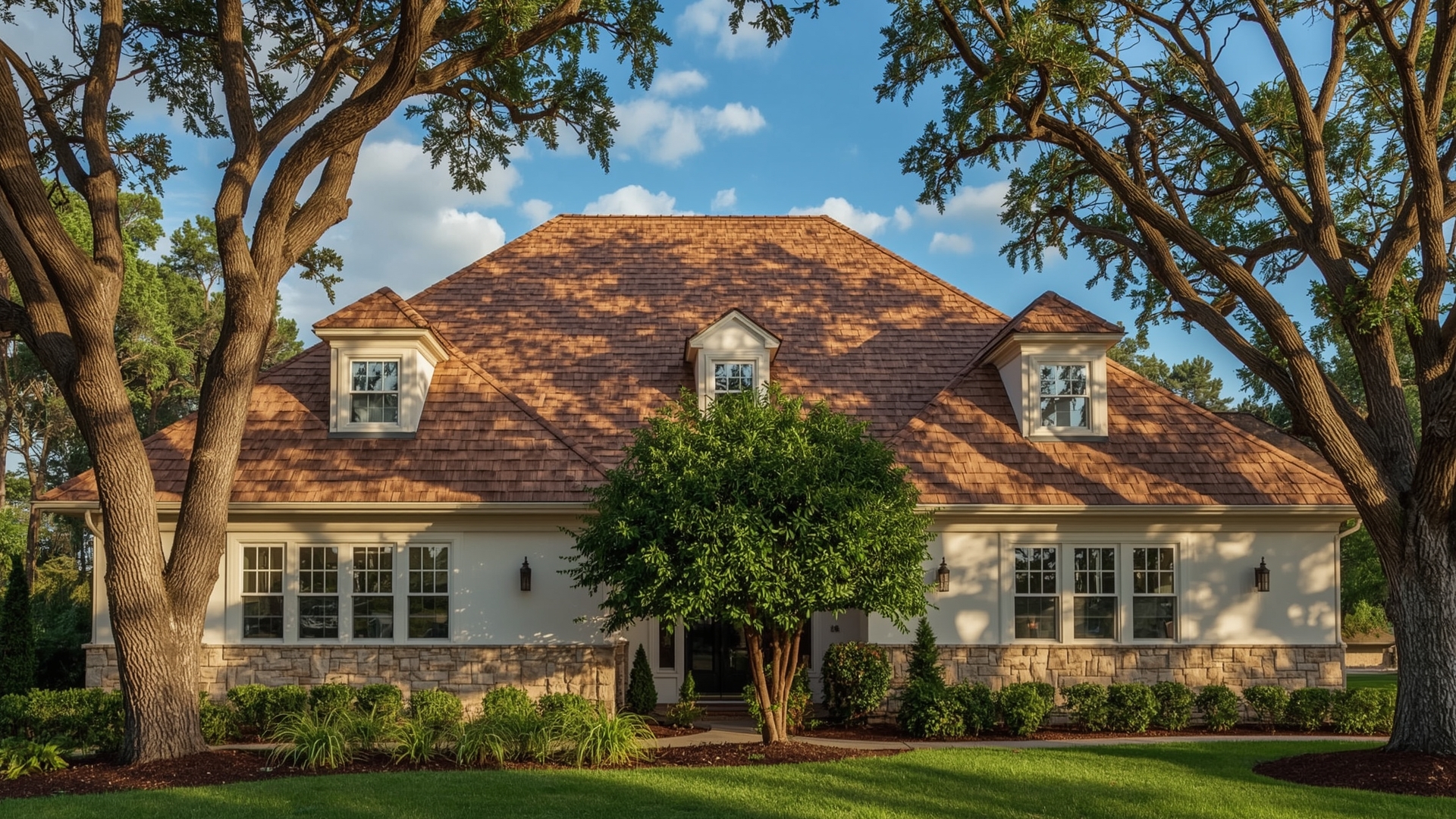
Quick Answer: Synthetic shingles are worth the cost for homeowners planning to stay 15 or more years, living in hail-prone regions, or replacing materials like wood shake that require high maintenance. In most other situations, Class 4 asphalt delivers similar impact protection at a significantly lower price.
The math works best in hail-prone markets. A homeowner in Dallas or Denver who installs a Class 4-certified synthetic roof might save 25% on annual insurance premiums. On a $3,000/year homeowners policy, that’s $750 per year. Over 30 years, the savings total $22,500 — which closes much of the cost gap between synthetic and asphalt.
For homes where aesthetics matter — historic neighborhoods, high-end custom builds, or areas with HOAs that require the look of slate or wood — synthetic shingles are the logical choice. They deliver the appearance without the structural concerns or maintenance burden of real slate or real cedar.
Frequently Asked Questions About Synthetic Roofing Shingles
Can synthetic shingles be installed over existing asphalt shingles?
Most synthetic shingle manufacturers do not recommend installation over existing shingles. Doing so can trap moisture, void the product warranty, and result in a final inspection failure if local building code requires a complete tearoff. Always check your local building permit requirements and the manufacturer’s installation guide before deciding.
Do synthetic shingles fade over time?
All exterior materials experience some color change over decades of UV exposure. Synthetic shingles contain UV stabilizers that slow fading significantly. Most manufacturers warrant against color change beyond a set threshold — typically measured in delta E units — for 30 years or more. Darker colors tend to show more fading than lighter tones.
Are rubber slate shingles truly made from recycled tires?
Yes. Products like EcoStar Majestic Slate and Euroshield shingles use post-consumer rubber reclaimed from vehicle tires. Rubber content typically makes up 50% to 95% of the finished shingle by weight. This recycled material also contributes to the shingle’s flexibility and impact absorption.
What is the minimum roof pitch for synthetic shingles?
Most synthetic shingles require a minimum pitch of 3:12 to 4:12 — meaning the roof rises 3 to 4 inches for every 12 inches of horizontal run. Very low-slope roofs below 3:12 are not appropriate for any shingle product, including synthetic. Always verify the specific product’s minimum slope requirement before purchasing.
Do synthetic shingles increase home resale value?
Synthetic shingles generally support resale value because buyers recognize the long lifespan and low maintenance profile. A transferable lifetime warranty adds tangible value to a listing. However, the increase in resale price rarely equals the full installation cost premium over asphalt. The best financial return comes from insurance savings and avoided maintenance costs over time.
How do I verify that a synthetic shingle product is genuinely UL 2218 Class 4 certified?
Ask the manufacturer or contractor for the official UL product listing number. You can then verify it directly on the UL Product iQ database at ul.com. Your insurance company may also request this listing number directly when processing a premium discount application. A contractor’s verbal confirmation alone is not sufficient documentation.