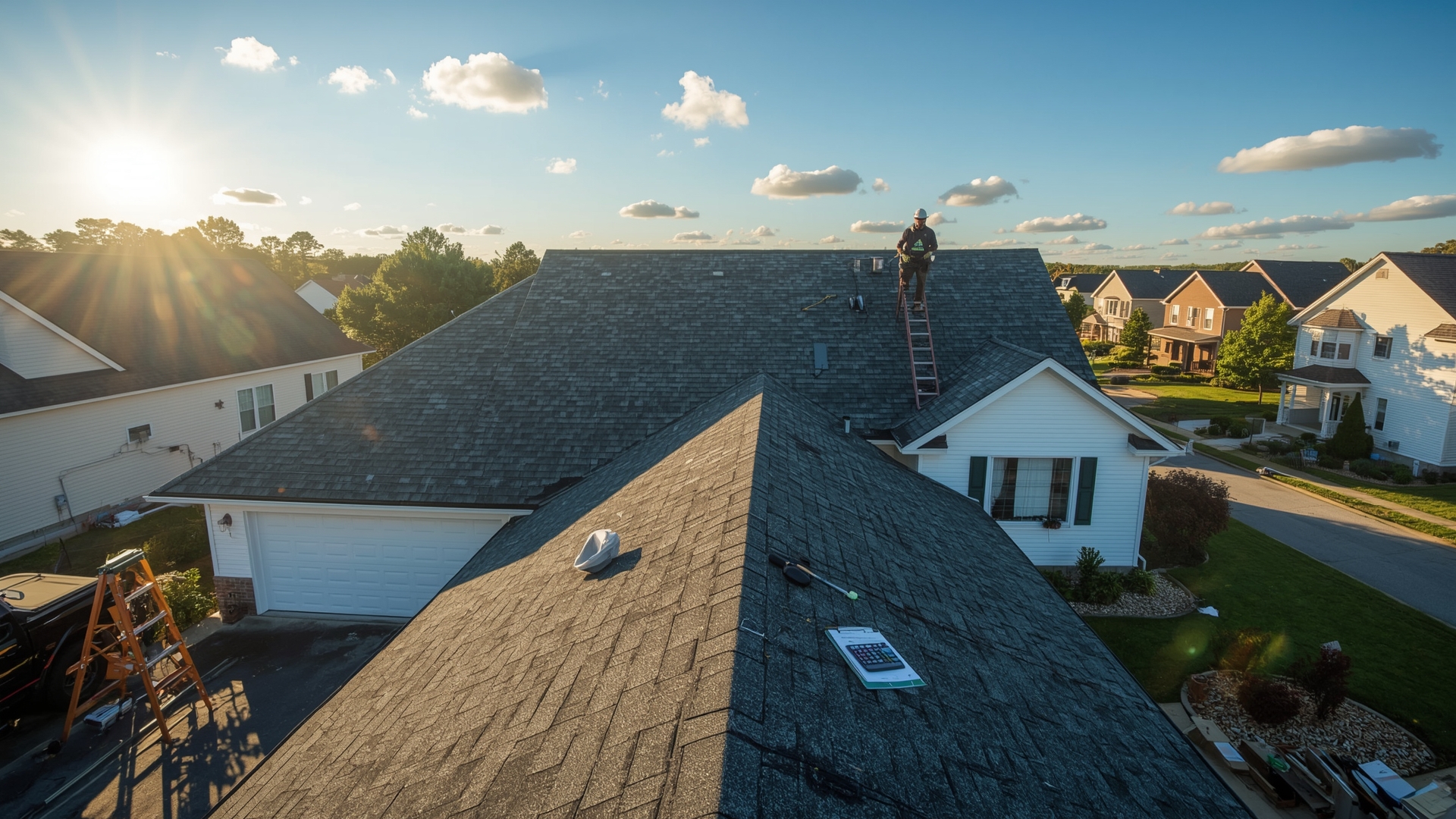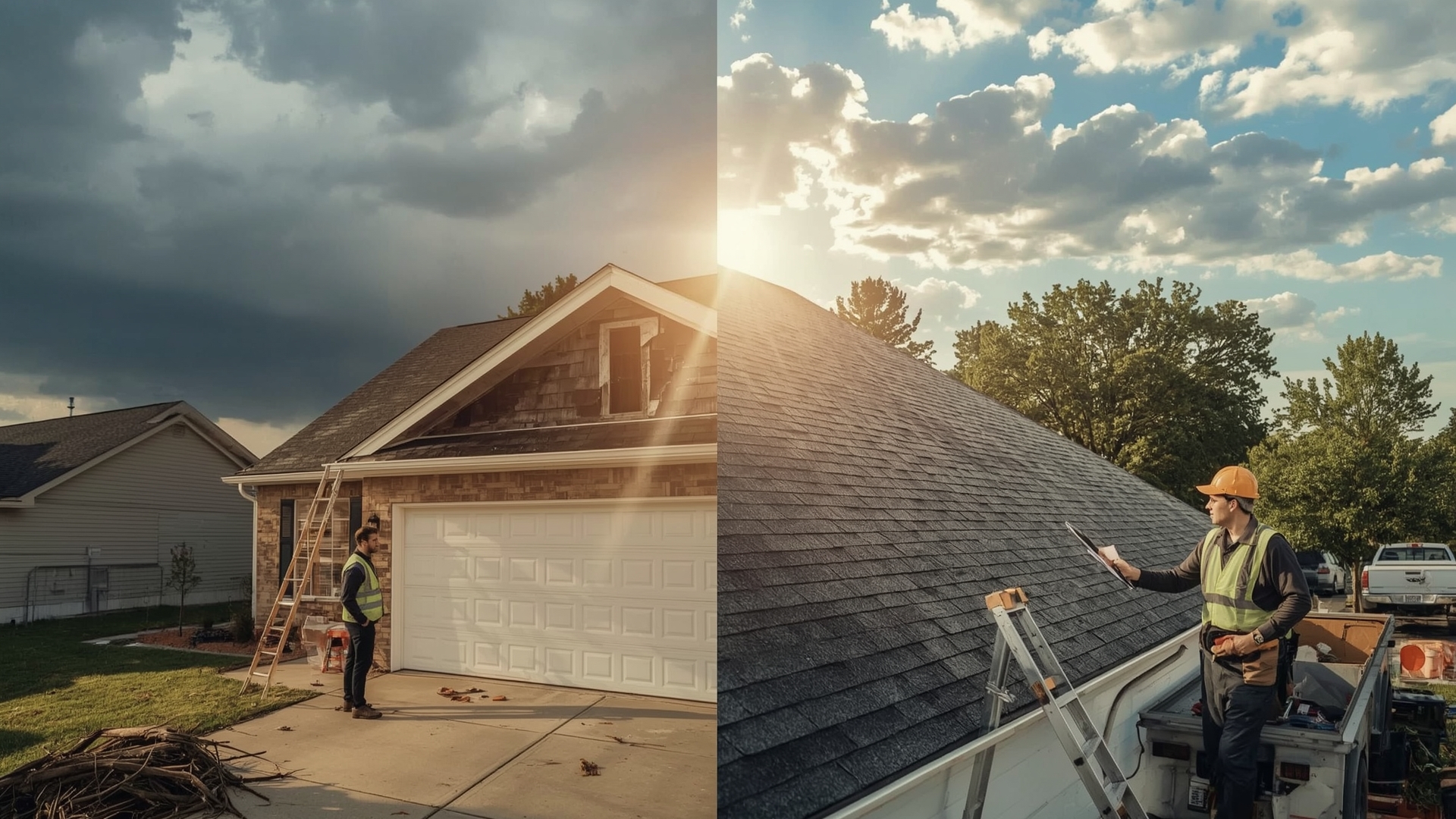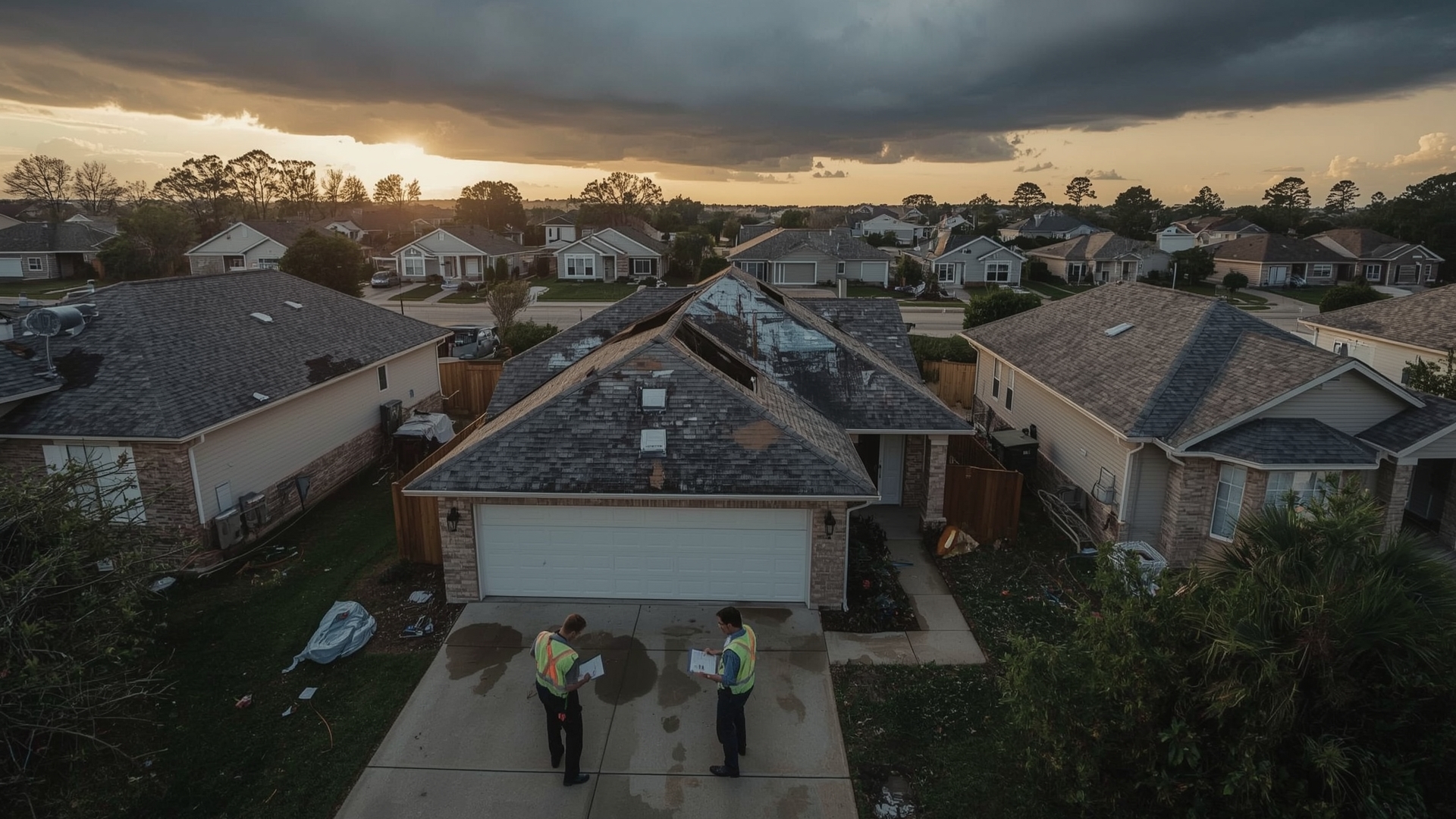
When your roof is damaged by hail, wind, or a storm, your insurance company sends their own adjuster to assess the damage. That adjuster works for the insurer, not for you. A public adjuster works for you — and only you. Knowing the difference could be worth thousands of dollars on your claim.
This guide covers everything you need to know: what public adjusters actually do, how much they charge, when hiring one makes financial sense, and how to find a licensed professional in your state.
Key Takeaways
- Public adjusters work for the policyholder, not the insurance company. Their job is to document your damage and maximize your settlement.
- They typically charge 10% to 20% of your final settlement as their fee, paid after you receive your claim payment.
- Public adjusters are most valuable on large, complex claims — generally those over $10,000 where documentation and negotiation matter most.
- Every state requires public adjusters to be licensed. Always verify a license before signing any contract.
- You can hire a public adjuster at any stage of a claim — before it’s filed, after an initial denial, or during an ongoing dispute.
- A public adjuster is different from an insurance company adjuster and a roofing contractor. Understanding who does what protects you from bad advice.
What Does a Public Adjuster Do for a Roof Insurance Claim?
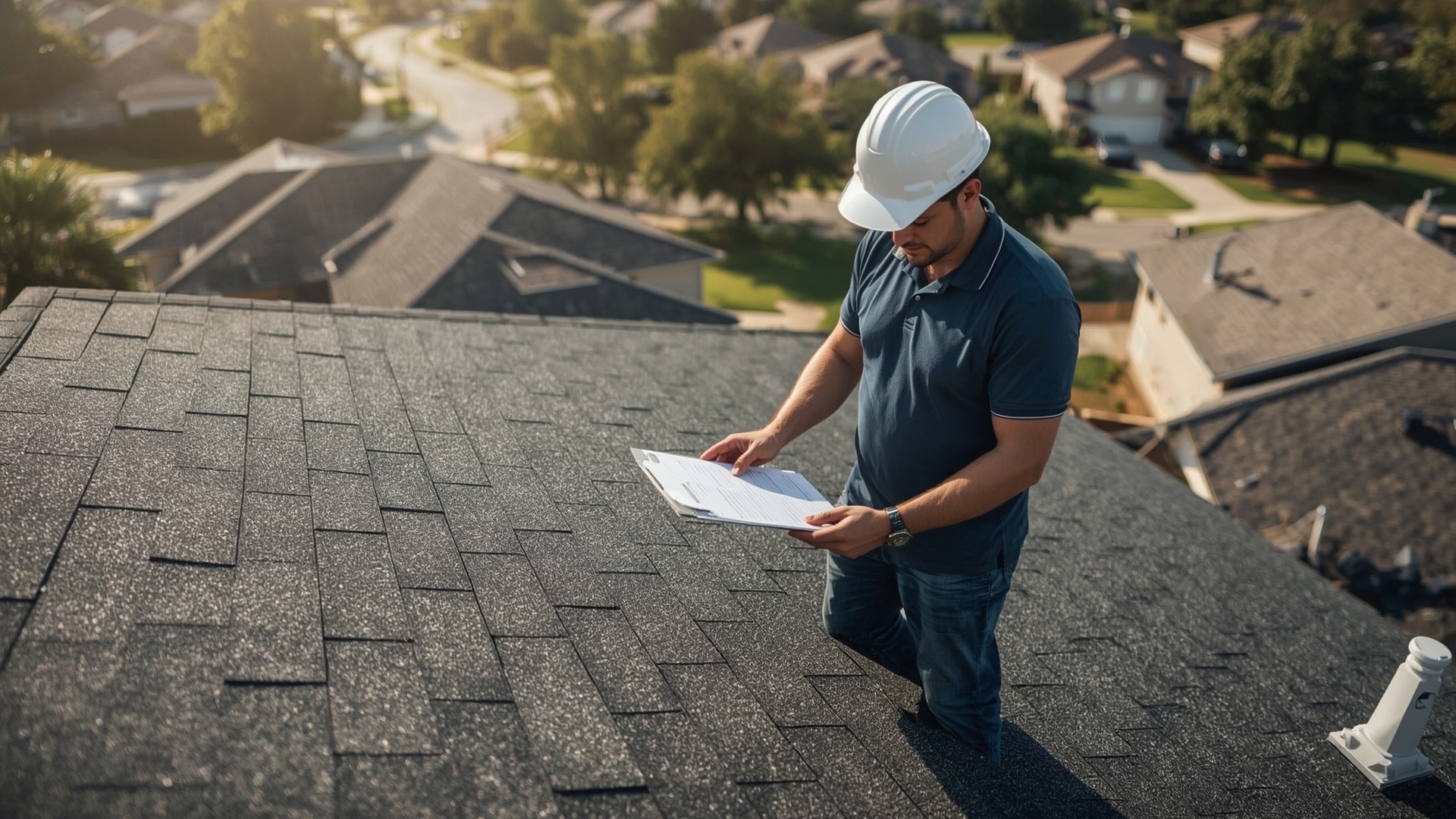
Quick Answer: A public adjuster inspects your roof damage, documents every item the insurance company may have missed, prepares your claim paperwork, and negotiates directly with the insurer on your behalf to get you the highest settlement the policy allows.
When you file a roof claim, the insurance company assigns one of their own adjusters to inspect the damage. That person’s job is to evaluate the claim fairly — but their employer is the insurer. Subtle biases can affect how damage gets measured, priced, and categorized.
A public adjuster (PA) is an independent claims professional you hire to represent your interests. They bring their own inspection tools, their own pricing software, and their own knowledge of insurance policy language.
What a Public Adjuster Does Step by Step
- Reviews your policy to identify every coverage that applies — including replacement cost value (RCV), ordinance or law coverage, and additional living expenses if applicable.
- Inspects the roof independently using tools like moisture meters, drones, and core sampling to find damage the insurance adjuster may have missed or undervalued.
- Prepares a detailed scope of loss — a line-item document listing all damaged materials, quantities, and repair costs using industry pricing tools like Xactimate.
- Submits or supplements the claim with supporting documentation: photos, measurements, weather data, and contractor estimates.
- Negotiates with the insurance company to close the gap between the insurer’s initial offer and the actual cost to repair or replace your roof.
What a Public Adjuster Does Not Do
A public adjuster does not repair your roof. They are not contractors, attorneys, or appraisers. Some PAs work alongside attorneys on denied or underpaid claims, but legal representation is a separate service. Make sure you understand what you’re hiring before you sign anything.
How Is a Public Adjuster Different from an Insurance Company Adjuster?
Quick Answer: An insurance company adjuster is employed or contracted by your insurer and represents the company’s interests. A public adjuster is hired by you and represents only your interests. You pay a public adjuster; the insurer pays their own adjuster.
| Attribute | Public Adjuster | Insurance Company Adjuster |
|---|---|---|
| Who They Work For | Policyholder (you) | The insurance company |
| Who Pays Them | You (% of settlement) | The insurer (salary or contract fee) |
| Inspection Goal | Find all damage, maximize documented loss | Evaluate and verify covered damage |
| Pricing Software Used | Xactimate, Symbility, or proprietary tools | Typically Xactimate (same tool, different inputs) |
| License Required | Yes — state-issued PA license | Yes — state-issued adjuster license |
| Negotiation Role | Advocates for higher settlement | Manages claim within policy guidelines |
When Should You Hire a Public Adjuster for a Roof Claim?
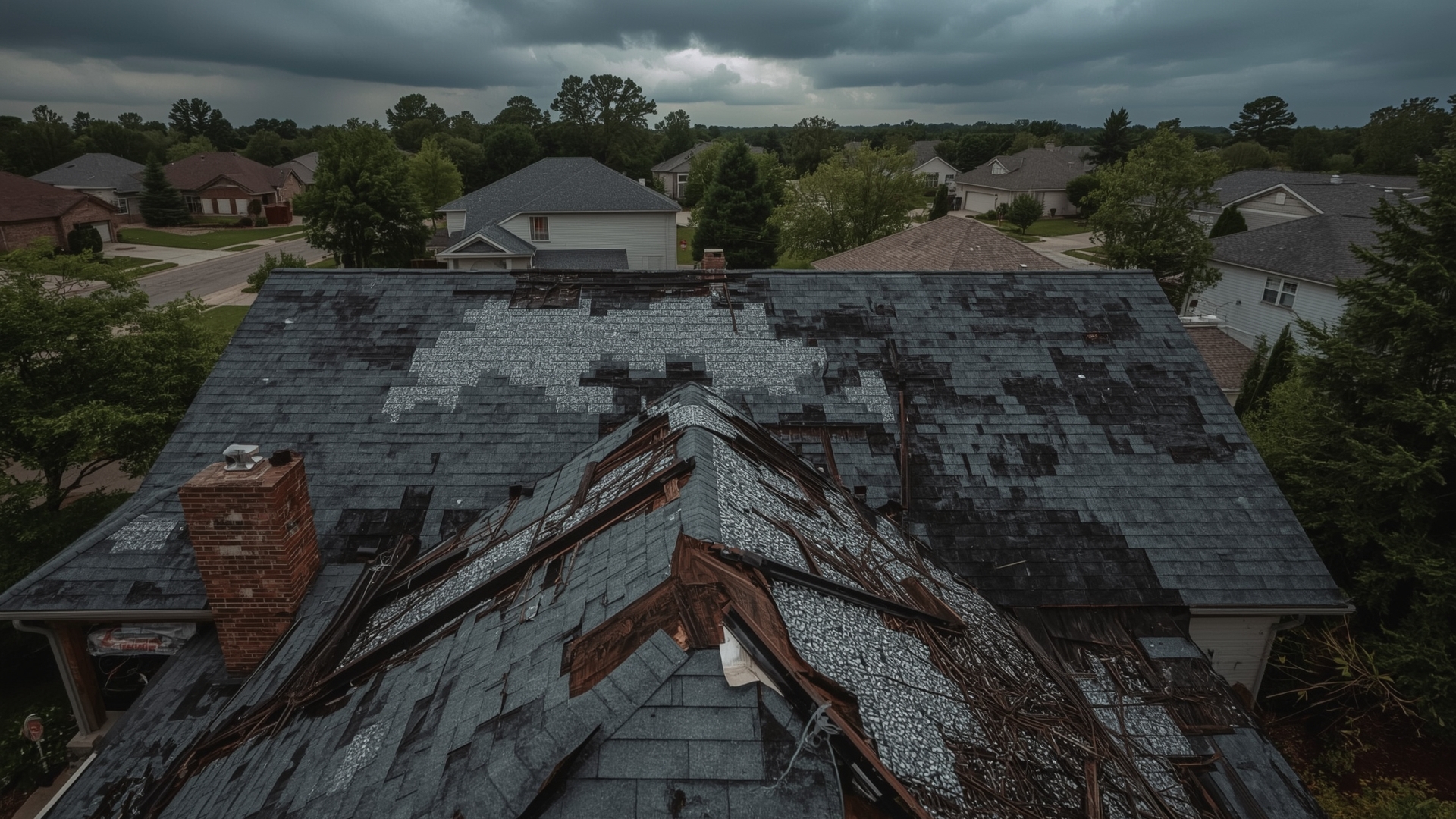
Quick Answer: Hire a public adjuster when your claim is large, complex, or disputed. Claims over $10,000, partial denials, significant underpayments, and damage affecting multiple building systems are the strongest candidates. Small claims rarely justify the fee.
Situations Where a Public Adjuster Adds Clear Value
- Large storm damage: Hail or wind events affecting the full roof, gutters, siding, and skylights simultaneously require complex, multi-line documentation.
- Partial claim denials: The insurer acknowledges some damage but excludes items you believe are covered — a PA can challenge those exclusions with documentation.
- Significant underpayment: The insurer’s estimate is far below the contractor bids you’ve received. A PA can identify what’s missing from the scope.
- Supplement situations: Hidden damage found during repairs (rotted decking, failed underlayment) requires a supplement claim, which PAs handle routinely.
- Policy language disputes: Your insurer argues that damage falls under a cosmetic exclusion or a depreciation clause. A PA reviews the policy language and pushes back with evidence.
When Hiring a Public Adjuster Probably Isn’t Worth It
- Small claims under $5,000 where the PA fee may equal or exceed the benefit they add
- Straightforward claims where the insurer’s estimate matches your contractor’s bid
- Claims already settled and accepted in writing (PAs generally cannot reopen fully closed claims)
How Much Does a Public Adjuster Charge for a Roof Claim?
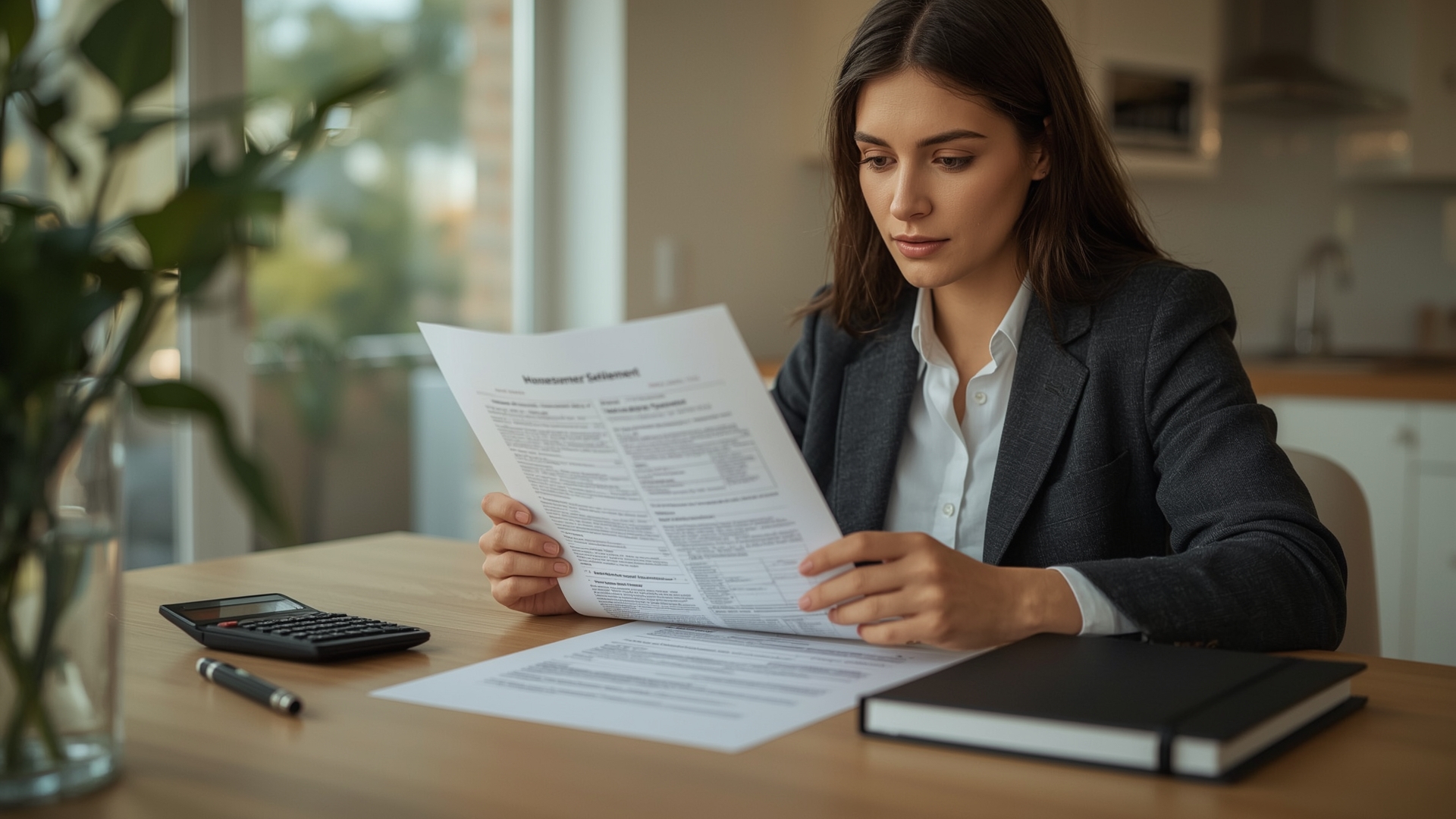
Quick Answer: Public adjusters typically charge 10% to 20% of the final insurance settlement. On a $30,000 roof claim, that’s $3,000 to $6,000. Some states cap fees by law. Fee percentages are negotiable before signing, especially on large claims.
| State | Maximum Allowed Fee | Disaster/CAT Event Cap | Fee Basis |
|---|---|---|---|
| Florida | 20% of claim settlement | 10% for state-declared disasters (first year) | Percentage of gross settlement |
| Texas | No statutory cap (market-set) | 10% during declared disasters | Percentage of settlement |
| California | 10% of claim settlement | 10% (same) | Percentage of settlement |
| New York | 12.5% of claim settlement | No separate disaster cap | Percentage of settlement |
| Illinois | No statutory cap | No separate disaster cap | Percentage or flat fee |
| Colorado | No statutory cap | No separate disaster cap | Percentage of settlement |
Always negotiate the fee percentage before signing the contract. On claims over $50,000, most PAs will accept 10% to 12%. On smaller claims, fees closer to 15% to 20% are standard.
Is Hiring a Public Adjuster Worth the Cost?
Studies and industry data suggest that public adjuster-represented claims settle for significantly more than unrepresented claims — in some markets, 20% to 747% more, though results vary widely by claim type, insurer, and documentation quality. The honest answer: the value depends entirely on how underpaid your initial offer is and how skilled your PA is.
If your insurer’s initial offer is $18,000 and your roof replacement costs $32,000, a PA who brings the settlement to $28,000 and charges 15% adds real value: you net $23,800 instead of $18,000. Run the math on your specific numbers before deciding.
What Qualifications Should a Public Adjuster Have?
Quick Answer: A public adjuster must hold a valid state-issued license in the state where your property is located. Look for membership in the National Association of Public Insurance Adjusters (NAPIA) and at least three to five years of experience handling residential roof claims specifically.
Public Adjuster Licensing Requirements by Type
| Credential / Requirement | Details | How to Verify |
|---|---|---|
| State License | Required in all 50 states; exam-based | State Department of Insurance license lookup |
| NAPIA Membership | National Association of Public Insurance Adjusters; voluntary professional body | NAPIA.com member directory |
| CPAU Designation | Certified Professional Public Adjuster; NAPIA-issued credential | NAPIA.com credential verification |
| Errors & Omissions Insurance | Professional liability coverage; protects you if PA makes a costly error | Request certificate of insurance before signing |
| Surety Bond | Required in most states; typically $20,000 to $50,000 | Request bond documentation or check state records |
How Do You Find a Licensed Public Adjuster in Your State?
Quick Answer: Start with your state’s Department of Insurance website, which has a free license lookup tool. The NAPIA member directory is the most reliable national resource. Never hire a public adjuster who approaches you at your home after a storm — that’s a red flag.
Step-by-Step: Finding a Vetted Public Adjuster
- Visit your state’s Department of Insurance website. Search for “public adjuster license lookup” plus your state name. Verify the license is active and has no disciplinary actions.
- Search the NAPIA member directory at NAPIA.com. NAPIA members agree to a code of conduct and are more likely to have consistent professional standards.
- Ask for referrals from your roofing contractor. Experienced roofing contractors often work with PAs regularly and can refer someone they’ve seen produce good documentation.
- Request at least two to three quotes. Fee percentages vary. Compare not just cost but experience level, references, and familiarity with your insurer.
- Check reviews and complaints. Search the PA’s name on your state’s Department of Insurance complaint database and on Google Reviews or the Better Business Bureau.
- Review the contract carefully. Look for the fee percentage, the duration of the agreement, cancellation terms (typically 3 to 5 business days), and what happens if the claim is denied.
Warning Signs of a Dishonest Public Adjuster
- Solicits you door-to-door immediately after a storm (storm chaser behavior)
- Cannot produce a current state license number on request
- Guarantees a specific settlement amount before seeing your policy or the damage
- Asks you to sign over your insurance benefits (assignment of benefits, or AOB) rather than a standard PA contract
- Pushes you to use a specific contractor they’re affiliated with
What Is the Public Adjuster Claims Process from Start to Finish?
Quick Answer: The process runs from initial policy review and roof inspection through scope documentation, claim submission or supplementation, insurer negotiation, and final settlement. Most residential roof claims take 30 to 90 days to resolve when a public adjuster is involved.
Phase 1: Engagement and Policy Review (Days 1 to 7)
After you sign the contract, the PA reviews your entire homeowners insurance policy. They’re looking at your coverage type (RCV vs. ACV), your deductible, any exclusions like cosmetic damage clauses, and optional coverages like ordinance or law that might apply to your roof replacement.
Phase 2: Independent Damage Inspection (Days 3 to 10)
The PA inspects your roof independently. This often involves drone photography, close-up granule loss assessment, underlayment evaluation, and documentation of the storm event using weather data from services like Verisk or NOAA reports. The goal is a damage report that is more thorough than what the insurer’s adjuster produced.
Phase 3: Scope of Loss Preparation (Days 7 to 21)
The PA builds a detailed scope of loss — a line-by-line estimate of all damaged items using current market pricing. This document is submitted to the insurance company either as an initial claim or as a supplement to an existing claim. Most PAs use Xactimate, the same software insurers use, which helps narrow pricing disputes.
Phase 4: Negotiation and Settlement (Days 14 to 90)
The PA negotiates directly with the insurance company’s adjuster or their in-house team. This may involve back-and-forth on individual line items, re-inspection requests, or formal appraisal process invocation if the parties can’t agree. When both sides agree on a final number, the insurer issues payment.
Timeline Benchmarks for Roof Claim Resolution
| Phase | Typical Duration | Key Milestone |
|---|---|---|
| Policy review and contract | 1 to 7 days | Coverage gaps identified |
| Independent roof inspection | 3 to 10 days | Damage report finalized |
| Scope of loss preparation | 7 to 21 days | Xactimate estimate submitted |
| Insurer negotiation | 14 to 60 days | Revised offer received |
| Final settlement and payment | 5 to 14 days after agreement | Check issued to policyholder |
Can You Hire a Public Adjuster After a Claim Has Already Been Filed?
Quick Answer: Yes. You can hire a public adjuster at any open stage of a claim — including after an initial settlement you think was too low. Most insurance policies allow you to reopen or supplement a claim within one to three years of the loss date, depending on your state.
Many homeowners hire a public adjuster after receiving an initial offer that seems far too low. In this scenario, the PA reviews what was paid, identifies missing line items or underpriced repairs, and submits a supplement claim to request additional funds.
What you cannot do: reopen a claim you formally accepted and settled in writing with a signed release. Always read settlement agreements before signing. If the insurer asks you to sign a final release, have the document reviewed before you accept.
How Does a Public Adjuster Interact with Your Roofing Contractor?
Quick Answer: The public adjuster documents the damage and negotiates the settlement. The roofing contractor does the actual repair work. These are two separate roles. A good PA and a good contractor work together, but they should never be the same person or financially connected.
Your roofing contractor can provide repair estimates that support the PA’s scope of loss. In fact, contractor estimates are often submitted alongside the PA’s documentation as supporting evidence. The key is that the contractor’s estimate and the PA’s estimate should be independent — not coordinated to inflate a claim.
Be cautious of any contractor who offers to connect you with “their public adjuster” or vice versa. Conflicts of interest in these arrangements have led to insurance fraud investigations in several states. Keep the roles separate and the financial relationships transparent.
What Are the Risks of Hiring a Public Adjuster?
Quick Answer: The main risks are paying a fee that exceeds the added value, encountering unlicensed or unethical adjusters, and delays caused by a prolonged negotiation process. Vetting credentials and fee terms carefully before signing eliminates most of these risks.
Real Risks to Consider
- Fee exceeds added value: If your insurer’s initial offer is already fair, a 15% PA fee just reduces your net payout. Always compare the initial offer to your contractor’s estimate before hiring anyone.
- Extended claim timeline: Negotiations take time. If you need your roof repaired before winter or during an active rainy season, a 90-day negotiation may create more damage than it prevents. Balance financial recovery with physical urgency.
- Unlicensed or unethical adjusters: Storm chasers sometimes pose as public adjusters without a valid license. Always verify the license number through your state’s Department of Insurance before signing anything.
- Insurer friction: Some insurers push back harder when a PA is involved. This rarely affects the final outcome but can extend the timeline.
Frequently Asked Questions
Does hiring a public adjuster increase the chance of a claim denial?
No. Insurers cannot legally deny a claim simply because you hired a public adjuster. Your right to hire a representative is protected by most state insurance codes. A PA’s involvement may slow negotiations, but it does not create new grounds for denial.
Can a public adjuster help if my roof claim was already denied?
Yes, as long as the claim is still within the policy’s filing window — typically one to three years from the date of loss. A PA can review the denial letter, gather additional evidence, and file a formal appeal or invoke the appraisal clause if appropriate. They work alongside insurance attorneys on contested denials.
What is an assignment of benefits and why should I avoid it?
An assignment of benefits (AOB) is a document that transfers your insurance claim rights to a third party — usually a contractor or restoration company. This is different from a standard public adjuster contract. Once you sign an AOB, you lose direct control of your claim. Stick to a standard PA representation agreement instead.
Is a public adjuster the same as an independent adjuster?
No. An independent adjuster is a freelance claims professional hired by insurance companies to handle claims on their behalf — they still work for the insurer. A public adjuster works exclusively for policyholders. The word “independent” refers to their contractor status, not their loyalty.
How long does a public adjuster have to settle my roof claim?
There is no fixed deadline, but most residential roof claims with PA involvement settle within 30 to 90 days. Complex claims involving code upgrades, ordinance or law coverage, or appraisal proceedings can take four to six months. Your state’s fair claims settlement regulations set maximum response time requirements on the insurer’s side.
Can I fire a public adjuster after hiring them?
Yes. Most PA contracts include a cancellation window of three to five business days with no penalty. After that window, you may owe a fee based on work completed. Read the contract’s termination clause carefully before signing. If your claim has already settled while under their representation, the agreed fee percentage still applies.