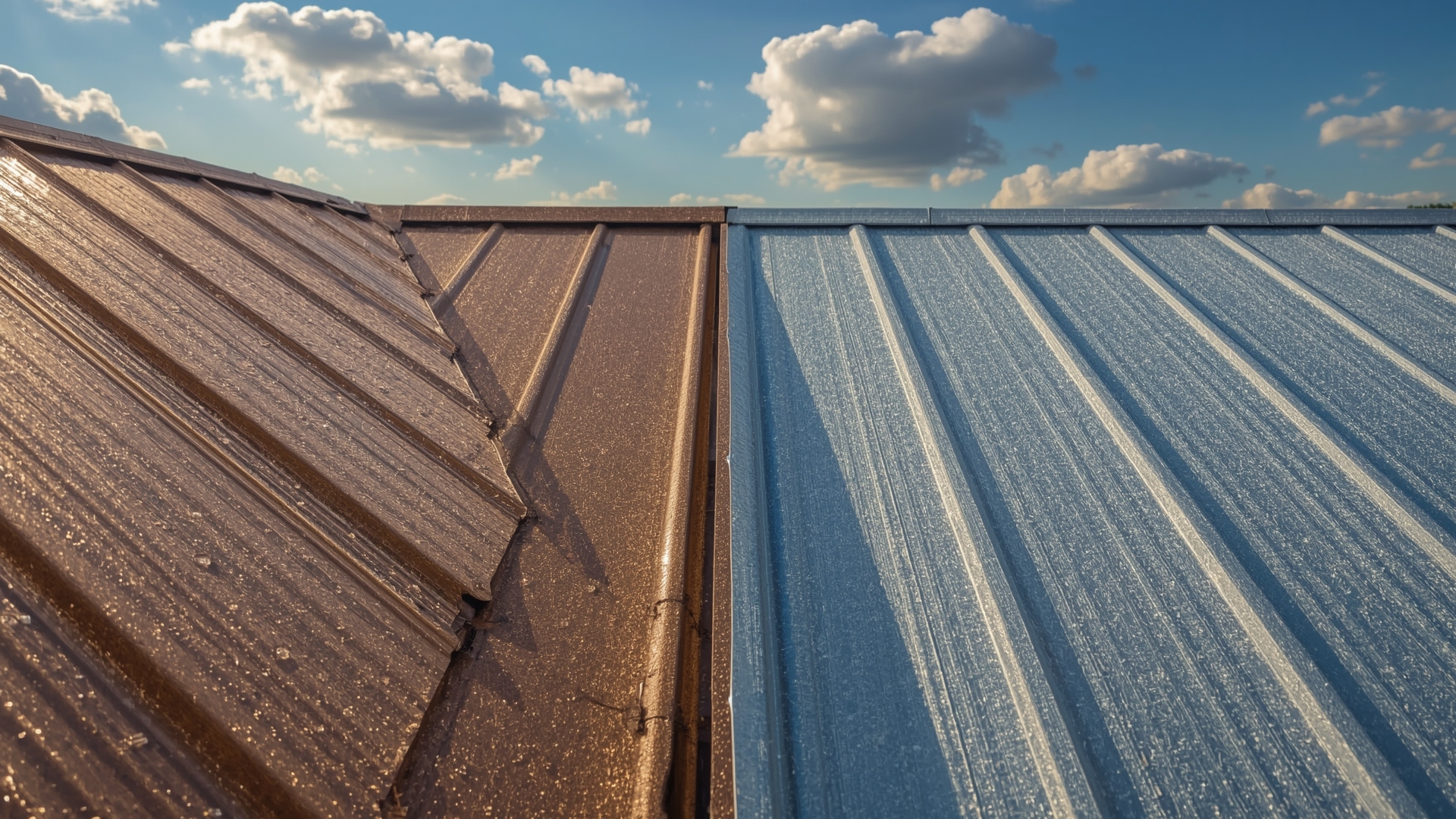
Both Galvalume and galvanized steel start as the same base material: steel. What makes them different is what gets applied to the surface. That coating determines how long your roof lasts, what warranty you can get, and whether the panels hold up in your specific climate and environment.
Choosing the wrong one can mean premature rust, voided warranties, or panels that fail decades earlier than expected. This guide breaks down the coating chemistry, real-world performance, cost differences, and ideal applications for each so you can make a confident decision before any panels go on your roof.
Key Takeaways
- Galvalume uses an aluminum-zinc alloy that delivers stronger corrosion resistance than galvanized steel in most environments.
- Galvanized steel uses pure zinc, which sacrifices itself to protect the steel underneath — making it better for cut edges and areas prone to physical damage.
- Galvalume lasts 40 to 60 years on a roof; galvanized steel typically lasts 20 to 40 years in comparable conditions.
- Galvanized steel outperforms Galvalume in coastal salt-air environments and areas with frequent animal waste exposure.
- Warranties differ significantly — Galvalume panels often carry 40-year corrosion warranties while galvanized panels typically carry 20 to 25 years.
- Galvalume costs slightly more upfront but usually delivers a better cost-per-year value over the life of the roof.
What Is the Difference Between Galvalume and Galvanized Steel?
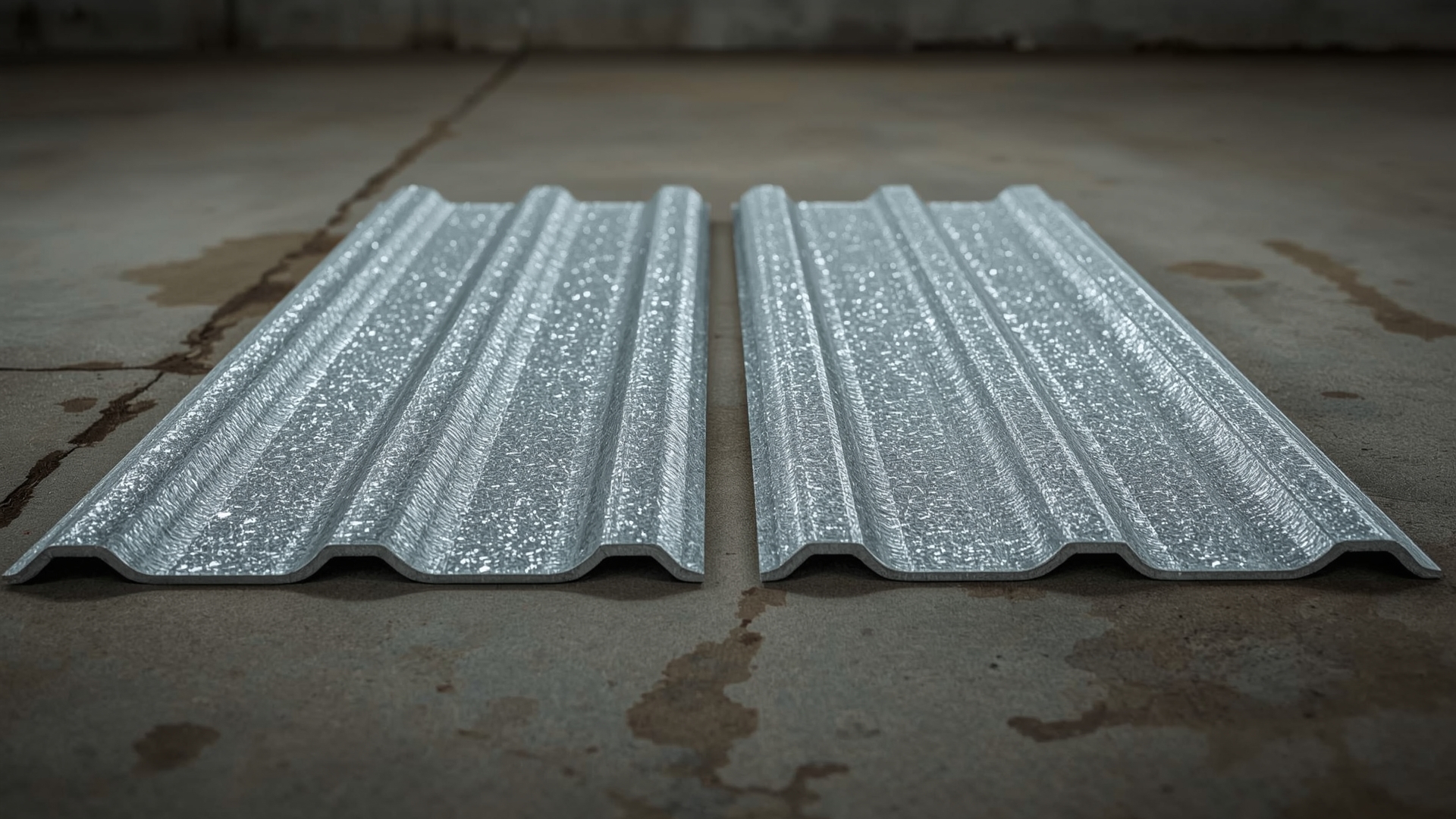
Quick Answer: Galvalume is steel coated with an aluminum-zinc alloy (55% aluminum, 43.4% zinc, 1.6% silicon). Galvanized steel is coated with pure zinc. Galvalume resists corrosion longer in most climates. Galvanized performs better near cut edges and saltwater environments.
Both products are made through a process called hot-dip coating. The base steel sheet runs through a molten bath of coating material, which bonds to the surface and creates a protective layer.
What Is Galvalume Steel?
Galvalume was developed by Bethlehem Steel in 1972. The coating contains 55% aluminum, 43.4% zinc, and 1.6% silicon by weight. The aluminum provides a barrier protection layer, meaning it physically blocks moisture from reaching the steel. The zinc provides galvanic protection, meaning it sacrifices itself electrochemically to protect exposed areas. Silicon helps the alloy bond tightly to the steel surface.
This combination gives Galvalume roughly two to four times the corrosion resistance of standard galvanized steel in controlled testing.
What Is Galvanized Steel?
Galvanized steel uses a coating of pure zinc. Zinc acts as a sacrificial anode — it corrodes before the steel does. This is called cathodic protection. When a galvanized panel is cut or scratched, the zinc around the exposed edge migrates to protect the bare steel underneath. This self-healing quality is galvanized steel’s biggest advantage over Galvalume.
Galvanized coatings are measured by weight per square foot. Common designations include G-60, G-90, and G-115, where the number represents the total zinc coating weight in hundredths of an ounce per square foot of sheet surface (both sides combined).
Coating Composition Comparison
| Attribute | Galvalume | Galvanized Steel |
|---|---|---|
| Coating Material | 55% aluminum, 43.4% zinc, 1.6% silicon | Pure zinc (98–100%) |
| Developed | 1972 (Bethlehem Steel) | Early 1800s (France) |
| Protection Mechanism | Barrier + galvanic (dual) | Galvanic (cathodic) only |
| Self-Healing at Cut Edges | Limited (low zinc content) | Strong (pure zinc migration) |
| Corrosion Resistance vs. Each Other | 2–4× better in most climates | Baseline |
| Common Grade Designations | AZ50, AZ55 (ASTM A792) | G-60, G-90, G-115 (ASTM A653) |
How Long Does Each Type of Roofing Last?
Quick Answer: Galvalume roofing typically lasts 40 to 60 years with proper installation. Galvanized steel roofing lasts 20 to 40 years under similar conditions. Climate, roof pitch, and coating grade all affect actual lifespan.
Lifespan projections come from accelerated corrosion testing, field studies, and decades of real-world installations. The numbers below reflect bare (unpainted) panels. Paint coatings, called PVDF or polyester finishes, can extend the effective service life further by adding another protective layer over the metallic coating.
Galvalume Lifespan Factors
Galvalume panels perform best on steep-slope roofs (3:12 pitch or greater) where water drains quickly. They are not recommended for roofs with standing water. The aluminum in the coating resists oxidation at high temperatures, which helps in hot climates where metal roofs experience significant thermal cycling.
The aluminum barrier layer does not self-repair at cut edges the way zinc does. Exposed edges on Galvalume panels can begin to corrode faster than the face of the panel. This makes proper edge treatment and fastener placement critical during installation.
Galvanized Steel Lifespan Factors
Galvanized steel’s lifespan depends heavily on coating weight. A G-90 coating (0.90 oz/ft² total both sides) is the minimum recommendation for roofing. G-115 and heavier coatings are used in agricultural and coastal applications. The zinc layer gradually depletes through weathering. Once it’s gone, the base steel is exposed and rust begins quickly.
In heavily polluted industrial environments or areas with acid rain, galvanized steel can fail significantly earlier than projections suggest. Zinc is more reactive to acidic conditions than aluminum.
Lifespan and Performance EAV Table
| Entity | Expected Lifespan | Minimum Roof Pitch | Best Climate | Worst Climate |
|---|---|---|---|---|
| Galvalume (bare AZ55) | 40–60 years | 3:12 recommended | Inland, semi-arid, temperate | Coastal salt air, animal waste exposure |
| Galvalume (painted) | 50–70 years | 3:12 recommended | Most climates with paint intact | Coastal (if paint fails) |
| Galvanized G-90 (bare) | 20–30 years | No formal restriction | Coastal, humid, agricultural | Industrial/acid rain zones |
| Galvanized G-115 (bare) | 30–40 years | No formal restriction | Agricultural, coastal | High industrial pollution zones |
| Galvanized (painted) | 25–45 years | No formal restriction | Moderate climates | Extreme heat with paint degradation |
Which Is More Corrosion Resistant in Real-World Conditions?
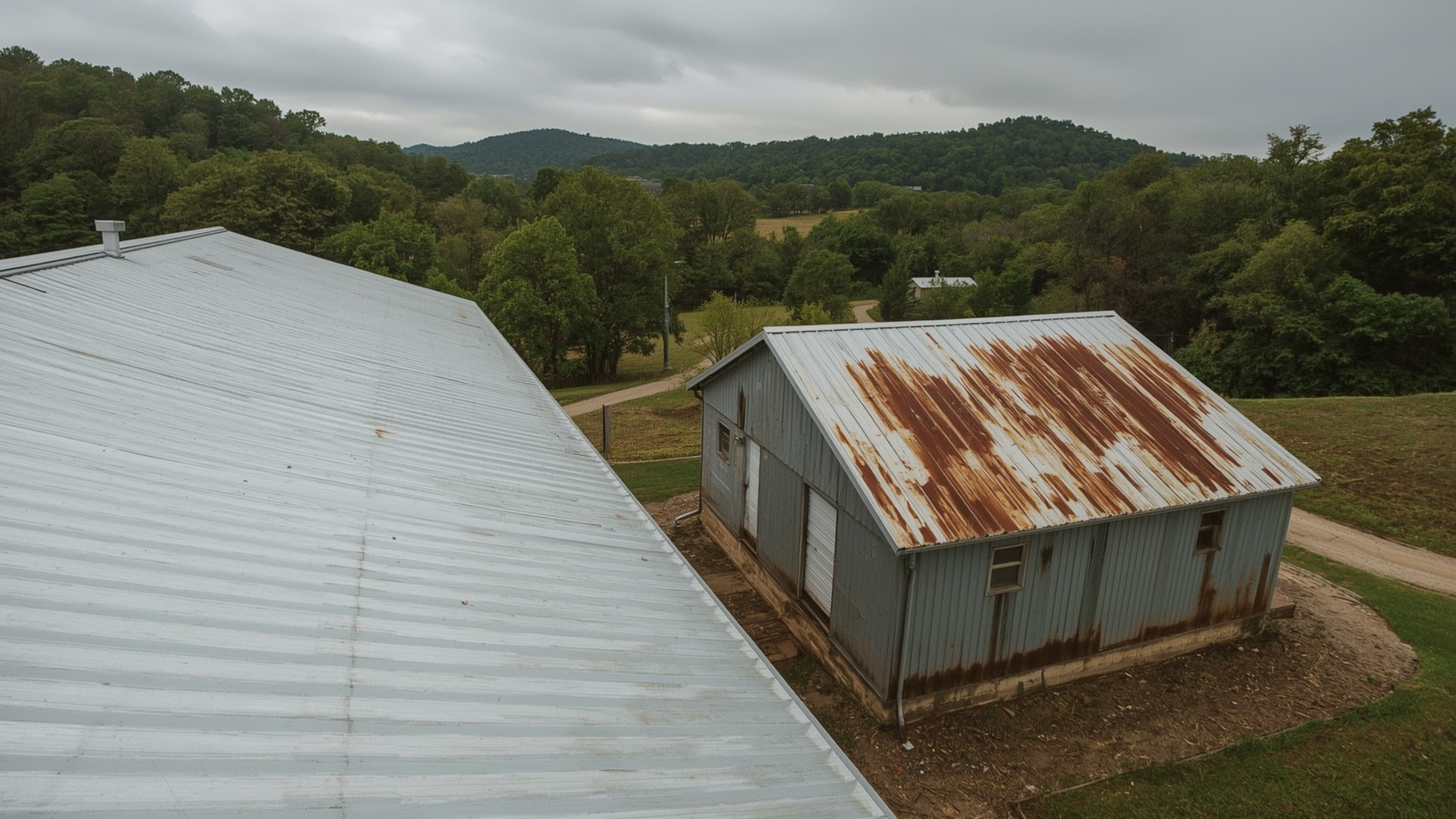
Quick Answer: Galvalume resists corrosion better than galvanized in most inland and temperate climates. Galvanized steel holds up better near the ocean and in agricultural settings where ammonia from animal waste attacks aluminum-rich coatings faster.
Corrosion resistance is not one-size-fits-all. The environment where your roof sits matters as much as the coating itself.
Where Galvalume Wins on Corrosion Resistance
In temperate and semi-arid climates — most of the continental United States outside of coastal regions — Galvalume consistently outperforms galvanized steel in salt spray testing and field studies. The aluminum barrier layer creates a dense oxide film that resists moisture penetration. Even when small areas of the coating are damaged, the remaining barrier slows corrosion spread significantly.
Galvalume also performs better in industrial areas where airborne pollutants (sulfur dioxide, carbon dioxide) are present in moderate levels. Its mixed alloy chemistry is less reactive to these compounds than pure zinc.
Where Galvanized Steel Wins on Corrosion Resistance
Within about one mile of saltwater, galvanized steel can outperform Galvalume. Salt accelerates the breakdown of aluminum oxide, which undermines the barrier layer that makes Galvalume strong in inland environments. Once that barrier degrades near the coast, galvanized steel’s pure zinc cathodic protection becomes more effective at protecting the base steel.
Agricultural environments are another case where galvanized steel holds an edge. Ammonia released from animal waste and manure reacts with the aluminum in Galvalume coatings, causing faster degradation. For barns, livestock shelters, and agricultural buildings, galvanized steel is typically the recommended choice.
Corrosion Resistance by Environment
| Environment Type | Better Choice | Reason | Typical Corrosion Rate Difference |
|---|---|---|---|
| Inland temperate (most US) | Galvalume | Aluminum barrier superior to zinc | Galvalume lasts 2–3× longer |
| Coastal (within 1 mile of salt water) | Galvanized | Salt degrades aluminum barrier faster | Galvanized lasts 20–40% longer |
| Agricultural (ammonia exposure) | Galvanized | Ammonia attacks aluminum in Galvalume | Galvanized lasts 30–50% longer |
| Industrial/urban pollution | Galvalume | Mixed alloy more resistant to SO₂ | Galvalume lasts 1.5–2× longer |
| Desert/semi-arid | Galvalume | Minimal moisture limits zinc depletion advantage | Galvalume lasts 2–4× longer |
How Do Warranties Compare Between Galvalume and Galvanized Steel?
Quick Answer: Galvalume panels typically carry 40-year corrosion perforation warranties. Galvanized steel panels usually carry 20 to 25-year warranties. Paint finish warranties on both run 30 to 40 years depending on the coating system used.
Warranties tell you what the manufacturer is willing to bet on their product. For roofing panels, the two main warranty categories are substrate (the metallic coating itself) and paint finish (the topcoat applied over the metallic layer).
Substrate Warranty Differences
A substrate warranty covers corrosion perforation — meaning a hole actually forms through the panel due to rust. Galvalume’s longer lifespan translates directly into longer substrate warranties. Most major panel manufacturers back Galvalume with 30 to 40-year substrate warranties. Some premium systems extend to 40 years for concealed fastener panels.
Galvanized steel substrate warranties typically run 20 to 25 years from the same manufacturers. This gap reflects the real-world performance difference between the two coatings.
Paint Finish Warranty Differences
Paint warranties are separate from substrate warranties. Both Galvalume and galvanized panels can be coated with high-performance PVDF (polyvinylidene fluoride) paint systems, which typically carry 30 to 40-year warranties for chalk and fade resistance. Polyester paint systems carry shorter warranties, usually 20 to 30 years.
A paint warranty does not protect the substrate. If paint fails and the substrate is not strong enough, rust can begin even while the paint warranty is still active. This is why substrate warranty length matters more for long-term roof performance.
Warranty Comparison EAV Table
| Panel Type | Substrate Warranty | PVDF Paint Warranty | Polyester Paint Warranty | Key Exclusions |
|---|---|---|---|---|
| Galvalume (concealed fastener) | 40 years | 30–40 years | 20–30 years | Coastal zones, animal waste, cut edges |
| Galvalume (exposed fastener) | 30 years | 30 years | 20 years | Ponding water, improper slope |
| Galvanized G-90 | 20 years | 30 years | 20 years | Industrial zones, severe acid rain |
| Galvanized G-115 | 25 years | 30 years | 20 years | Industrial zones, severe acid rain |
What Voids These Warranties?
Both Galvalume and galvanized warranties share common exclusions. Using incompatible metals in contact with the panels — copper or lead — causes galvanic corrosion that neither coating can prevent. Pressure-treated lumber (older formulas using copper azole preservatives) also reacts with both coatings. Runoff from copper flashing or pipes onto metal panels will void most warranties from day one.
Poor installation that causes ponding water on a roof pitched below the manufacturer’s minimum specification is another common exclusion. Galvalume warranties are especially strict about minimum pitch requirements because the aluminum oxide layer breaks down faster under standing water conditions.
What Are the Cost Differences Between Galvalume and Galvanized Steel Roofing?
Quick Answer: Galvalume panels cost roughly 10 to 15% more than galvanized steel panels of the same gauge and profile. For a 2,000-square-foot residential roof, that difference is typically $500 to $1,500 in material costs before labor.
Cost should be evaluated in two ways: upfront material cost and lifetime cost per year. Galvalume’s longer lifespan often makes it the better value even when the initial price is higher.
Upfront Material Cost
Bare Galvalume standing seam panels typically run $1.50 to $3.50 per square foot for materials alone. Painted Galvalume panels range from $3.00 to $6.00 per square foot. Galvanized steel panels run $1.20 to $2.80 per square foot bare, and $2.50 to $5.00 painted. Installed costs (including labor, underlayment, trim, and fasteners) range from $8 to $18 per square foot for either material, depending on panel profile, roof complexity, and region.
Lifetime Cost Comparison
A Galvalume roof with a 50-year lifespan at $12 per square foot installed costs $0.24 per square foot per year. A galvanized steel roof with a 30-year lifespan at $11 per square foot installed costs $0.37 per square foot per year. Over a 1,500-square-foot roof footprint, that difference adds up to roughly $29,000 in cumulative cost advantage for Galvalume over a 60-year period, accounting for one galvanized replacement.
Cost EAV Table
| Panel Type | Bare Material Cost (per sq ft) | Painted Material Cost (per sq ft) | Installed Cost Range (per sq ft) | Expected Lifespan | Annual Cost per sq ft (painted, installed) |
|---|---|---|---|---|---|
| Galvalume standing seam | $1.50–$3.50 | $3.00–$6.00 | $9–$18 | 40–60 years | $0.20–$0.32 |
| Galvalume exposed fastener | $1.25–$2.50 | $2.50–$4.50 | $8–$14 | 35–50 years | $0.19–$0.33 |
| Galvanized G-90 standing seam | $1.20–$2.50 | $2.50–$4.50 | $8–$16 | 20–30 years | $0.32–$0.67 |
| Galvanized G-115 exposed fastener | $1.40–$3.00 | $2.80–$5.00 | $8–$15 | 30–40 years | $0.23–$0.44 |
Which Roofing Coating Is Better for Residential Homes?
Quick Answer: Galvalume is the better choice for most residential roofs. It lasts longer, carries stronger warranties, and costs less per year over the roof’s life. Galvanized steel is the better choice for homes within one mile of saltwater or with known ammonia exposure.
Residential roofing decisions involve more than just coating chemistry. Roof pitch, proximity to water, home style, and the type of panel system all influence which coating performs best.
Panel Systems and Coating Pairing
Standing seam metal roofing (where fasteners are hidden inside the seam) is almost always paired with Galvalume. The concealed fastener design protects the substrate at the most vulnerable points, and the longer Galvalume warranty matches the long-term expectation homeowners have for standing seam systems.
Exposed fastener panels (where screws are visible through the face of the panel) are compatible with both coatings. These systems are more common in agricultural, commercial, and budget-conscious residential applications. When using exposed fasteners, proper fastener material matters — stainless steel or compatible coated fasteners prevent galvanic corrosion at the screw hole.
Residential Use Case Recommendations
- Inland temperate climate, 3:12+ pitch: Galvalume is the clear choice. Superior lifespan, better warranty, lower lifetime cost.
- Coastal home within one mile of salt water: Galvanized G-115 or aluminum roofing. Galvalume’s aluminum layer degrades faster in sustained salt air.
- Mountain or high-altitude home: Galvalume handles freeze-thaw cycling and UV exposure better than galvanized steel.
- Home near agricultural land or livestock: Galvanized G-115 is safer. Ammonia concentrations from nearby animal operations accelerate Galvalume degradation.
- Home in industrial or urban pollution zone: Galvalume performs better. Its mixed alloy coating resists sulfur dioxide and airborne pollutants more effectively.
- Low-slope roof (under 3:12 pitch): Neither bare Galvalume nor bare galvanized steel is recommended. A painted system with proper underlayment and drainage design is required, and even then, flat roofing materials may be more appropriate.
Does Paint Coating Change Which Steel Type You Should Choose?
Quick Answer: Paint coatings extend the life of both Galvalume and galvanized panels but do not eliminate the coating differences underneath. If the paint fails, the substrate takes over. Galvalume’s stronger substrate remains the safer long-term choice for painted panels in most climates.
Most residential metal roofing panels sold today are painted. The paint system sits on top of the metallic coating and serves as the first line of defense against UV degradation, moisture, and mechanical wear.
PVDF vs. Polyester Paint on Metal Roofing
PVDF (polyvinylidene fluoride), sold under brand names like Kynar 500 and Hylar 5000, is the premium paint system for metal roofing. It contains at least 70% PVDF resin, which gives it exceptional UV and chalk resistance. PVDF-coated panels typically carry 30 to 40-year paint warranties and are standard on high-quality Galvalume standing seam panels.
Polyester and silicone-modified polyester (SMP) paints are the mid-grade option. They cost less and carry shorter warranties (20 to 25 years) but are common on exposed fastener panels and agricultural roofing. Both PVDF and polyester are available on Galvalume and galvanized substrates.
What Happens When Paint Fails
Paint failure on a metal roof usually shows up first as chalking (a white powdery residue from UV breakdown) or fading. Once the paint film breaks down enough to allow moisture through, the metallic coating underneath takes over protection. If the substrate is Galvalume, you still have 20 to 30 years of corrosion resistance remaining after paint failure. If the substrate is galvanized G-90, you may have only 5 to 10 years left before rust becomes visible.
What Should You Look for When Comparing Metal Roofing Products?
Quick Answer: Check the ASTM designation (A792 for Galvalume, A653 for galvanized), coating weight (AZ55 or G-90 minimum), paint system (PVDF preferred), panel gauge (24 or 26 gauge for residential), and warranty length separately for substrate and paint finish.
Product labels and spec sheets contain the information you need to compare panels accurately. Knowing what to look for prevents you from accidentally purchasing a lower-grade product marketed with vague language.
Key Spec Sheet Terms
- ASTM A792: The standard specification for Galvalume (aluminum-zinc alloy coated steel sheet).
- ASTM A653: The standard specification for galvanized steel (zinc-coated steel sheet).
- AZ50 / AZ55: Galvalume coating weight designations. AZ55 (0.55 oz/ft² total both sides) is the minimum recommended for roofing.
- G-90 / G-115: Galvanized coating weight designations. G-90 is the minimum for roofing; G-115 is preferred for coastal and agricultural use.
- Gauge: Panel thickness. 24-gauge (0.0239 inches) is standard for residential quality. 26-gauge is thinner and used for lighter-duty applications.
- Kynar 500 / Hylar 5000: Brand names for PVDF paint systems meeting 70% resin content standard.
Are There Any Installation Differences Between Galvalume and Galvanized Panels?
Quick Answer: Installation methods are nearly identical. The key differences involve edge treatment, fastener compatibility, and contact with incompatible metals. Galvalume requires more careful edge sealing. Both require stainless steel or coated fasteners. Neither should contact copper, lead, or graphite materials.
Edge Treatment and Cutting
When a Galvalume panel is cut, the aluminum in the coating does not migrate to protect the raw steel edge the way zinc does on galvanized panels. This means cut edges on Galvalume panels are more vulnerable to rust than cut edges on galvanized panels. Contractors should apply a zinc-rich edge treatment or sealant to any field-cut Galvalume edges to prevent early corrosion at those points.
Galvanized steel edges benefit from the natural zinc migration that protects exposed steel. This is a genuine practical advantage for galvanized panels in applications where field cutting is frequent or unavoidable.
Fastener Compatibility
Both Galvalume and galvanized panels require compatible fasteners to avoid galvanic corrosion. Stainless steel (Type 304 or 316) screws are the safest choice for either panel type. Zinc-plated steel fasteners are acceptable for galvanized panels. Avoid using copper, brass, or plain steel fasteners with either coating.
Incompatible Contact Materials
- Copper flashing or pipes: Runoff from copper onto either panel type accelerates corrosion. This voids most warranties.
- Lead: Lead contact causes rapid corrosion on both coatings. Lead-free pipe boots are required.
- Pressure-treated lumber (copper azole formulas): Direct contact with some treated lumber formulas degrades both coatings. Use a barrier between panels and treated wood where contact occurs.
- Graphite-based products: Graphite is highly cathodic and accelerates galvanic corrosion in both steel types.
Frequently Asked Questions
Can you paint over bare Galvalume or galvanized steel panels?
Yes, both can be painted after installation using appropriate metal roof coatings. The surface needs to be cleaned and primed first with a primer formulated for metallic substrates. Factory-applied PVDF paint bonds better and lasts longer than field-applied coatings, so painting after installation is generally considered a maintenance measure, not a long-term alternative to factory paint.
Does Galvalume rust?
Galvalume can eventually rust, but it takes significantly longer than bare steel. The aluminum barrier layer slows moisture penetration. Cut edges and areas where the coating is damaged are the most likely points where rust appears first. Applying a sealant to cut edges and using compatible fasteners prevents most early rust on Galvalume panels.
Is Galvalume safe for rainwater collection?
Most authorities recommend against using Galvalume roofs as primary rainwater harvesting surfaces. The zinc and aluminum in the coating can leach into collected water, especially on new panels. Studies have found elevated zinc levels in rainwater collected from Galvalume roofs. Galvanized steel has similar concerns. If rainwater collection is a priority, coated panels with food-safe paint or alternative materials like stainless steel are better options.
What gauge of metal panel do I need for a residential roof?
24-gauge is the standard recommendation for residential metal roofing. It provides adequate rigidity, dent resistance, and load-bearing capacity. 26-gauge panels are thinner and more affordable but more susceptible to denting from hail and foot traffic. 22-gauge is used in commercial and high-wind applications where additional strength is needed.
Does a metal roof require a special underlayment?
Metal roofing panels require an underlayment compatible with metal’s thermal movement. Felt underlayments can stick to the underside of metal panels and tear during expansion and contraction cycles. Self-adhering rubberized asphalt or non-bituminous synthetic underlayments are recommended for both Galvalume and galvanized steel panels. The underlayment also provides a secondary moisture barrier if the panel system is ever compromised.
How do I know if a metal roof panel is actually Galvalume and not galvanized?
The product specification sheet and the ASTM designation printed on the coil or panel tell you definitively. Galvalume carries the ASTM A792 designation with an AZ coating weight (AZ50, AZ55). Galvanized steel carries ASTM A653 with a G coating weight (G-60, G-90, G-115). If a supplier cannot provide the spec sheet, request the material test report (MTR) — a document that certifies the chemical composition and mechanical properties of the steel coil used to make the panels.