Keeping flat roofs in good shape is key for both homes and businesses. Ponding water is a big problem that can harm the roof if not fixed. We’ll look at why it happens, the dangers it poses, and how to stop it.

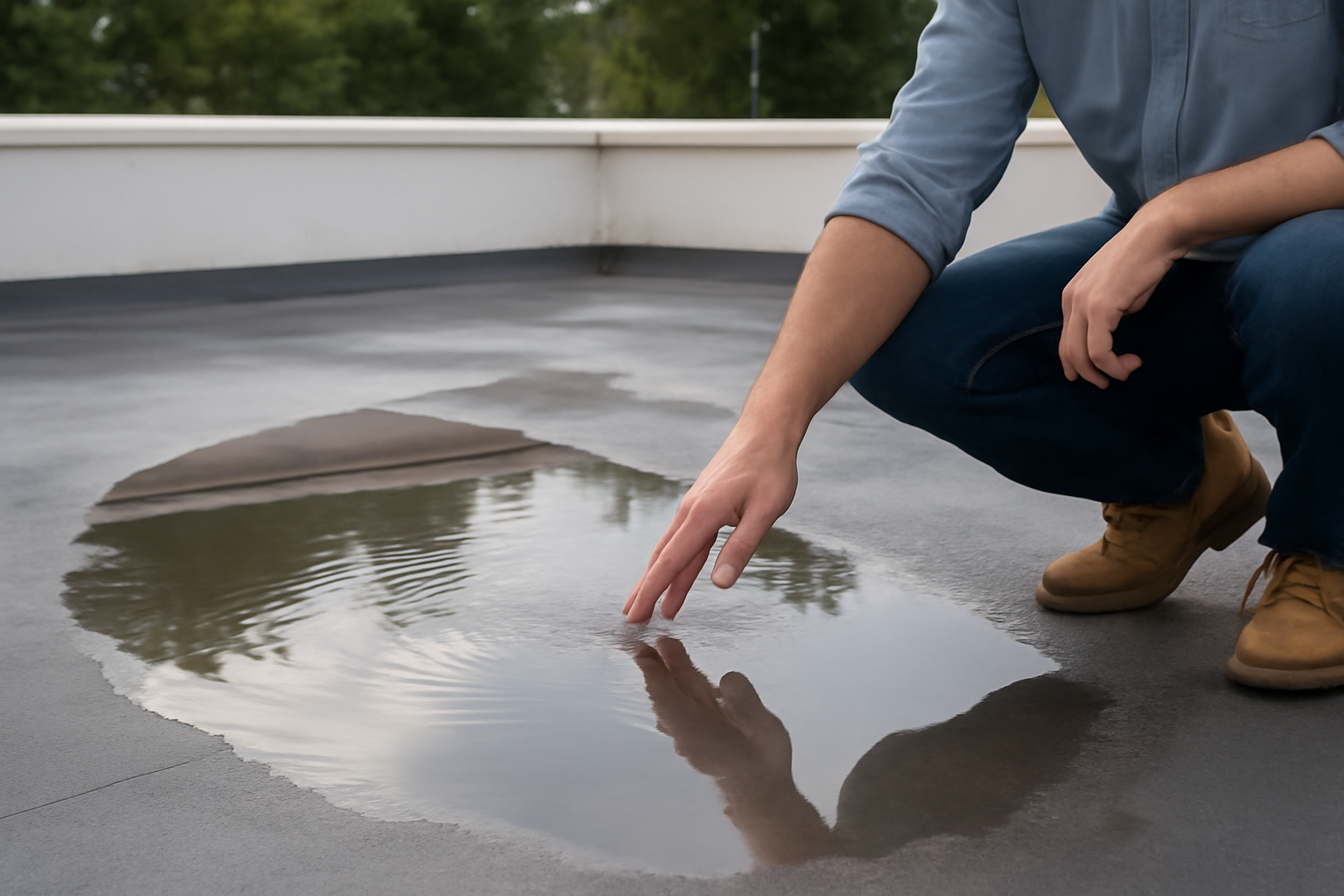
Flat roofs tend to hold water because they don’t slope like other roofs. Rain or melted snow can make puddles. These puddles can weaken the roof, cause leaks, and lead to mold. It’s important to tackle this issue early to keep your roof strong and lasting.
Understanding Ponding Water and Its Impact on Roof Systems
Flat roofs are great for saving space and energy. But, they can have a problem – ponding water. This happens when water stays on the roof, forming pools that don’t drain. Knowing about ponding water is key to keeping your roof strong and lasting.
Defining Ponding Water in Roofing Terms
In roofing, ponding water means water that stays on the roof for more than 48 hours after it rains. This can really harm your roof, causing stress and leading to many issues.
Common Causes of Water Accumulation
Several things can cause water to pool on flat roofs, including:
- Improper roof slope or drainage design
- Clogged or malfunctioning drains and scuppers
- Uneven roof surfaces or depressions in the roofing membrane
- Excessive debris, such as leaves or dirt, blocking water flow
Structural Risks and Damage Assessment
Ponding water is a big risk for your roof’s structure. The weight of the water can make the roof sag, crack, or even fail. Also, the moisture can damage the roof materials, causing leaks, mold, and more.
It’s important to check your roof often and fix any water issues early. By understanding ponding water, you can protect your roof and keep it in good shape for years.

Important Components of Proper Flat Roofs Drainage
Keeping a good drainage system is key to stop water buildup and make flat roofs last longer. To get water to drain well, you need a few important parts.
The roof’s slope is very important. It makes sure water flows to the drainage outlets without stopping. Experts say a slope of at least 1/4 inch per foot is best for good drainage.
Drainage systems are the heart of managing water on flat roofs. They have scuppers, which let water out, and internal drains that collect and move water away. It’s important to check and clean these parts often to keep them working right.
Scuppers and internal drains aren’t the only things that help. Gutters and downspouts also play a big role. They help move water away from the building’s base and stop water damage. Using all these parts together helps prevent water problems on flat roofs.
Knowing what makes a good drainage system helps building owners keep their roofs in good shape. This protects their property from water damage.
Professional Inspection and Maintenance Schedule
Keeping your flat roof in good shape is key. Regular checks by roofing experts help avoid water pooling. They ensure your roof works well, offering advice to keep it in top condition.
Seasonal Inspection Guidelines
Checking your roof regularly is important. Experts suggest doing this at least twice a year, in spring and fall. These checks help spot problems early, like debris or clogged drains, before they get worse.
Documentation and Monitoring Procedures
It’s crucial to keep records of roof inspections and any repairs. Roofing pros can help with detailed reports. These records help track your roof’s health over time. Regular checks help you stay on top of maintenance and repairs.
Early Warning Signs Detection
Roofing experts are good at spotting early signs of water pooling. This includes seeing water pooling, stains, or moss. Catching these signs early helps avoid bigger problems that could harm your roof’s structure.
Installing and Maintaining Effective Drainage Systems
Proper drainage is key for flat roofs to avoid water pooling and damage. It involves strategic placement and upkeep of roof drains, gutters, and downspouts. Knowing their importance helps keep flat roofs in great shape.
Optimizing Roof Drain Placement and Sizing
Roof drains are crucial for flat roof drainage. They need to be the right size and in the right spot to move water off the roof. Roof size, slope, and rainfall affect how many drains you need. Make sure to clean roof drains regularly to avoid clogs.
Gutters and Downspouts: Crucial Drainage Components
Gutters collect water and downspouts send it to a safe place. Keeping them clean is vital for good drainage.
Maintaining Drainage Systems for Long-Term Performance
Regular checks and maintenance are key for roof drains, gutters, and downspouts. Owners should set up a maintenance plan. This includes:
- Clearing debris from roof drains, gutters, and downspouts
- Inspecting for any signs of damage or deterioration
- Addressing issues promptly to prevent further problems
- Documenting maintenance activities for future reference
By focusing on drainage system installation and maintenance, owners protect their flat roofs. This ensures the roofs last a long time without water damage.
Structural Solutions for Water Management
Managing water on flat roofs needs smart structural changes. Installing tapered insulation systems and modifying the roof deck are key. These steps help prevent water pooling and protect the roof’s integrity.
Tapered Insulation Systems
Tapered insulation systems are a top choice for water management. They create slopes for water to flow away from the roof. This method reduces the risk of water damage and keeps the roof safe.
Roof Deck Modifications
Modifying the roof deck also helps with water diversion. Adjusting the deck’s slope or adding drainage channels are common changes. These improvements ensure water flows off the roof, preventing leaks.
Support Structure Reinforcement
At times, the roof’s support structure needs strengthening. This might mean adding support columns or enhancing the roof framing. Strengthening the structure helps it handle water better, avoiding damage.
Using these structural solutions, we can manage water on flat roofs well. This protects the roof’s performance and longevity.
Waterproofing Membranes and Protective Coatings
Keeping a flat roof watertight is key to avoiding ponding water problems. Waterproofing membranes and protective coatings are crucial. They create a strong barrier against moisture, keeping the roof safe and working well for a long time.
There are many waterproofing membranes to choose from, like modified bitumen, single-ply, and liquid-applied ones. These are carefully put on the roof to fit perfectly and keep water out. Protective coatings add extra strength, protecting against weather, chemicals, and physical damage.
Choosing and installing the right waterproofing and protective solutions is vital. By using top-notch membranes and coatings, building owners can protect their roof. This helps avoid ponding water issues and keeps the roof in good shape for years.