Installing an impact resistant roof can save you hundreds of dollars per year on homeowners insurance. But the discount you get depends heavily on where you live, which insurer you have, and whether you can prove your roof qualifies. Many homeowners leave this money on the table simply because they don’t know how to claim it.
This guide covers the specific states with the most significant discount programs, which major insurers participate, what documentation you need, and the exact steps to apply. If you already have an impact resistant roof or are planning one, this is where to start.
Key Takeaways
- Discounts range from 5% to 30%+ depending on your state, insurer, and roof class rating.
- Class 4 is the gold standard for maximum discounts — it requires passing the UL 2218 or FM 4473 impact test at the highest severity level.
- Not all states mandate the discount — some states require insurers to offer it by law, while others leave it entirely up to the carrier.
- Documentation matters — you need a product data sheet, a UL or FM certification label, and ideally a contractor invoice showing the specific product installed.
- You must ask for the discount — insurers rarely apply it automatically, even after a re-roof.
- Regional weather patterns drive availability — hail-heavy states like Texas, Colorado, and Oklahoma typically offer the largest discounts.
What Is the Impact Resistant Roofing Insurance Discount?
Quick Answer: The impact resistant roofing discount is a reduction in your homeowners insurance premium for having a roof that can withstand hail and debris impact. Discounts typically range from 5% to 30% and are based on your roof’s UL 2218 or FM 4473 impact rating, usually Class 3 or Class 4.
Insurance companies price your premium based on the risk that your home will suffer damage. A roof that resists hail reduces that risk significantly. Insurers reward that reduced risk with lower premiums.
The rating system works like this: roofing materials are tested by dropping steel balls of specific sizes from specific heights onto the material. Class 4 is the hardest test. A roof that passes gets a UL 2218 or FM 4473 Class 4 certification. Some insurers also accept Class 3, but the discount is usually smaller.
UL 2218 vs. FM 4473: What’s the Difference?
Both UL 2218 and FM 4473 are industry-standard impact tests, but they come from different testing organizations. UL 2218 (Underwriters Laboratories) is more commonly referenced by insurance companies. FM 4473 (FM Approvals) uses a similar ball-drop method and is widely accepted as an equivalent standard.
Most insurers accept either certification. When you’re shopping for shingles or metal roofing, look for either label on the product data sheet.
Which States Offer the Largest Impact Resistant Roof Discounts?

Quick Answer: Texas, Colorado, Oklahoma, Kansas, and Nebraska consistently offer the largest discounts — often 20% to 30% — because these states sit in Hail Alley, where hail claims are frequent and expensive. Several states also require insurers to offer the discount by law.
State-by-State Discount Availability Overview
| State | Typical Discount Range | Mandated by Law? | Qualifying Class | Notes |
|---|---|---|---|---|
| Texas | 15% – 35% | Yes (TDI requires offering) | Class 3 or 4 | Some counties have higher rates due to catastrophic hail history |
| Colorado | 20% – 30% | No (carrier discretion) | Class 4 preferred | Front Range counties see the largest discounts |
| Oklahoma | 15% – 25% | No (carrier discretion) | Class 3 or 4 | Strong competition among regional carriers drives availability |
| Kansas | 10% – 20% | No | Class 4 | Discount availability varies widely by zip code |
| Nebraska | 10% – 20% | No | Class 4 | Omaha metro area typically qualifies more readily |
| Minnesota | 5% – 15% | No | Class 4 | Twin Cities corridor has the highest discount availability |
| Missouri | 5% – 15% | No | Class 4 | Insurers in hail-prone regions more likely to offer it |
| Illinois | 5% – 10% | No | Class 4 | Less consistent; national carriers more reliable than regional ones |
| Georgia | 5% – 10% | No | Class 3 or 4 | Primarily driven by wind and impact risk in northern counties |
| Florida | 0% – 10% | No (wind mitigation rules differ) | Class 4 (rare) | Wind resistance credits dominate; hail credits less common |
Why Texas Has the Most Robust Discount Program
The Texas Department of Insurance (TDI) requires insurers to offer a premium credit for impact resistant roofing materials. That mandate makes Texas unique. In most other states, the discount is purely optional for the insurer.
Texas homeowners in cities like Dallas, Fort Worth, San Antonio, and Austin see some of the highest potential savings. A homeowner paying $3,000 per year in premiums could save $450 to $1,050 annually with a qualifying Class 4 roof.
Colorado and the Hail Alley Premium
Colorado doesn’t mandate the discount, but the market has driven most major carriers to offer it anyway. The Front Range — stretching from Fort Collins through Denver to Colorado Springs — is one of the most hail-active corridors in the country.
Some Colorado carriers have gone further. A few insurers now write policies exclusively for homes with Class 4 roofs in high-risk zip codes. If your roof doesn’t qualify, you may struggle to find competitive coverage at all.
Which Insurance Companies Offer Impact Resistant Roofing Discounts?
Quick Answer: State Farm, Allstate, Farmers, Travelers, USAA, and Erie Insurance are among the major national carriers that offer impact resistant roof discounts. Discount amounts and qualifying criteria vary by state and policy. Regional carriers like Amica, Auto-Owners, and PEMCO also participate in select states.
National Carrier Discount Programs
| Insurer | Discount Name | Typical Discount | Qualifying Standard | Available In |
|---|---|---|---|---|
| State Farm | Impact-Resistant Roof Credit | 5% – 30% | UL 2218 Class 3 or 4 | Most states; largest in TX, CO, OK |
| Allstate | Hail-Resistant Roof Discount | 5% – 20% | UL 2218 Class 4 | TX, CO, KS, NE, MN, OK |
| Farmers | Roof Rating Discount | Up to 25% | UL 2218 or FM 4473 Class 4 | TX, CO, OK, KS, MO |
| Travelers | Green Home Discount / Impact Roof | 5% – 15% | UL 2218 Class 4 | Select states; varies by region |
| USAA | Impact-Resistant Roof Discount | Up to 10% | UL 2218 Class 4 | All states (military members only) |
| Erie Insurance | New Roof / Impact Resistance Credit | 5% – 15% | UL 2218 Class 3 or 4 | Midwest and Mid-Atlantic states |
| Auto-Owners | Protective Device / Roof Credit | 5% – 10% | UL 2218 Class 4 | Select Midwest states |
These figures represent typical program parameters as of early 2026. Specific discount amounts change with policy renewals and regional rate filings. Always confirm the exact credit with your agent before your renewal date.
What About Insurance Marketplace Carriers?
Some newer insurance marketplace carriers — like Hippo and Kin — specifically market their products to homeowners with impact resistant roofs. Kin Insurance, available in Florida and Texas, structures its underwriting around roof quality and may offer lower base rates rather than a stated discount percentage.
This is worth noting because the benefit may show up differently on your declarations page. Instead of a line-item discount, you may simply see a lower total premium compared to a standard roof home.
What Documentation Do You Need to Claim the Discount?
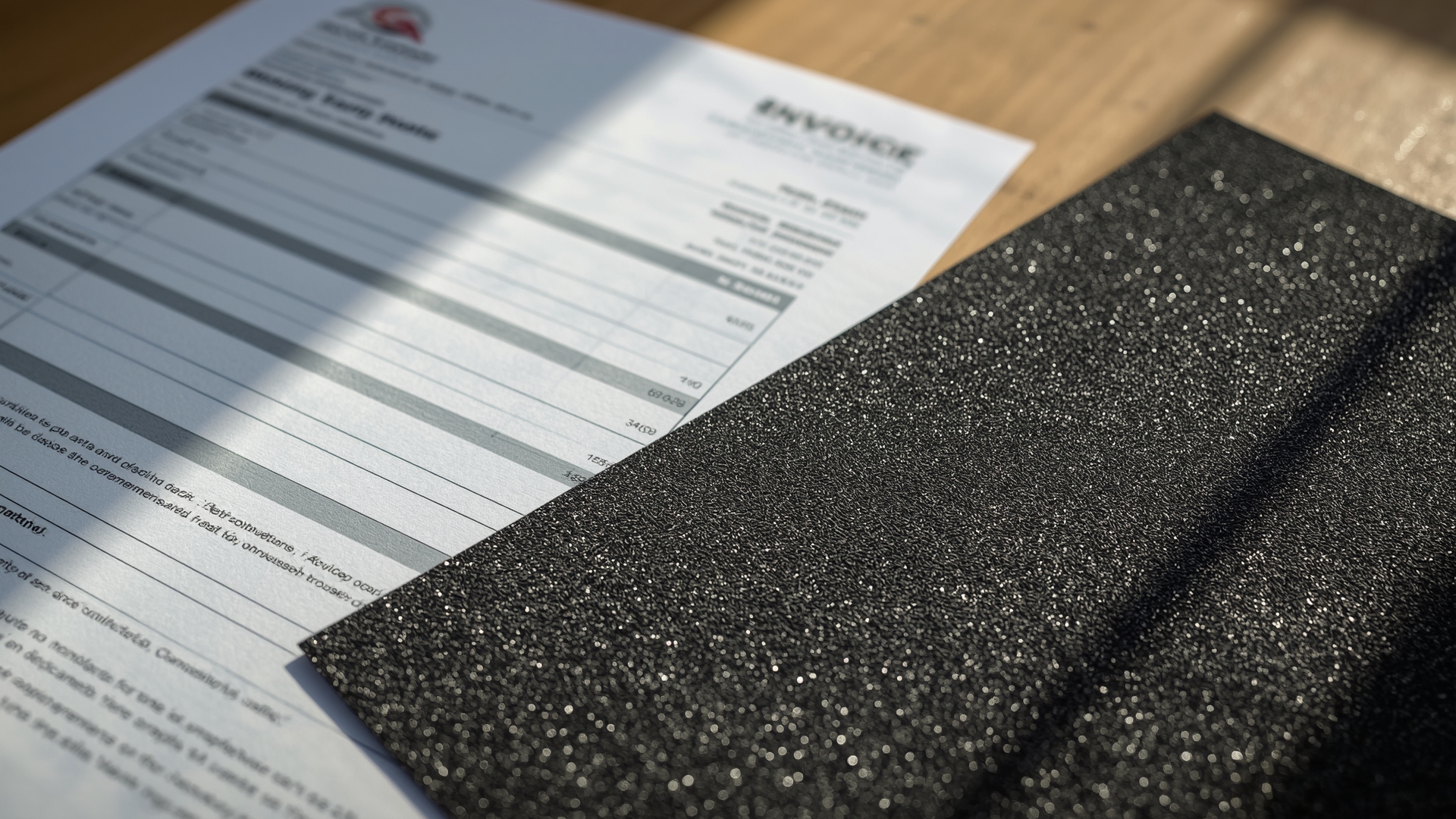
Quick Answer: You need at least three documents: a contractor invoice showing the exact product name and manufacturer, the product’s UL 2218 or FM 4473 certification data sheet, and photos of the completed installation. Some insurers also request a signed contractor statement or a roof inspection report.
Required Documentation Checklist
- Contractor invoice: Must include the product name, manufacturer, and the specific shingle or panel model number. A generic invoice that says “installed new shingles” is not sufficient.
- Product certification data sheet: This is typically a one or two-page document from the manufacturer. It confirms the UL 2218 or FM 4473 class rating. You can usually download it from the manufacturer’s website.
- Completion photos: Wide shots of the completed roof from multiple angles. Some insurers also want close-up photos of the ridge, valleys, and drip edge to confirm proper installation.
- Permit and inspection record: If your local jurisdiction required a permit, include the final inspection sign-off. This strengthens your documentation significantly.
- Warranty registration confirmation: Some insurers treat a registered manufacturer warranty as additional proof that a qualifying product was installed.
What If You Bought a Home With an Impact Resistant Roof Already Installed?
This is where many homeowners get stuck. If you didn’t have the roof installed yourself, you may not have the original invoice or documentation.
Start by asking the previous owner through your real estate attorney or the closing documents. If that fails, contact the roofing contractor who did the work — they typically keep job records. You can also request a roof certification inspection from a licensed inspector, who can identify the installed product in many cases by examining the shingles directly.
Some insurers will accept a signed affidavit from a licensed roofing contractor stating the product and its rating, especially if the shingle can be visually identified and matches a known Class 4 product.
How Do You Apply for the Impact Resistant Roof Discount?
Quick Answer: Contact your insurance agent directly after your roof installation is complete. Submit your documentation, ask them to apply the impact resistant roof credit to your policy, and request a mid-term endorsement so the discount takes effect immediately rather than waiting for your next renewal date.
Step-by-Step Application Process
- Complete the installation first. The discount applies to the finished roof, not the plan to install one. Have everything documented before contacting your insurer.
- Gather all documentation. Use the checklist above. Don’t contact your insurer until you have at least the contractor invoice and the certification data sheet.
- Call or email your agent directly. Don’t rely on the insurer’s website portal for this. A live conversation ensures the credit gets flagged and reviewed correctly.
- Request a mid-term policy endorsement. This updates your policy immediately rather than waiting 6 to 12 months for renewal. You may receive a partial-year premium credit or reduction in your next bill.
- Confirm the discount appears on your declarations page. After the endorsement processes, review your updated declarations page. The credit should appear as a named line item.
- Compare quotes at renewal. Once you know your current insurer’s exact discount, use that as a benchmark when shopping competing carriers. The difference between insurers can be substantial.
What If Your Insurer Doesn’t Offer the Discount?
Some carriers — especially smaller regional insurers — don’t have an impact resistant roof discount in their rate filing. In that case, you have options.
First, ask if there’s a general roof condition or new construction credit that could apply. Second, shop your policy at renewal. A Class 4 roof is a strong selling point with competing carriers, and switching insurers could yield a larger benefit than any existing credit with your current provider.
How Much Can You Actually Save With an Impact Resistant Roof?
Quick Answer: Annual savings range from $150 to over $1,500 depending on your current premium, state, and insurer. In high-risk states like Texas and Colorado, a 20–30% discount on a $4,000 annual premium saves $800 to $1,200 per year — which can offset the cost of a premium roof upgrade within 5 to 10 years.
Real Dollar Savings by Scenario
| State | Annual Premium (Example) | Discount Applied | Annual Savings | 10-Year Savings |
|---|---|---|---|---|
| Texas (Dallas) | $4,200 | 28% | $1,176 | $11,760 |
| Colorado (Denver) | $3,800 | 25% | $950 | $9,500 |
| Oklahoma (OKC) | $3,400 | 20% | $680 | $6,800 |
| Kansas (Wichita) | $2,800 | 15% | $420 | $4,200 |
| Minnesota (Twin Cities) | $2,200 | 10% | $220 | $2,200 |
| Illinois (Chicago suburbs) | $2,000 | 7% | $140 | $1,400 |
Does the Discount Change Over Time?
Yes. Discounts are not permanently locked in. Insurers can adjust their rate filings at renewal. Some carriers have reduced impact resistant roof discounts in states where hail claims remained high even with impact resistant materials.
On the flip side, as your roof ages, some carriers apply age-based adjustments that reduce the credit. Maintaining the discount long-term usually requires periodic roof inspections to confirm the roof is still in good condition.
Are There States Where the Discount Is Legally Required?
Quick Answer: Texas is the most notable state where the law requires insurers to offer an impact resistant roof discount. A handful of other states have encouraged or suggested the credit through insurance department guidance, but most states do not legally mandate it. The mandate in Texas comes from Texas Department of Insurance (TDI) regulations.
State Regulatory Frameworks Compared
| State | Legal Mandate? | Regulatory Body | Policy Approach |
|---|---|---|---|
| Texas | Yes | Texas Department of Insurance (TDI) | Insurers must file and offer a premium credit for qualifying roofs |
| Colorado | No | Colorado Division of Insurance | Market-driven; most major carriers participate voluntarily |
| Oklahoma | No | Oklahoma Insurance Department | Encouraged but not required; carrier discretion |
| Kansas | No | Kansas Insurance Department | No formal guidance; varies by carrier rate filing |
| Nebraska | No | Nebraska Department of Insurance | No formal guidance; varies by carrier rate filing |
| Florida | No (different system) | Florida Office of Insurance Regulation | Wind mitigation credits dominate; separate inspection system |
How Florida’s Wind Mitigation System Differs
Florida has a separate credit system called wind mitigation credits. These are based on a formal wind mitigation inspection performed by a licensed inspector. Impact resistance is one factor, but it’s evaluated differently than in hail-risk states.
In Florida, the primary driver of discounts is the roof-to-wall connection type and roof deck attachment method — not just the shingle’s impact rating. A homeowner with a hip roof and ring-shank nails may save more than one with a Class 4 shingle and a standard roof structure.
How Do You Know If Your Current Roof Qualifies?
Quick Answer: Check the product name on your contractor invoice, then look it up on the manufacturer’s website or the UL Product iQ database. If the product shows a UL 2218 Class 3 or Class 4 rating, your roof qualifies. You can also hire a licensed roofing inspector to identify the installed shingle and confirm its rating.
How to Look Up a Shingle’s Impact Rating
- Find the exact product name on your contractor invoice or roofing permit.
- Visit the manufacturer’s product page and download the technical data sheet.
- Look for the UL 2218 or FM 4473 impact classification in the product specifications section.
- Alternatively, search the UL Product iQ database (productiq.ul.com) using the product name. This is a public database of certified products.
- If you can’t identify the product, have a licensed roofing contractor inspect the roof and attempt to identify the shingle visually or by removing a small section near an edge.
Common Qualifying Products by Roofing Type
| Roofing Type | Example Products | Typical Impact Class | Approximate Cost (per square) |
|---|---|---|---|
| Asphalt Shingle (Impact) | Owens Corning Duration Storm, GAF Timberline ArmorShield II, Certainteed Landmark IR | Class 4 | $150 – $220 |
| Metal Roofing (Standing Seam) | McElroy Metal, ATAS International, Fabral | Class 4 | $400 – $900 |
| Metal Shingles | Gerard Stone-Coated, Metal Sales Classic Rib | Class 4 | $350 – $700 |
| Synthetic Shingle | DaVinci Roofscapes, Brava Composite, CeDUR | Class 4 | $350 – $600 |
| Polymer/Rubber Shingle | EcoStar Majestic, Euroshield | Class 4 | $300 – $550 |
Can You Stack the Impact Resistant Roof Discount With Other Credits?
Quick Answer: Yes. In most cases, you can combine an impact resistant roof discount with other homeowners insurance credits such as a new roof credit, bundling discount, claims-free discount, and home security discount. Combining discounts can push total savings well above 40% of the base premium.
Discounts That Commonly Stack With Roof Credits
- New roof discount: Many carriers give a separate credit just for a roof that is less than 5 years old, regardless of material type. A new impact resistant roof may qualify for both.
- Multi-policy bundling: Bundling auto and home insurance typically saves 5% to 15%. This stacks with roof discounts.
- Claims-free discount: If you haven’t filed a claim in 3 to 5 years, you may qualify for an additional loyalty credit of 5% to 10%.
- Home security discount: Monitored alarm systems add another 2% to 5% in most markets.
- Protective device credits: In some states, storm shutters, whole-home surge protectors, and generator installations qualify for small additional credits.
Frequently Asked Questions
Does a Class 3 roof qualify for the insurance discount?
Some insurers accept Class 3 UL 2218 impact ratings, but the discount is usually smaller than for Class 4. Texas state law covers both Class 3 and Class 4. In most other states, carriers prefer Class 4 for the full credit. Always ask your agent whether Class 3 qualifies before choosing a roofing product.
How long does it take to receive the discount after I submit documentation?
Most insurers process the endorsement within 5 to 15 business days of receiving your documentation. You should receive an updated declarations page confirming the credit. If your renewal is more than 30 days away, you may receive a prorated credit applied to your current term.
Will my insurance company inspect my roof before granting the discount?
Some carriers do order a roof inspection, especially for homes with older structures or if they can’t verify the product from documentation alone. Most of the time, documentation is sufficient. In competitive markets like Texas and Colorado, insurers typically process credits without requiring a physical inspection.
Does filing a hail damage claim affect my impact resistant roof discount?
Filing a claim won’t eliminate your impact resistant roof discount — those are separate factors in your premium calculation. However, a filed claim may trigger a surcharge or affect your claims-free discount. The impact resistant roof credit itself stays in place as long as the qualifying roof remains installed.
Can a roofing contractor help me claim the insurance discount?
A good contractor can provide all the documentation you need — the invoice, product data sheet, and installation photos. Some contractors in high-discount states actively help homeowners file for the credit as part of their post-installation service. They can’t negotiate with your insurer, but they can make sure you have the right paperwork.
Do metal roofs qualify for the same discount as impact resistant shingles?
Yes. Metal roofs with a Class 4 UL 2218 or FM 4473 certification qualify for the same impact resistant roof discount. Standing seam metal roofs almost universally achieve Class 4 ratings. The discount amount is typically the same regardless of whether the qualifying material is metal, asphalt, or a synthetic product.