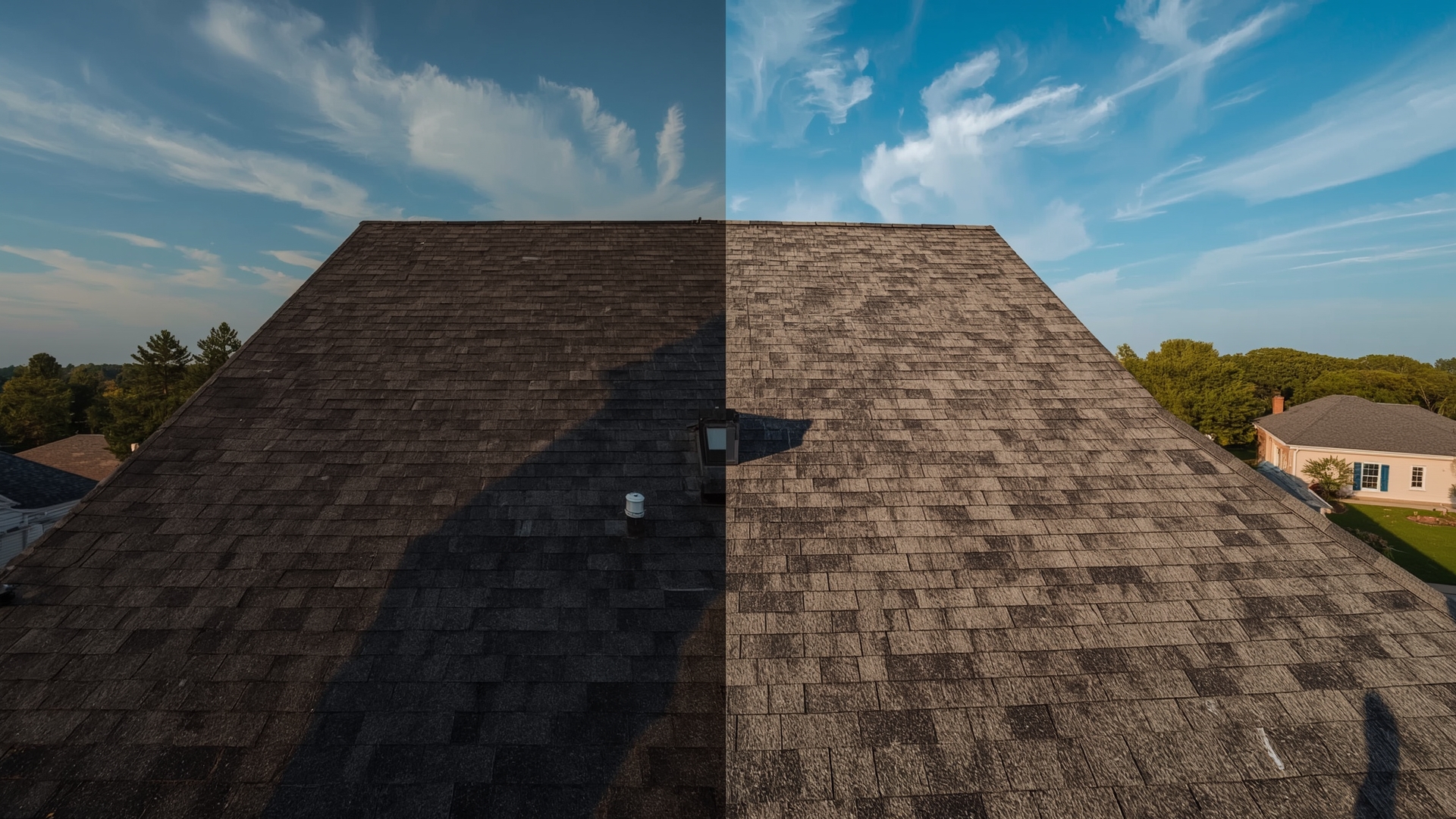
Your roof gets damaged in a hailstorm. You file a claim. Then your insurance company sends you a check that barely covers half the repair bill. What went wrong? In most cases, the answer comes down to four letters: ACV.
The type of roof insurance you carry — Replacement Cost Value (RCV) or Actual Cash Value (ACV) — determines how much money you receive after a covered loss. The difference between the two can be thousands of dollars. Understanding how each works before you need to file a claim is one of the most important financial decisions a homeowner can make.
Key Takeaways
- RCV pays the full cost to replace your roof with a comparable new one, minus your deductible.
- ACV pays the depreciated value of your roof at the time of the loss — not what a new roof costs.
- Depreciation is the core difference. A 15-year-old roof has lost significant value in an insurer’s eyes, even if it was still functional.
- RCV policies cost more in premiums but pay out significantly more after a claim.
- Recoverable depreciation is the gap between ACV and RCV — and with some policies, you can reclaim it.
- Your roof’s age and material directly affect how depreciation is calculated.
- Policy language matters. Read your declarations page carefully before assuming you have full replacement coverage.
What Is the Difference Between RCV and ACV Roof Insurance?

Quick Answer: RCV (Replacement Cost Value) pays what it costs to replace your roof today with a new, comparable one. ACV (Actual Cash Value) pays that same amount minus depreciation — the value lost due to your roof’s age and wear.
Think of it like a car insurance analogy. If your 10-year-old car gets totaled, ACV pays you what that used car was worth on the day of the accident. RCV would pay for a brand-new car of the same type. The same logic applies to your roof.
With an RCV policy, your insurer calculates the full cost to replace your damaged roof using current labor and material prices. You pay your deductible. They cover the rest.
With an ACV policy, your insurer calculates the replacement cost first — then subtracts depreciation based on how old your roof is and how much useful life it has left. The check you receive reflects the roof’s present-day market value, not the cost of a new one.
How Depreciation Affects Your Payout
Depreciation is calculated based on the roof’s expected lifespan and its current age. An asphalt shingle roof with a 25-year lifespan that is 15 years old has used 60% of its life. Your insurer may depreciate the claim payout by a similar percentage.
That math adds up fast. On a $20,000 roof replacement, a 60% depreciation means your ACV check comes out to $8,000 — before your deductible. If your deductible is $2,500, you walk away with $5,500 toward a $20,000 project.
How Does an RCV Policy Calculate Your Claim Payout?
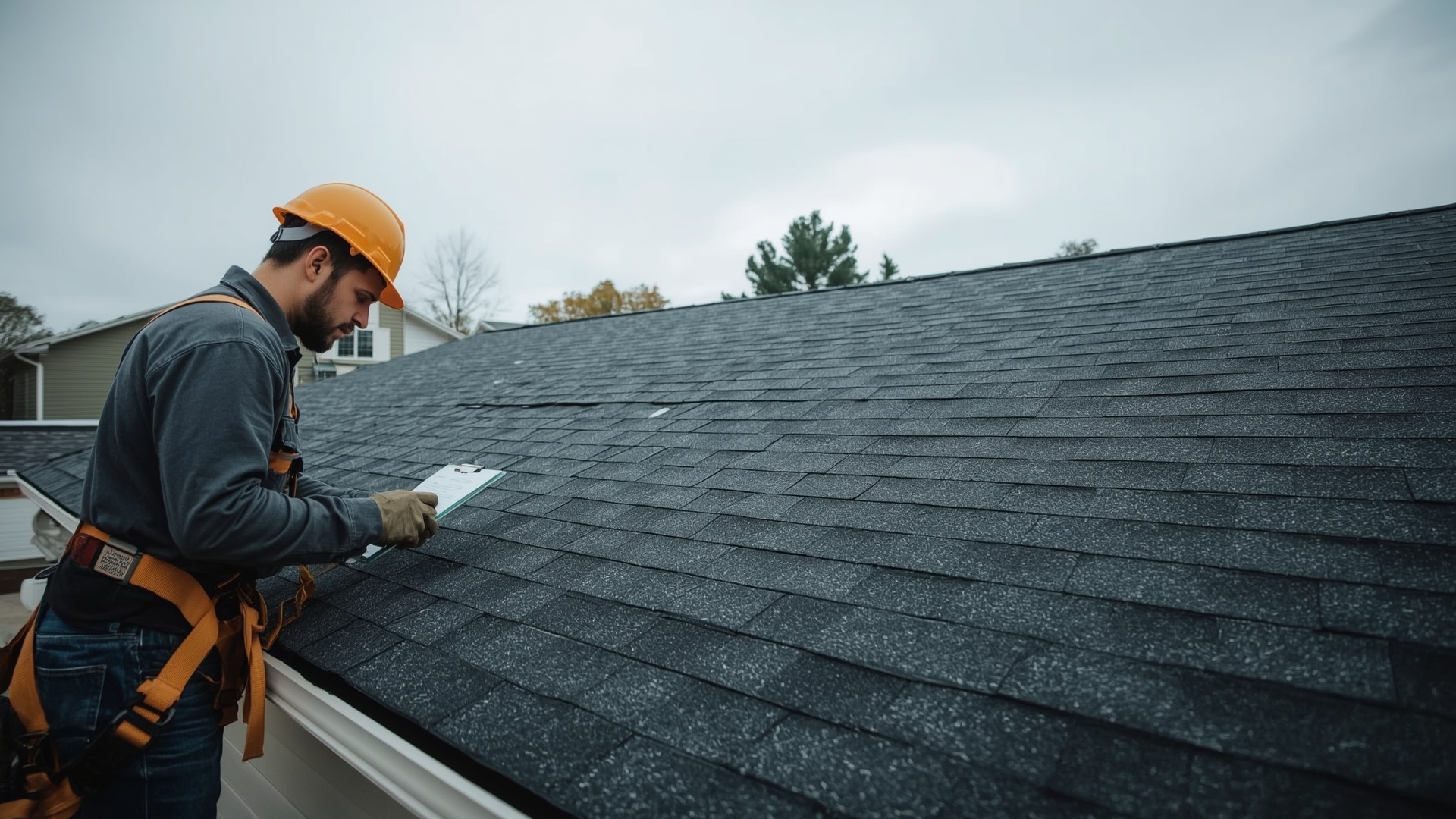
Quick Answer: An RCV payout works in two stages. First, the insurer pays the ACV amount. Once you complete repairs with a licensed contractor, they release the remaining “recoverable depreciation” — the withheld amount that brings your total up to full replacement cost.
Most RCV policies follow a two-payment process. The first check is the ACV amount — what the roof was worth at the time of the loss. This gets you started on repairs. Once you hire a contractor and the work is completed (or substantially underway), you submit proof to your insurer and receive a second check for the withheld depreciation.
What Is Recoverable Depreciation?
Recoverable depreciation is the difference between the ACV payment and the full RCV amount. It is the money your insurer holds back until you prove the repairs were made.
For example: Your RCV is $18,000. Your insurer first pays $11,000 (ACV). After you complete the roof replacement and submit your contractor’s invoice, you receive the remaining $7,000. That $7,000 is the recoverable depreciation.
This two-step process protects insurers from paying for repairs that never happen. It also means you need to have enough cash on hand to start the work before your full payout arrives.
RCV vs ACV Payout Comparison
| Scenario | Roof Replacement Cost | Roof Age | Depreciation Applied | ACV Payout | RCV Payout (after repairs) |
|---|---|---|---|---|---|
| New roof (3 years old) | $20,000 | 3 years | $2,400 (12%) | $17,600 | $20,000 |
| Mid-life roof (12 years old) | $20,000 | 12 years | $9,600 (48%) | $10,400 | $20,000 |
| Older roof (20 years old) | $20,000 | 20 years | $16,000 (80%) | $4,000 | $20,000 |
Deductible not included. Depreciation percentages are illustrative examples based on a 25-year shingle lifespan.
What Does an ACV Roof Policy Actually Cover?
Quick Answer: An ACV policy covers the same perils as RCV — wind, hail, fire, and other named events. The difference is not what is covered, but how much you receive. You pay the gap between the depreciated payout and the actual repair cost out of pocket.
ACV policies are not inherently bad. They cover legitimate storm damage, fire damage, and other covered perils. The limitation is purely financial: the payout reflects the worn value of the roof, not the cost to restore it.
Homeowners often choose ACV policies because they carry lower monthly premiums. The trade-off is accepting a larger financial responsibility at claim time — especially as the roof ages.
When ACV Coverage Creates the Biggest Gap
The older your roof, the wider the gap between ACV and RCV becomes. A 5-year-old roof with minor depreciation still yields a useful ACV payout. A 20-year-old roof with heavy depreciation may produce a check that barely covers materials, let alone labor.
Some states have also allowed insurers to apply a separate “roof age schedule” or “cosmetic damage exclusion” that limits payouts further. Always read your policy’s roof coverage endorsements specifically.
How Much More Do You Pay for RCV vs ACV Coverage?
Quick Answer: RCV coverage typically costs 10% to 25% more in annual premium than a comparable ACV policy. On a $1,800 annual homeowner’s premium, that translates to roughly $180 to $450 more per year for full replacement cost roof coverage.
The premium difference varies based on your roof’s age, material, location, and insurer. Newer roofs with impact-resistant materials often qualify for smaller RCV surcharges because they carry lower replacement risk.
RCV vs ACV: Premium and Payout Trade-Off
| Coverage Type | Annual Premium Increase | Depreciation Applied | Out-of-Pocket Gap at Claim | Best For |
|---|---|---|---|---|
| RCV | 10%–25% higher | None (after repairs) | Deductible only | Roofs under 15 years; high storm risk areas |
| ACV | Baseline | Full depreciation applied | Deductible + full depreciation gap | Newer roofs; tight budgets; low storm risk |
What Factors Do Insurers Use to Depreciate a Roof?
Quick Answer: Insurers depreciate roofs based on material type, age, expected lifespan, condition at inspection, and local climate. Each factor adjusts how much of the replacement cost they subtract before issuing the initial claim payment.
Insurance adjusters use depreciation schedules — pre-set tables that assign a percentage of value lost per year per roofing material. These schedules vary by insurer but are grounded in estimated material lifespans.
Depreciation Schedules by Roof Material
| Roof Material | Expected Lifespan | Annual Depreciation Rate | Maximum Depreciation Cap | Remaining Value at Year 15 |
|---|---|---|---|---|
| 3-Tab Asphalt Shingles | 15–20 years | 5%–7% per year | 80%–90% | 20%–30% |
| Architectural Asphalt Shingles | 25–30 years | 3%–4% per year | 80% | 40%–55% |
| Metal Roofing (standing seam) | 40–70 years | 1.5%–2.5% per year | 70% | 62%–78% |
| Wood Shake | 20–30 years | 3%–5% per year | 80% | 30%–50% |
| Slate (natural) | 75–150 years | 0.5%–1% per year | 50% | 85%–93% |
Depreciation rates and caps vary by insurer and state. These ranges reflect common industry schedules and are not guaranteed figures for your specific policy.
What Is Functional Depreciation vs Aesthetic Depreciation?
Functional depreciation accounts for the loss of structural performance — a roof that leaks or can no longer protect the home. Insurers universally cover functional losses.
Aesthetic depreciation (also called cosmetic damage) refers to appearance-only issues like surface dents from hail that do not affect function. Some policies now exclude cosmetic damage from payouts entirely, especially after hail events. This is a growing trend in states with high hail frequency, including Texas, Colorado, and Oklahoma.
Can You Switch From ACV to RCV Coverage?
Quick Answer: Yes, but your insurer may require a roof inspection first. If your roof is over 15 to 20 years old, many insurers will only offer ACV coverage or may require re-roofing before approving RCV. Switching is easiest when your roof is newer.
Most homeowners can request a coverage upgrade at their annual renewal. Your insurer will typically send an adjuster or use satellite imagery to assess the roof’s current condition. A roof in poor condition — missing shingles, visible wear, or improper repairs — may be denied RCV status.
Age Thresholds for RCV Eligibility by Insurer Type
| Insurer Category | Maximum Roof Age for RCV | Inspection Required? | Notes |
|---|---|---|---|
| Standard market insurers | 15–20 years | Often yes | May downgrade to ACV automatically at age threshold |
| Preferred market insurers | 10–15 years | Usually required | Stricter underwriting; better pricing for new roofs |
| Non-standard/surplus lines | Varies widely | Case by case | Higher premiums; may insure older roofs at ACV only |
| State FAIR Plans | ACV only (most states) | Yes | Last-resort market; limited to ACV coverage |
What Is the Matching Coverage Endorsement and How Does It Relate to RCV?
Quick Answer: A matching coverage endorsement requires your insurer to replace undamaged sections of your roof if the damaged area cannot be matched with current materials. This protects against partial replacements that leave your roof visually mismatched or structurally inconsistent.
Matching disputes are common with older roofs. If a manufacturer discontinues a shingle color or profile, your insurer may argue that replacing only the damaged section is sufficient. A matching endorsement forces full-slope replacement when a true match cannot be sourced.
Not all states require insurers to offer matching coverage. Florida, Minnesota, and Iowa have strong matching provisions. Texas and Colorado have had ongoing legislative debates on this issue. Check your state’s department of insurance guidelines for current rules.
What Happens If You File a Claim Under the Wrong Coverage Type?
Quick Answer: You cannot “file under the wrong coverage.” Your policy type is fixed at the time of the claim. If you have ACV, the payout is depreciated regardless of your preference. Understanding your coverage before a loss — not after — is what determines your outcome.
This is the most common point of confusion homeowners face after a storm. They assume they have full replacement coverage because they pay for homeowner’s insurance. But RCV coverage is not automatic — it is an upgrade that must be selected and maintained.
When you receive a smaller-than-expected check, you have three options: accept the ACV payout, dispute the depreciation calculation through the appraisal process, or work with a public adjuster to negotiate the claim.
Dispute Options When You Disagree With a Depreciation Calculation
- Request a re-inspection: Ask your insurer to send a different adjuster if you believe the scope of damage was missed.
- Submit a contractor’s estimate: A detailed repair estimate from a licensed roofing contractor can challenge a low adjuster assessment.
- File a supplemental claim: If additional damage is discovered during repairs, a supplemental claim can increase the initial payout.
- Invoke the appraisal clause: Most policies include a formal appraisal process where both parties hire independent appraisers and a neutral umpire resolves the dispute.
- Hire a public adjuster: A licensed public adjuster works on your behalf — not the insurer’s — to maximize your claim settlement. They typically charge 10% to 15% of the claim amount.
Does Roof Material Choice Affect Whether You Should Choose RCV or ACV?
Quick Answer: Yes. Long-lifespan materials like metal or slate depreciate slowly, so an ACV payout on a 15-year-old metal roof still covers most of the replacement cost. Short-lifespan materials like 3-tab shingles depreciate fast, making RCV coverage far more valuable as the roof ages.
If you install a premium roof with a long lifespan, the financial gap between ACV and RCV shrinks over time. On a 50-year metal roof, year 15 still represents 70% of the roof’s useful life. On a 20-year 3-tab shingle roof, year 15 represents only 25% of remaining life — creating a much larger depreciation gap.
This is one reason upgrading to architectural shingles, impact-resistant shingles, or metal roofing can reduce long-term insurance risk — not just in premiums, but in claim outcomes if you carry ACV coverage.
How Do You Know Which Coverage You Currently Have?
Quick Answer: Check your homeowner’s insurance declarations page — the summary page at the front of your policy. Look for “Loss Settlement” or “Roof Settlement” language. It will specify RCV, ACV, or a hybrid option. When in doubt, call your agent and ask directly.
Your declarations page uses specific terms. Common language for RCV includes: “Replacement Cost,” “Extended Replacement Cost,” or “Guaranteed Replacement Cost.” ACV is typically listed as “Actual Cash Value” or “Depreciated Value.” Some policies use a hybrid called “Limited Replacement Cost” that applies RCV to structure but ACV to roofs specifically.
Key Policy Terms to Look For
- Loss Settlement Provision: The section governing how the insurer calculates your claim payment.
- Extended Replacement Cost: Pays 20%–50% over your dwelling limit if rebuild costs exceed your coverage amount.
- Guaranteed Replacement Cost: Pays the full rebuild cost regardless of your policy limit — the most complete coverage available.
- Roof Surface Payment Schedule: A newer policy endorsement that applies ACV specifically to roofs while keeping RCV for the rest of the dwelling.
- Functional Replacement Cost: Pays to replace with a less expensive material that performs the same function — common for high-value materials like slate.
Is RCV Roof Coverage Always Worth the Extra Cost?
Quick Answer: RCV is almost always worth it for roofs over 8 years old in storm-prone regions. The breakeven point is roughly one significant claim — where the increased payout easily covers years of added premium. For newer roofs in low-risk areas, the value is smaller but still meaningful.
Run your own numbers. Take the annual RCV premium increase — say $300 per year. Over 10 years, you pay $3,000 more. One hail claim on a 10-year-old roof in a city like Denver or Dallas could produce $8,000 to $12,000 more in RCV payout versus ACV. That math heavily favors RCV.
The only scenarios where ACV may be reasonable: your roof is brand new (depreciation is minimal anyway), you live in a low-storm-risk area with historically few claims, or the premium difference is too large relative to your financial situation. Even then, revisit the decision every few years as your roof ages.
RCV vs ACV: Quick Decision Guide
- Roof under 5 years old, low storm risk: ACV may be acceptable — depreciation gap is small.
- Roof 5–10 years old: RCV strongly recommended — depreciation gap is growing.
- Roof over 10 years old: RCV is essential if available — out-of-pocket exposure with ACV is significant.
- You live in a hail corridor (Texas to Minnesota): RCV is critical regardless of roof age.
- You have a metal or slate roof: ACV gap is smaller due to slow depreciation, but RCV still preferred.
- Your insurer only offers ACV: Factor this into whether you shop for a new policy at renewal.
Frequently Asked Questions
What does “non-recoverable depreciation” mean on a roof claim?
Non-recoverable depreciation is the portion of depreciation that your insurer will not release even after repairs are completed. It is common on ACV policies and on some hybrid policies with a roof age schedule. This amount is a permanent reduction to your claim payout — not money you can earn back later.
Can my insurer downgrade my roof from RCV to ACV at renewal?
Yes. Many insurers automatically downgrade roof coverage to ACV when the roof reaches a certain age — typically 15 to 20 years. They are usually required to notify you before the policy renews. Review your renewal documents carefully every year, especially as your roof gets older.
Does a new roof get me better insurance coverage terms?
Installing a new roof often qualifies you for RCV coverage if you were previously on ACV. It can also lower your annual premium by 5% to 20% depending on the material and your insurer. Some carriers run a re-inspection after installation and update your coverage class automatically.
What is a “roof surfacing” endorsement and how does it affect my claim?
A roof surfacing endorsement is a policy addition that limits roof claim payouts to ACV regardless of your main dwelling coverage type. It is increasingly common in hail-heavy states. If your policy includes this endorsement, your roof is covered at depreciated value even if your home is otherwise on an RCV policy.
How does my deductible interact with RCV and ACV payouts?
Your deductible is subtracted from the claim payout after the coverage type is applied. With RCV, you pay the deductible and receive the rest of the full replacement cost. With ACV, the deductible comes out of the already-depreciated amount — leaving you with a smaller net payment to work with.
What is a “depreciation holdback” and when is it released?
A depreciation holdback is the withheld portion of an RCV claim — the gap between your initial ACV check and your full replacement cost. Your insurer releases it after you complete the roof repairs and submit proof, usually a signed contractor invoice or completion certificate. Most insurers give you 12 to 24 months to complete repairs and claim the holdback.