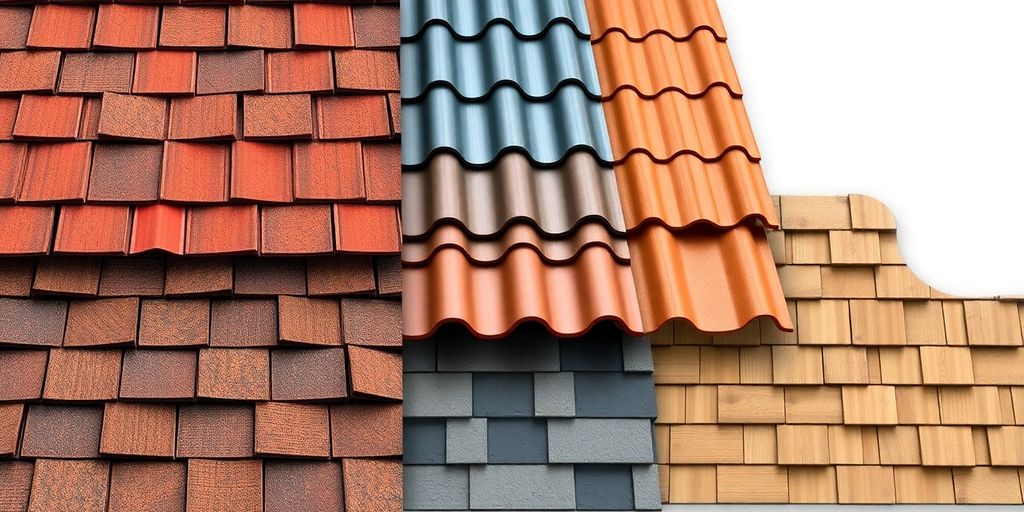
So, you’re thinking about a new roof, huh? It’s a big job, and picking the right roofing materials can feel like a lot. You want something that looks good, lasts a long time, and doesn’t break the bank. We’ve all seen those fancy houses with amazing roofs, but what actually goes into them? Let’s break down some of the most common roofing materials out there to help you figure out what’s best for your home.
Key Takeaways
- Asphalt shingles are a popular, budget-friendly choice known for easy installation and decent energy efficiency.
- Metal roofs offer great durability and can last for decades, making them a good option for harsh climates.
- Slate roofing provides a classic, high-end look and is incredibly long-lasting, though it’s heavy and costly.
- Cedar shake roofing adds natural beauty and charm but requires regular maintenance and can be expensive.
- Synthetic shingles mimic the look of natural materials like slate or cedar at a lower cost and with good durability.
1. Asphalt Shingles
When you’re thinking about a new roof, asphalt shingles are probably the first thing that pops into your head. They’re super common for a reason! They’re generally the most budget-friendly option out there, which is a big plus for a lot of homeowners. Plus, they’re pretty straightforward to install, so finding a roofer who can handle them is usually easy. You’ve got a few main types to consider:
3-Tab Asphalt Shingles
These are the classic, flat shingles you see everywhere. They get their name from the three tabs on each shingle strip. They used to be the go-to, but honestly, they’re kind of being phased out now. They don’t hold up as well in bad weather, like high winds, and they tend to have a shorter lifespan, usually around 20 years. If you’re looking for the absolute cheapest option, these might be it, but you might end up replacing them more often.
Architectural Asphalt Shingles
These are the most popular type these days, and for good reason. They’re also called dimensional shingles because they have a more textured, layered look that gives your roof some depth. This often makes them look a bit like wood shakes, which is a nice upgrade. They’re thicker and sturdier than 3-tab shingles, meaning they can handle wind and rain better and often come with warranties up to 50 years. They do cost a bit more upfront, but many people feel the added durability and curb appeal are totally worth it. It’s a good balance between cost and quality for most homes.
Luxury Asphalt Shingles
If you want your roof to really make a statement, these are the ones. Luxury shingles are designed to mimic the look of natural slate or wood shakes, but they’re still asphalt. They’re bigger, tougher, and definitely have the highest curb appeal, but they also come with a higher price tag. They’re built for durability and can last a long time, often 30 years or more, and they tend to handle storm damage pretty well. Just be aware that installation can take a bit longer because of their size and design.
Asphalt shingles are a popular choice because they offer a good mix of affordability, variety, and decent performance.
While asphalt shingles are a solid choice for many, it’s worth noting that they can be prone to cracking, especially if you live somewhere with really wild temperature swings. Keeping up with regular checks can help catch any issues early.
If you’re curious about the different types and what might work best for your home, checking out different roofing materials can give you a clearer picture.
2. Metal Roofs
When you think about roofing, metal might not be the first thing that pops into your head, but it really should be. These roofs are tough cookies, seriously built to last. We’re talking potential lifespans of 50 years or even more, which is pretty wild when you compare it to other materials. Plus, they’re really good at handling all sorts of weather, from heavy rain and snow to strong winds. They’re also fire-resistant, which is a big plus depending on where you live.
Types of Metal Roofs
There are a few main ways metal roofs are put together. The most common ones you’ll see are:
- Standing Seam: This is where metal panels have raised seams that connect them. They’re usually attached with hidden clips, giving a really clean, smooth look. It’s a popular choice because it’s super durable and low maintenance.
- Screw-Down: These roofs have panels that are directly screwed into the roof deck. They’re strong and can be a bit more budget-friendly upfront than standing seam, but the screws can sometimes loosen over time due to the metal expanding and contracting.
Pros of Metal Roofing
Metal roofs have a lot going for them. For starters, their durability is a huge selling point. They’re also pretty energy-efficient because they reflect a lot of the sun’s heat, which can help keep your cooling bills down in the summer. And let’s not forget about the environment – many metal roofs are made from recycled materials and are themselves recyclable. You also get a ton of choices when it comes to colors and styles, so you can really match it to your home’s look.
Cons of Metal Roofing
Okay, so nothing’s perfect. The biggest hurdle for most people is the initial cost; metal roofs tend to be more expensive upfront than, say, asphalt shingles. Some folks also find them a bit noisy when it rains or hails, though good insulation can help with that. Installation can also be tricky and usually requires professionals, which adds to the cost. And, depending on the type, they can sometimes get dented from big hail or falling branches.
Metal roofs are a solid investment if you’re looking for something that lasts and can handle tough conditions. While the upfront cost is higher, the long-term benefits like durability and energy savings often make up for it.
If you’re curious about the different metal options available, checking out various metal roofing styles can give you a better idea of what might work for your home.
3. Slate Roofing
What is Slate Roofing?
Slate roofing is made from natural stone, which is quarried and then cut into individual tiles. It’s a really beautiful material that can add a lot of character to a home. Slate roofs are known for their incredible durability and longevity, often lasting for a century or even longer. Because it’s a natural product, each slate tile has its own unique color and texture, giving your roof a distinctive look. It’s also naturally resistant to fire and water, which is a big plus.
Pros of Slate Roofing
- Longevity: Slate roofs can easily last 75 to 150 years, meaning you likely won’t ever need to replace your roof again in your lifetime.
- Aesthetics: The natural beauty and variety of colors and textures slate offers are hard to match.
- Durability: It’s resistant to fire, water, and extreme weather conditions, making it a solid choice for many climates.
- Low Maintenance: Once installed, slate requires very little upkeep.
Cons of Slate Roofing
- Cost: This is definitely a premium option, with installation costs often starting around $15-$30 per square foot. Getting multiple estimates is a good idea to find the best value for quality materials.
- Weight: Slate is extremely heavy. Your home’s structure might need reinforcement to support the weight, which adds to the overall expense.
- Fragility: While durable in the long run, individual slate tiles can be brittle and may break if not handled carefully during installation or if something heavy is dropped on them.
- Installation: It requires specialized installers, and the process is slower and more labor-intensive than with other materials.
When considering slate, it’s important to factor in the potential need for structural upgrades. This upfront investment, while significant, contributes to the overall integrity and longevity of your slate roof system.
Cost and Lifespan
| Feature | Average Cost (per sq ft) | Lifespan (years) |
|---|---|---|
| Slate Roofing | $15 – $30 | 75 – 150+ |
4. Cedar Shake Roofing
If you’re aiming for a rustic, natural look, cedar shakes might be your top pick. These aren’t your typical shingles; they’re split from logs, giving them a thicker, more substantial appearance and a really unique texture. They’re made from cedar trees, often sourced from the Pacific Northwest, and have been a go-to for centuries because they look so good and offer decent insulation. They really add a lot of character to a home.
Pros of Cedar Shakes
- Aesthetic Appeal: Seriously, they look fantastic. That natural wood grain and variation in color give any house a warm, inviting feel.
- Natural Insulation: Cedar is a good insulator, which can help keep your home a bit warmer in the winter and cooler in the summer, potentially saving you on energy bills.
- Eco-Friendly: Since they’re made from a renewable resource, they’re a more environmentally conscious choice compared to some synthetic options.
Cons of Cedar Shakes
- Maintenance: This is a big one. Cedar shakes need regular upkeep to prevent rot, cracking, and insect damage. You’ll likely need to treat them periodically.
- Fire Risk: Unless they’ve been treated with fire retardants, cedar shakes can be a fire hazard. This is something to seriously consider depending on your location.
- Cost and Lifespan: They tend to be on the pricier side, and while they can last a good while, their lifespan isn’t as long as some other materials, especially if not meticulously maintained. You might get around 30 years out of them, though this can vary a lot based on climate and upkeep. There’s also typically no material warranty because they’re natural products.
Cedar shakes are beautiful, but they definitely require a commitment to maintenance. If you love the look and are prepared for the upkeep, they can be a great choice. Otherwise, you might want to explore other options.
When you’re looking at cedar shakes, you’ll find they come in different grades, like common, selects, and 100% straight grain, with the latter being the highest quality. The cost can range quite a bit, often falling between $25.00 to $30.00 per square foot. It’s a significant investment, but the visual payoff is pretty high. If you’re interested in the longevity and care of wood roofs, checking out resources on cedar shake installation can be helpful.
5. Synthetic Shingle Roofing
Synthetic shingles, sometimes called composite shingles, are a newer player in the roofing game, but they’re quickly winning over homeowners. These aren’t your grandma’s asphalt shingles; they’re made from advanced polymers or recycled materials, and they’re designed to look just like natural slate or cedar shakes. Pretty neat, right?
Pros of Synthetic Shingles
- Eco-Friendly: Many synthetic shingles are made from recycled plastics and rubber, which is a big win for the environment. Plus, they can often be recycled again when they’ve reached the end of their life. No trees harmed here!
- Durability: These shingles are tough. They can handle impacts, resist cracking, and don’t really fade like some other materials. You get that high-end look without the fragility of natural materials.
- Lightweight: Compared to real slate or even some wood shakes, synthetic options are significantly lighter. This can make installation easier and potentially save on structural support costs. For a 2,000-square-foot roof, you might be looking at an installation cost between $8,000 and $16,000 [dae8].
- Low Maintenance: Forget about treating or painting your roof every few years. Synthetic shingles generally require very little upkeep to keep them looking good.
- Variety: You can find them in a wide array of colors and styles, mimicking everything from rustic wood to elegant slate.
Cons of Synthetic Shingles
- Newer Technology: Because they’re relatively new, there’s less long-term data on how they perform over decades compared to traditional materials. It’s a bit of a gamble on how they’ll hold up in the really long run.
- Cost: While often cheaper than the natural materials they imitate, they can still be pricier upfront than standard asphalt shingles.
- Appearance: Even though they look good, some people can tell they aren’t the real deal. If you’re going for that absolutely authentic, natural look, this might not be it.
Synthetic shingles offer a compelling middle ground for homeowners who want the aesthetic appeal of premium materials without the associated costs and maintenance headaches. They’re a smart choice if you’re looking for a balance of style, durability, and environmental consideration.
So, What’s the Verdict?
Alright, so we’ve gone over a bunch of different roofing materials, from the super common asphalt shingles to the fancy slate and cedar shakes. It can feel like a lot to take in, right? But remember, the best choice really depends on what you need for your specific home. Think about your budget, how long you want the roof to last, and what kind of look you’re going for. Don’t forget to chat with a good roofer too – they can offer some solid advice based on your situation and local weather. Picking the right roof is a big deal, but with this info, you’re way more prepared to make a choice you’ll be happy with for years to come.
Frequently Asked Questions
What are the main types of asphalt shingles and what makes them different?
Asphalt shingles are a popular choice because they’re not too pricey, easy to put on, and help keep your home cool. They come in different types, like organic and fiberglass. Organic ones are flexible and good for cold weather, while fiberglass ones are lighter and handle heat better.
How long do metal roofs typically last and why are they a good choice for snowy areas?
Metal roofs are known for lasting a long time, often 50 years or more. They’re great for areas with lots of snow because they shed it easily. While they can cost more upfront, their durability often makes them a good long-term investment.
What are the pros and cons of slate roofing materials?
Slate roofs are made from natural stone and are incredibly durable, often lasting 75 to 100 years. They look very fancy and don’t need much upkeep. However, they are very heavy, so your house needs to be strong enough to hold them, and they can be fragile if hit hard.
What is cedar shake roofing and what kind of care does it need?
Cedar shake roofs are made from natural cedar wood and offer a beautiful, rustic look. They can last about 30 years, but they need regular care to stop them from rotting or cracking. They also tend to lose their color over time and can be quite expensive.
What are synthetic shingles and why are they gaining popularity?
Synthetic shingles are made from plastic or recycled stuff and are designed to look like slate or cedar. They’re becoming popular because they’re eco-friendly, strong, and can last 40-50 years. They’re also usually cheaper than the natural materials they copy.
What key factors should I consider when choosing a roofing material for my home?
When picking a roof, think about how long you want it to last, how much you can spend, and what the weather is like where you live. Also, consider how you want your house to look. Talking to a professional roofer can help you choose the best material for your specific needs and budget.