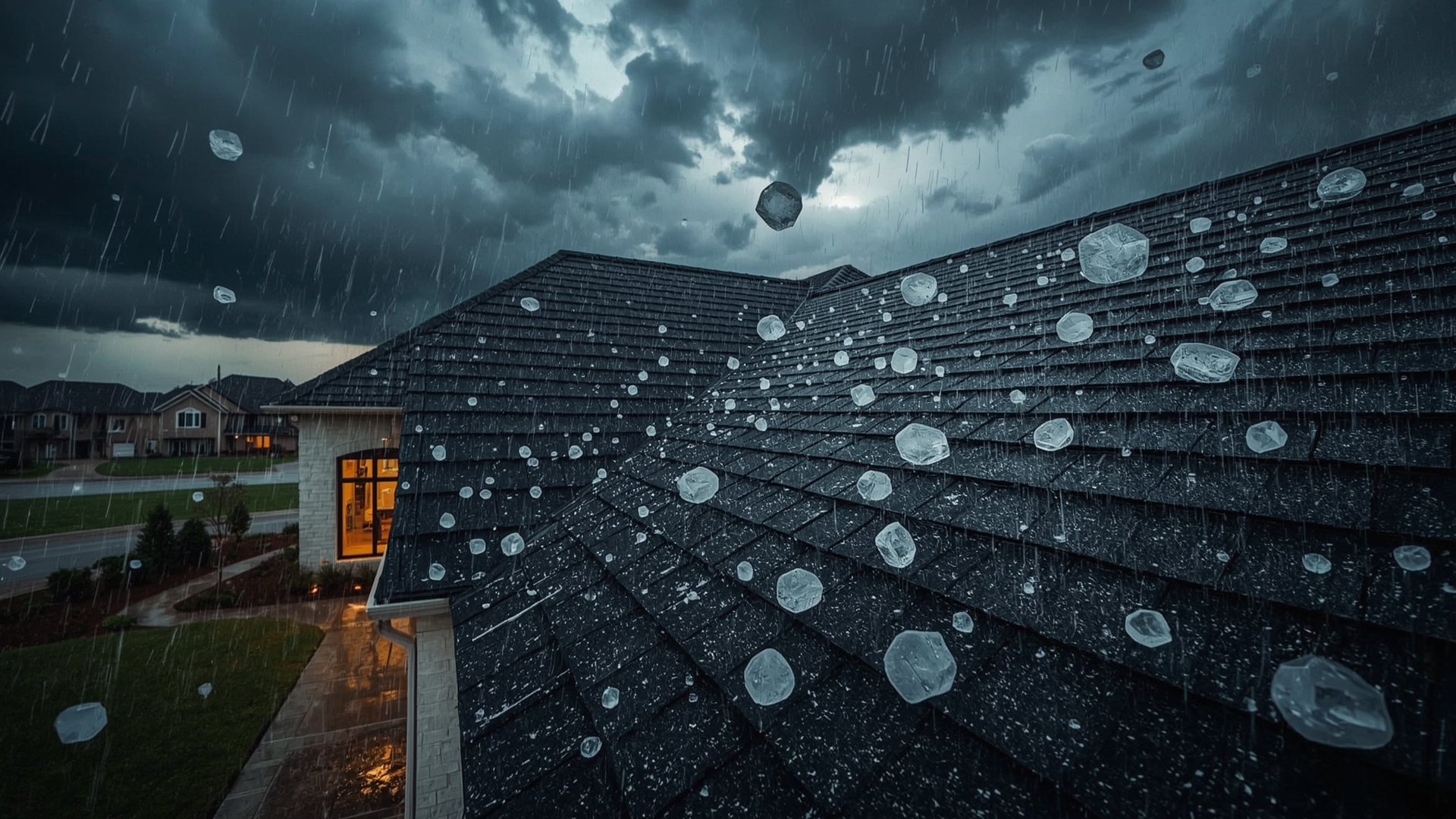
A single hailstorm can turn a perfectly good roof into a costly insurance claim. Class 4 impact resistant shingles are engineered to absorb that punishment. They’re the highest-rated shingles available under the UL 2218 testing standard, and in many states, installing them can earn you a meaningful discount on your homeowner’s insurance premium.
This guide covers everything you need to make a smart decision: what the Class 4 rating actually means, how it compares to Class 3, which products from GAF and Owens Corning lead the category, and how to find out if your state offers insurance savings.
Key Takeaways
- Class 4 is the highest impact resistance rating under the UL 2218 standard, tested with a 2-inch steel ball dropped from 20 feet.
- Insurance discounts range from 10% to 30% depending on your state and insurer, with the biggest savings in hail-prone regions.
- Class 4 shingles cost 10% to 25% more than standard architectural shingles, but the insurance savings often offset the difference within a few years.
- Top-rated products include the GAF Timberline ArmorShield II and the Owens Corning Duration FLEX.
- Class 3 shingles are tested with a 1.75-inch ball and offer moderate protection, but most insurers reserve their best discounts for Class 4.
- Not every state or insurer offers discounts — you need to confirm eligibility directly with your insurance provider before purchasing.
What Are Class 4 Impact Resistant Shingles?
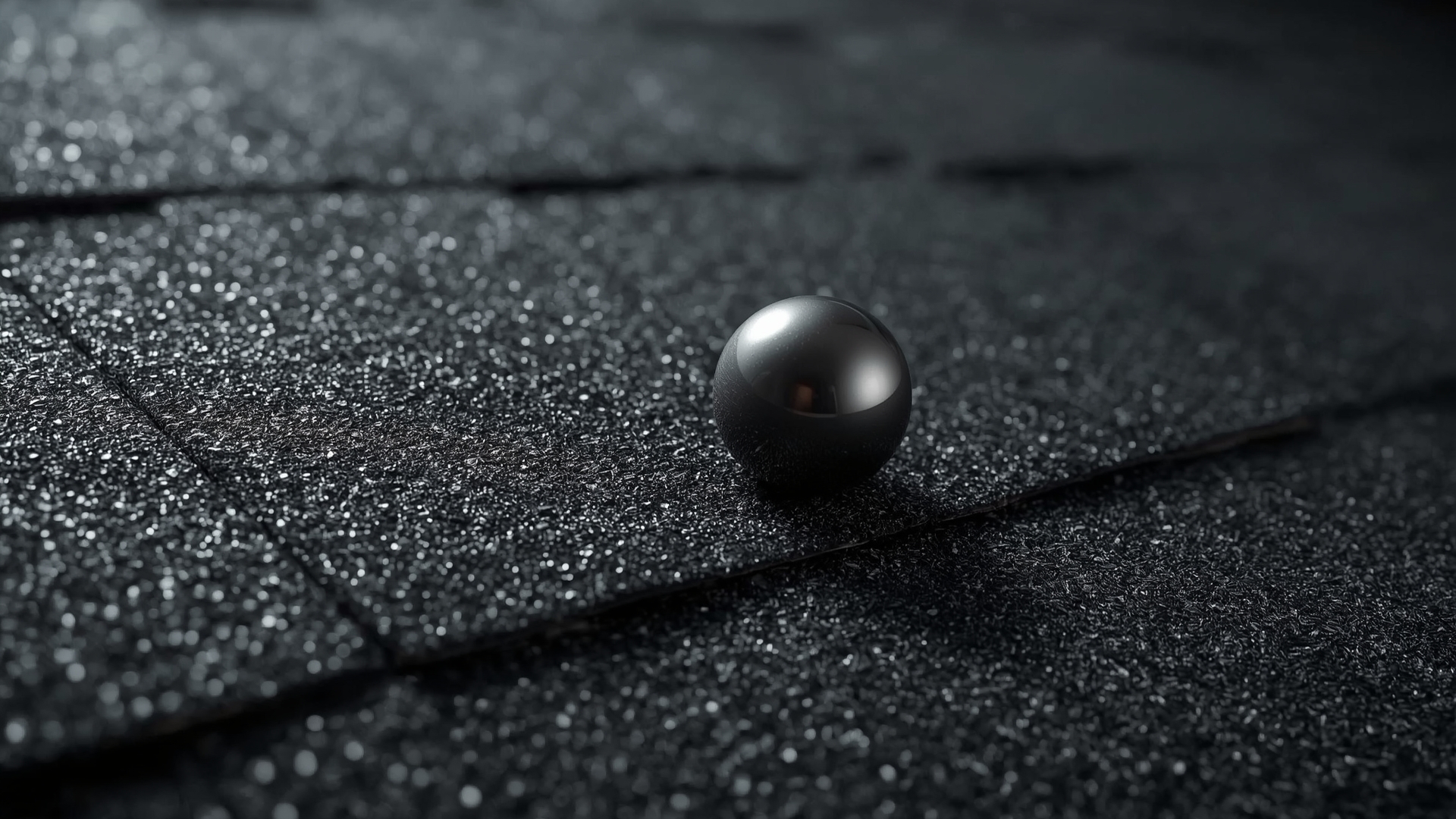
Quick Answer: Class 4 impact resistant shingles are asphalt shingles that pass the UL 2218 test without cracking when struck by a 2-inch steel ball dropped from 20 feet. Class 4 is the top rating in a four-level system, offering the best hail protection available in asphalt shingles.
The UL 2218 standard is the benchmark that defines impact resistance for roofing shingles. It was developed by Underwriters Laboratories, an independent safety testing organization. The test simulates hailstones hitting a roof by dropping steel balls of specific sizes from set heights.
There are four rating levels: Class 1 through Class 4. Each class uses a different ball size. To achieve a Class 4 rating, a shingle must survive two hits in the same spot from a 2-inch steel ball without cracking, splitting, or fracturing.
That 2-inch ball mimics a large hailstone. Hailstones of that size carry enough force to crack standard shingles, split the mat inside the shingle, and allow water to penetrate. Class 4 shingles resist that damage through a more flexible asphalt compound, a reinforced fiberglass mat, or a rubberized polymer layer added during manufacturing.
How the UL 2218 Rating System Works
The four-class system gives homeowners and insurers a clear way to compare shingle performance. Each class requires the shingle to pass two impacts in the same location without visible cracking.
| UL 2218 Class | Steel Ball Diameter | Drop Height | Hailstone Equivalent | Typical Insurance Benefit |
|---|---|---|---|---|
| Class 1 | 1.25 inches | 12 feet | Small hail (penny-size) | None to minimal |
| Class 2 | 1.5 inches | 15 feet | Moderate hail (quarter-size) | None to minimal |
| Class 3 | 1.75 inches | 17 feet | Large hail (half-dollar-size) | 5%–15% in some states |
| Class 4 | 2.0 inches | 20 feet | Very large hail (golf ball-size) | 10%–30% in hail-prone states |
How Do Class 3 and Class 4 Shingles Compare?
Quick Answer: Class 3 shingles withstand a 1.75-inch steel ball from 17 feet. Class 4 shingles handle a 2-inch ball from 20 feet. That difference translates to real-world hail resistance against golf-ball-sized hail, and most insurers reserve their largest discounts for Class 4 only.
The gap between Class 3 and Class 4 feels small on paper — a quarter inch of ball size. In practice, it’s a meaningful difference in impact energy. The force delivered by a 2-inch ball falling 20 feet is significantly greater than the Class 3 test. Shingle manufacturers have to redesign their products at a fundamental level to pass, not just tweak the formula slightly.
From an insurance standpoint, the difference matters even more. Many insurers in hail-prone states offer a discount for Class 3 products, but their largest discount tier is reserved exclusively for Class 4. Some insurers don’t offer any discount for Class 3 at all. If insurance savings are part of your decision, Class 4 is almost always the more financially sound choice.
Class 3 vs Class 4: Side-by-Side Comparison
| Attribute | Class 3 Shingles | Class 4 Shingles |
|---|---|---|
| UL 2218 Test Ball Size | 1.75 inches | 2.0 inches |
| Drop Height | 17 feet | 20 feet |
| Hailstone Equivalent | Half-dollar size (~1.75 in.) | Golf ball size (~1.75–2.0 in.) |
| Typical Cost Premium | 5%–12% over standard | 10%–25% over standard |
| Average Insurance Discount | 5%–15% (select states) | 10%–30% (hail-prone states) |
| Availability | Limited product lines | Wide selection from major brands |
| Warranty Length (typical) | 30 years to lifetime | 30 years to lifetime |
What Insurance Discounts Can You Get for Class 4 Shingles?
Quick Answer: Homeowners with Class 4 shingles can receive insurance premium discounts between 10% and 30%, depending on their state and insurer. States in Tornado Alley — including Texas, Colorado, Oklahoma, and Kansas — tend to offer the highest discounts due to frequent hail activity.
Insurance discounts for impact resistant roofing are driven by actuarial data. Insurers know that homes with Class 4 roofs generate fewer hail-related claims. Fewer claims mean lower payouts, and insurers pass a portion of those savings back to policyholders as a premium reduction.
The discount isn’t automatic. You have to request it, provide proof of installation (usually a contractor invoice and product data sheet confirming the Class 4 rating), and your insurer must offer the program in your state.
Which States Offer the Best Insurance Discounts?
Discounts are most common in states that experience frequent, severe hailstorms. The central United States, often called Hail Alley, sees the highest concentration of large hail events each year.
| State | Typical Discount Range | Notes |
|---|---|---|
| Texas | 15%–28% | Mandated credit option in some markets |
| Colorado | 20%–30% | Among the highest discounts nationally |
| Kansas | 15%–25% | Widely available across major insurers |
| Oklahoma | 15%–25% | Strong uptake due to storm frequency |
| Nebraska | 10%–20% | Growing availability |
| Missouri | 10%–18% | Available through most major carriers |
| Minnesota | 10%–15% | Seasonal storm exposure drives adoption |
| Southeast and Northeast states | 0%–10% | Less common; fewer hail events annually |
Always contact your insurance provider directly before purchasing Class 4 shingles. Discount programs vary by insurer, policy type, and home location. Some carriers require a third-party inspection after installation before applying the discount.
What Are the Best Class 4 Shingles from GAF?
Quick Answer: GAF’s top Class 4 rated product is the Timberline ArmorShield II. It uses a rubberized asphalt compound to flex on impact rather than crack, carries a lifetime limited warranty, and qualifies for Class 4 insurance discounts. It’s available in 12 color options.
GAF is the largest roofing manufacturer in North America. Their Class 4 lineup centers on the Timberline ArmorShield II, which builds on the popular Timberline HDZ platform but adds a SBS (styrene-butadiene-styrene) modified asphalt layer. SBS is a synthetic rubber compound. It allows the shingle to bend slightly on impact, which prevents the cracking that standard asphalt shingles experience under hail strikes.
GAF Timberline ArmorShield II: Product Specifications
| Attribute | Value |
|---|---|
| Impact Rating | Class 4 (UL 2218) |
| Fire Rating | Class A (UL 790) |
| Wind Rating | 130 mph (with proper nailing) |
| Warranty | Lifetime limited (transferable) |
| Algae Resistance | Yes (StainGuard Plus technology) |
| Shingle Weight | Approximately 235–250 lbs per square |
| Available Colors | 12 color options |
| Cost Per Square (installed) | $420–$580 |
The ArmorShield II qualifies for GAF’s Certified Contractor warranty programs, which can extend coverage and add non-prorated workmanship protection. This matters because shingle defects and installation errors are treated as separate warranty issues by most manufacturers.
What Are the Best Class 4 Shingles from Owens Corning?
Quick Answer: Owens Corning’s leading Class 4 product is the Duration FLEX shingle. It uses StretchGuard technology, a flexible polymer compound built into the shingle’s adhesive layer, to absorb impact. It carries a lifetime limited warranty and a 130 mph wind rating.
Owens Corning is one of the two dominant shingle manufacturers in the U.S. alongside GAF. Their Class 4 offering, the Duration FLEX, takes a different engineering approach than GAF’s ArmorShield II. Rather than using SBS rubber throughout the asphalt, Owens Corning integrates a flexible polymer layer into the shingle’s self-sealing adhesive strip. This StretchGuard technology improves both impact resistance and wind uplift performance.
Owens Corning Duration FLEX: Product Specifications
| Attribute | Value |
|---|---|
| Impact Rating | Class 4 (UL 2218) |
| Fire Rating | Class A (UL 790) |
| Wind Rating | 130 mph (with SureNail nailing) |
| Warranty | Lifetime limited (transferable) |
| Algae Resistance | Yes (StreakGuard protection) |
| Key Technology | StretchGuard flexible polymer layer |
| Available Colors | Over 20 color options |
| Cost Per Square (installed) | $410–$570 |
One practical advantage of the Duration FLEX is the SureNail Technology nailing strip, a woven reinforcing fabric embedded in the nail hem. This makes the shingle easier to install correctly and reduces the risk of improper nailing patterns that can void wind warranties.
GAF ArmorShield II vs Owens Corning Duration FLEX
Both products are Class 4 rated, carry lifetime limited warranties, and offer 130 mph wind resistance. The differences come down to technology approach, contractor familiarity, and regional pricing.
- Impact mechanism: ArmorShield II uses SBS rubber throughout the shingle body. Duration FLEX uses a flexible polymer strip in the adhesive layer.
- Color selection: Duration FLEX offers more color options (20+) than ArmorShield II (12).
- Installation: Duration FLEX’s SureNail strip simplifies nailing. ArmorShield II follows standard Timberline installation patterns.
- Pricing: Both fall in the $410–$580 installed per square range. Regional labor costs have more impact on the final price than product differences.
- Contractor network: GAF’s Master Elite and Owens Corning’s Platinum Preferred programs both offer extended warranty options. Your contractor’s certification determines which path is available.
How Much Do Class 4 Shingles Cost Compared to Standard Shingles?
Quick Answer: Class 4 shingles typically cost 10% to 25% more than standard architectural shingles. On a 2,000 square foot roof, that’s roughly $500 to $1,500 more in material costs. Insurance premium savings in hail-prone states can recover that difference in 2 to 5 years.
The cost premium for Class 4 shingles comes from more expensive raw materials. SBS rubber modifiers and flexible polymer compounds cost more than standard asphalt. Manufacturing processes are also more complex. These costs get passed to consumers, but the premium is usually reasonable when you factor in the long-term financial picture.
Here’s a simplified cost comparison for a 2,000 square foot roof (20 squares):
- Standard architectural shingles: $350–$450 per square installed = $7,000–$9,000 total
- Class 3 impact resistant shingles: $380–$490 per square installed = $7,600–$9,800 total
- Class 4 impact resistant shingles: $410–$580 per square installed = $8,200–$11,600 total
The cost gap looks significant upfront. But consider a homeowner in Colorado paying $2,400 per year in homeowners insurance. A 20% discount for Class 4 shingles saves $480 annually. The extra $1,500 spent on Class 4 materials pays for itself in about three years — and then continues saving money every year after that.
Do Class 4 Shingles Also Protect Against Wind and Fire?
Quick Answer: Yes. Most Class 4 shingles also carry a Class A fire rating (the highest level) under UL 790 and a 110–130 mph wind resistance rating. The flexible compounds that improve hail resistance also help shingles grip better under high wind uplift forces.
Hail resistance gets most of the attention with Class 4 shingles, but the same engineering that improves impact performance tends to improve other performance metrics as well. SBS rubber modifiers, for example, increase a shingle’s flexibility across a range of temperatures. This helps the shingle maintain adhesion in cold climates and resist cracking from thermal expansion in hot climates.
The Class A fire rating is the highest level under UL 790. It means the shingle resists flame spread, does not contribute significantly to fire, and doesn’t allow flames to penetrate to the roof deck. Most asphalt shingles today carry a Class A rating regardless of their impact class, but it’s worth confirming with any product you’re considering.
How Do You Know If a Shingle Is Truly Class 4 Rated?
Quick Answer: A genuine Class 4 rated shingle will have a UL 2218 Class 4 listing on its product data sheet, available from the manufacturer’s website. You can also verify the rating on the UL Product iQ database. Never rely solely on a contractor’s verbal claim.
The UL 2218 Class 4 label on packaging isn’t always enough. Some products carry the label but the specific color or size variant you’re purchasing may have been tested differently. Always download the product data sheet (PDS) for the exact product SKU you’re buying and confirm the Class 4 rating applies to that specific version.
When submitting a discount request to your insurance company, they may ask for documentation. The most commonly accepted documents are:
- A copy of the manufacturer’s product data sheet showing the UL 2218 Class 4 rating
- The contractor’s installation invoice listing the exact product name and model
- The UL product listing number (found on the UL Product iQ database)
- Proof of installation from a licensed contractor
Is Installing Class 4 Shingles Worth It If You Don’t Live in a Hail Zone?
Quick Answer: In low-hail areas like the Pacific Coast or Southeast, insurance discounts are rare, making the cost premium harder to justify purely on savings. However, Class 4 shingles still offer better longevity, improved wind resistance, and a reduced chance of damage from falling debris or severe storms.
Homeowners in the Pacific Northwest, Florida, or New England face different risks than those in Hail Alley. Hail events are less frequent, and insurance discounts are rarely available. In those regions, the decision shifts from “will I save money on insurance?” to “will this roof last longer and require fewer repairs?”
The flexible asphalt compounds in Class 4 shingles resist cracking caused by freeze-thaw cycles, which is a real problem in Northern climates. In coastal areas, the improved wind resistance helps during tropical storm events even when hail isn’t a factor. If you’re replacing an old roof and plan to stay in your home for 15 or more years, the durability benefits alone may justify the modest cost increase.
What Should You Ask a Roofing Contractor Before Choosing Class 4 Shingles?
Quick Answer: Ask the contractor to confirm the UL 2218 Class 4 rating on the product data sheet, verify they are certified to install the brand you choose, explain the warranty requirements, and provide the documentation you’ll need to request your insurance discount after installation.
Not every roofing contractor is equally familiar with Class 4 products. The installation requirements for some products, like the Owens Corning SureNail nailing pattern, differ from standard architectural shingles. Installing them incorrectly can void the wind warranty even if the impact resistance remains intact.
Before signing a contract, ask these specific questions:
- “Can you show me the product data sheet with the UL 2218 Class 4 rating?” This protects you from substitution during the project.
- “Are you a certified installer for this brand?” GAF Master Elite and Owens Corning Platinum Preferred certifications unlock extended warranty options.
- “What documentation will you provide for my insurance discount request?” You need the invoice and product data sheet before your contractor leaves the job.
- “Does the Class 4 rating apply to the specific color I’m choosing?” Some color variants have different underlayment or thickness specifications.
Frequently Asked Questions About Class 4 Impact Resistant Shingles
What does the “Class 4” label on a shingle package mean?
It means the shingle passed the UL 2218 test at the highest level. During that test, a 2-inch steel ball was dropped from 20 feet onto the same spot twice, and the shingle showed no cracking or fracture. Class 4 is the top rating in a four-level system.
Will Class 4 shingles completely prevent hail damage?
No shingle is hail-proof. Class 4 shingles resist cracking and granule loss better than standard shingles, but very large hailstones (over 2.5 inches in diameter) or extreme hail events can still cause damage. The goal is to reduce the severity and frequency of damage, not eliminate it entirely.
How do I find out if my insurance company offers a discount?
Call your insurance agent and ask specifically about discounts for UL 2218 Class 4 rated roofing. Have your policy number ready. Some insurers apply the discount automatically when you file a roof update, but most require you to submit documentation and request the review.
Can I install Class 4 shingles over my existing roof?
In many cases, yes — local building codes allow a second layer of shingles over an existing layer. However, adding a heavier Class 4 shingle over an existing layer can increase roof load. Most roofing professionals recommend a full tear-off for the best result and to maintain full warranty coverage.
Are there Class 4 rated shingles that aren’t made of asphalt?
Yes. Metal roofing panels, synthetic polymer shingles, and some composite shingles can also achieve UL 2218 Class 4 ratings. Stone-coated steel products are a popular alternative in hail-prone markets. However, asphalt-based Class 4 shingles are the most widely available and most budget-friendly option for residential roofing.
How long do Class 4 shingles last compared to standard shingles?
Class 4 shingles typically carry the same 30-year to lifetime limited warranties as premium architectural shingles. The enhanced materials don’t dramatically extend lifespan under normal conditions, but they do reduce the risk of storm-related damage that shortens a standard shingle’s functional life. In hail-prone regions, a Class 4 roof may realistically last several years longer before needing replacement.