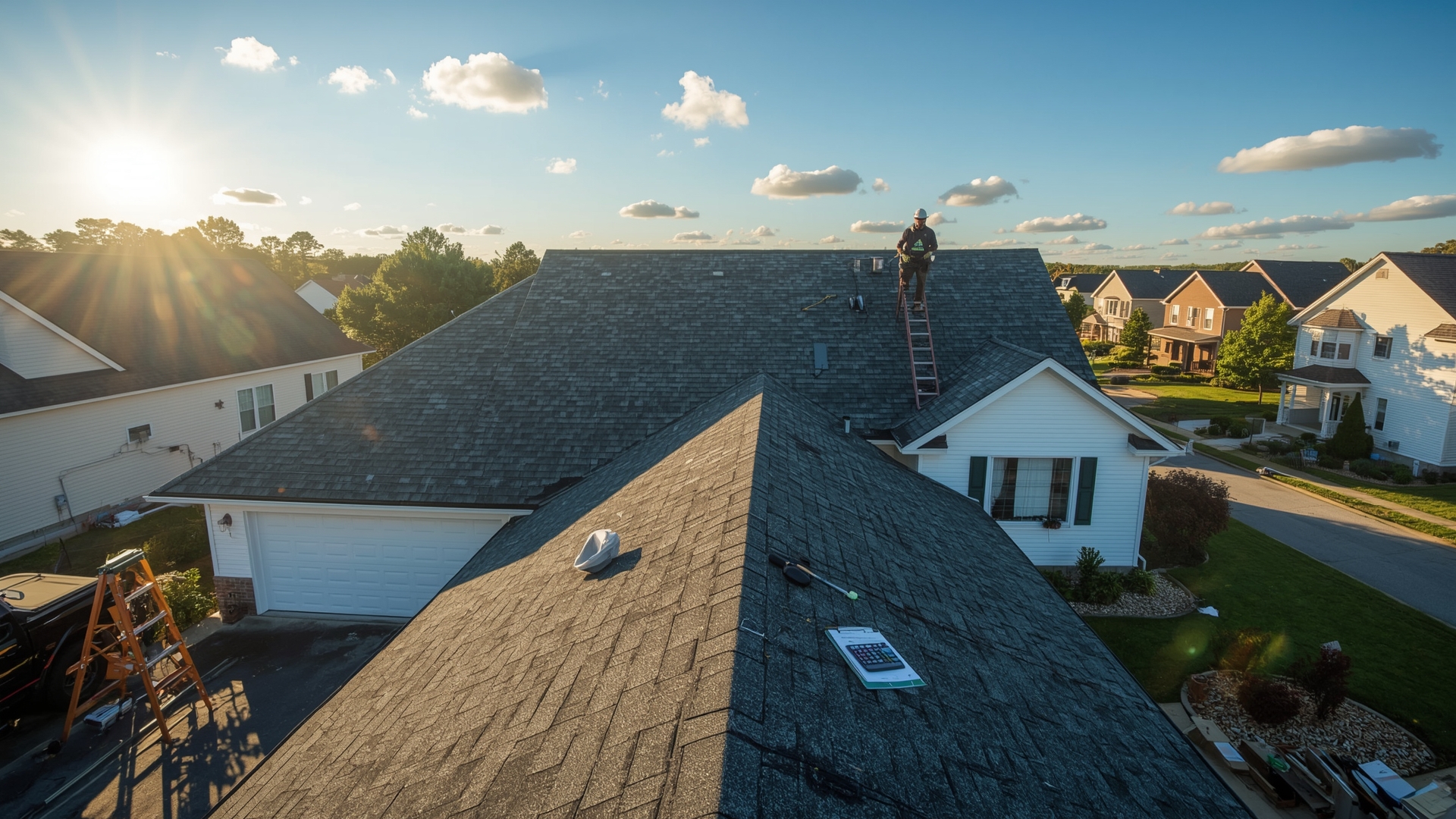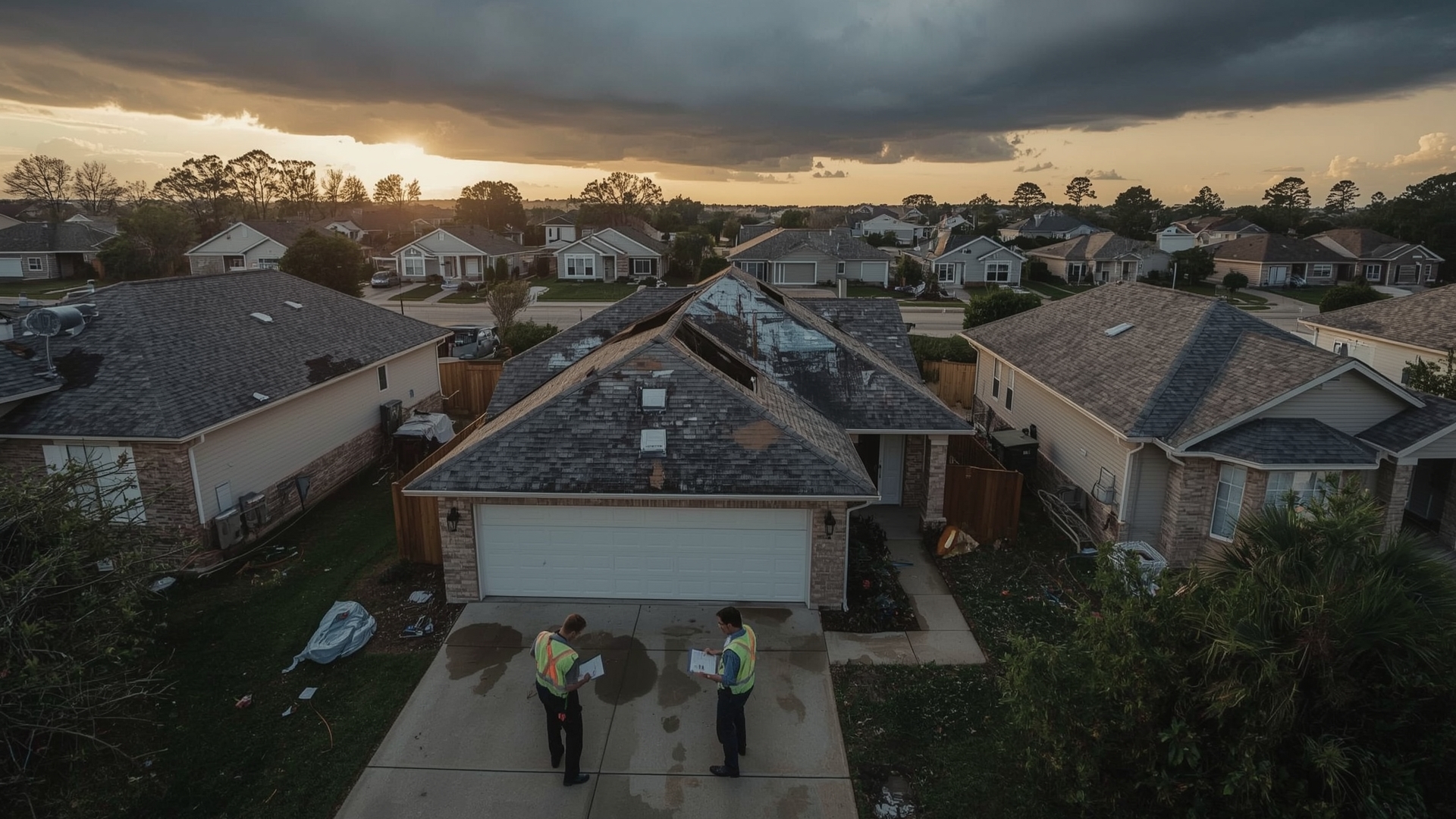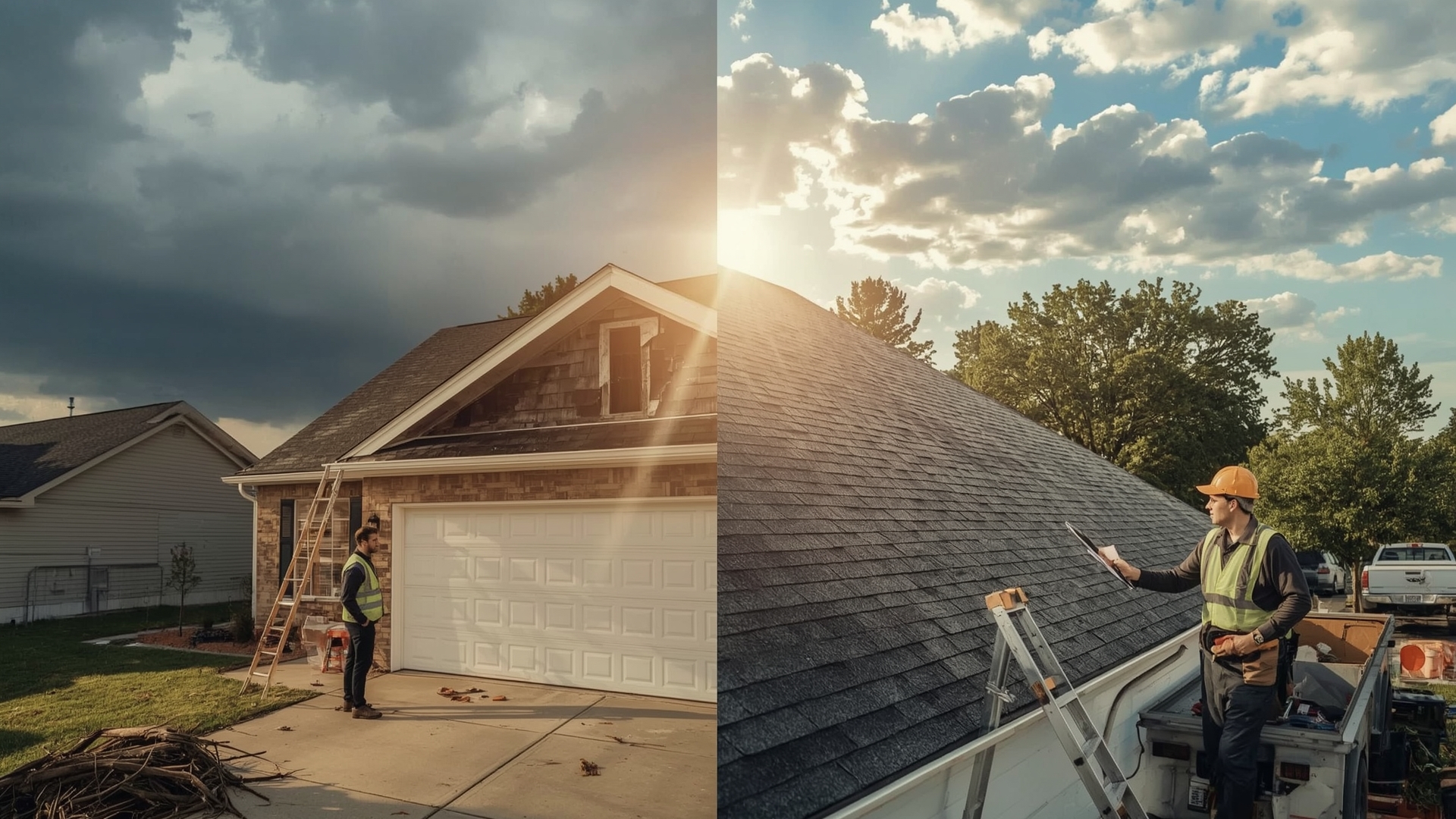
Your roof is one of the hardest-working parts of your home. It handles rain, wind, heat, and cold every single day. But unlike a leaky faucet or a broken window, roof damage often goes unnoticed until it becomes a serious problem. Knowing the warning signs early can save you thousands of dollars and protect everything inside your home.
Not every roof issue needs a full replacement. But some do. This guide walks you through the most important signs that your roof has reached the end of its life, how to spot them yourself, and what steps to take next.
Key Takeaways
- Age is the most reliable indicator: Most asphalt shingle roofs last 20 to 30 years. If yours is older, it’s time to get a professional assessment.
- Missing or curling shingles signal structural failure: These aren’t just cosmetic issues. They expose the underlayment and decking to water damage.
- Granule loss accelerates deterioration: Granules protect shingles from UV rays. Heavy loss means your shingles are breaking down.
- Sagging is a structural emergency: A sagging roofline points to decking or framing failure and requires immediate professional attention.
- Interior water stains confirm active leaks: Stains on ceilings or walls mean water is already getting through your roof system.
- Repair vs. replacement depends on damage scope: One damaged area often gets repaired. Widespread damage, old age, or recurring leaks usually call for a full replacement.
How Old Is Too Old for a Roof?
Quick Answer: Most asphalt shingle roofs last 20 to 30 years. If your roof is over 20 years old and showing any other warning signs, replacement is usually more cost-effective than repeated repairs. Metal and tile roofs last 40 to 70 years.
Age is the single most useful data point when evaluating a roof. Even a roof that looks fine on the surface may be structurally compromised if it’s old enough.
The problem is that many homeowners don’t know how old their roof is. If you bought your home without that information, check your home inspection report. You can also ask a licensed roofing contractor to estimate the age based on shingle wear patterns and other visible clues.
Roof Lifespan by Material
| Roofing Material | Average Lifespan | Replacement Indicator Age | Key Failure Signs |
|---|---|---|---|
| 3-Tab Asphalt Shingles | 15–20 years | 15+ years | Curling, granule loss, cracking |
| Architectural Asphalt Shingles | 25–30 years | 20+ years | Granule loss, lifting edges, blistering |
| Metal Roofing (Steel/Aluminum) | 40–70 years | 35+ years | Rust, loose fasteners, seam failure |
| Clay or Concrete Tile | 50–100 years | 50+ years | Cracked tiles, failed underlayment |
| Wood Shake | 20–30 years | 20+ years | Splitting, moss growth, rot |
| Flat/TPO or EPDM | 15–25 years | 15+ years | Ponding water, membrane shrinkage, seam gaps |
If your roof is within five years of its expected lifespan and you’re already seeing damage, don’t sink money into repairs. A full replacement will cost less over time.
What Does Shingle Damage Actually Look Like?
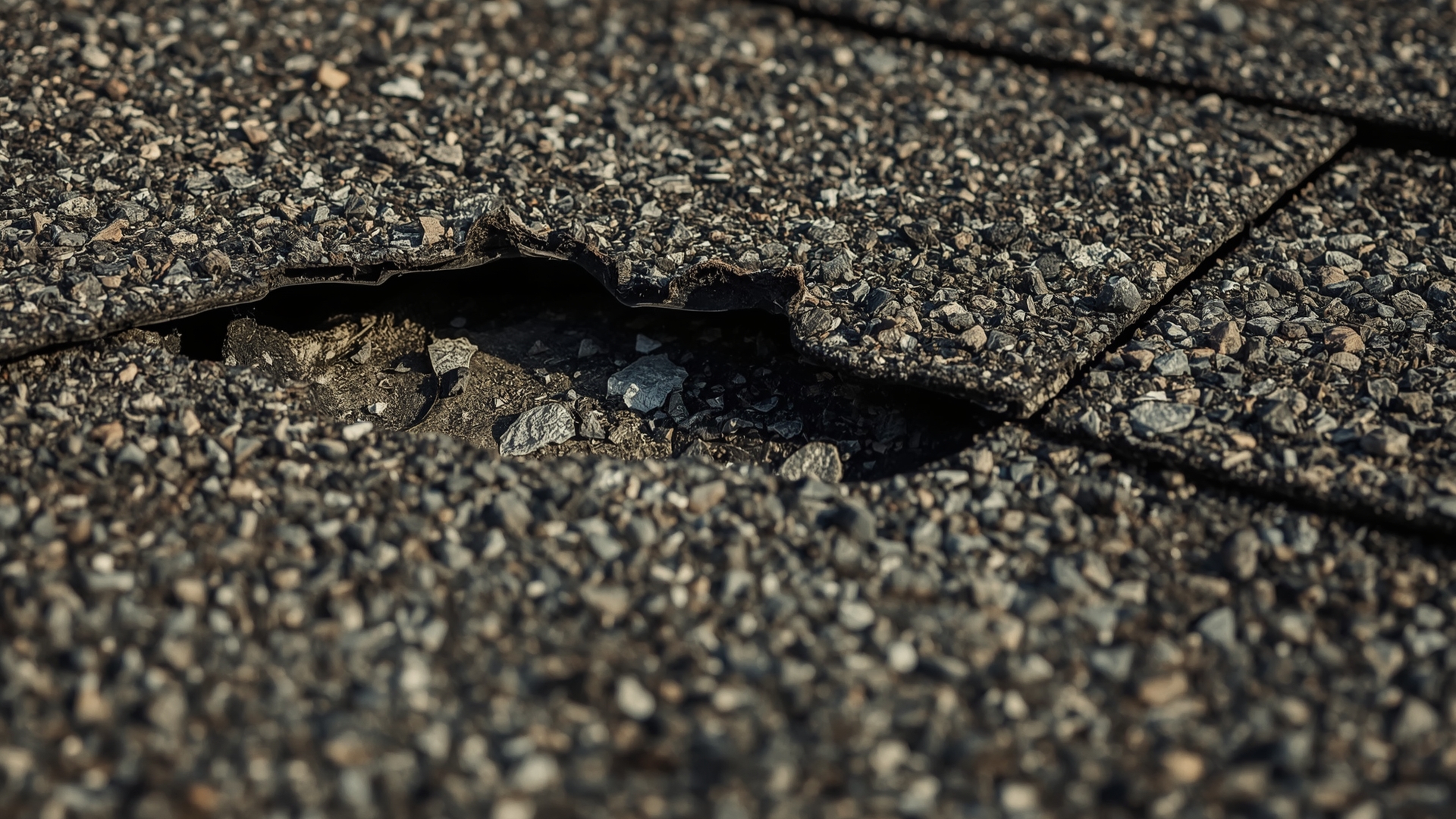
Quick Answer: Shingle damage shows up as curling edges, cracked surfaces, missing pieces, or blistered spots. Any of these conditions let moisture reach the wood decking underneath, which leads to rot and leaks. Even a few damaged shingles across a large area signal a declining roof system.
Shingles are your roof’s first line of defense. When they fail, water and weather get direct access to everything beneath them.
Types of Shingle Damage to Watch For
- Curling (cupping or clawing): Curling edges point upward or the center of the shingle pulls down. This happens when shingles age, lose moisture balance, or were improperly installed. Curling shingles are easily lifted by wind and are close to the end of their useful life.
- Cracking: Shingles crack from thermal expansion and contraction over many years. Cracked shingles can no longer shed water effectively.
- Missing shingles: Wind, ice, or age can pull shingles off entirely. Even a small exposed area creates a direct entry point for water.
- Blistering: Raised bubbles on the shingle surface are caused by moisture or volatile compounds escaping from within the shingle. Blistering often signals poor ventilation.
- Granule loss: Asphalt shingles are coated with mineral granules that protect against UV rays. When granules shed heavily, shingles deteriorate quickly.
What Granule Loss Tells You
Check your gutters. If you find a significant buildup of dark, sand-like granules after a rain, your shingles are wearing out. Some granule loss is normal in the first year after installation. Heavy, ongoing loss on an older roof is a major warning sign.
You can also look for bald spots on individual shingles from the ground using binoculars. Uneven granule coverage leaves patches that look lighter or darker than the surrounding area.
Why Is My Roof Sagging and How Dangerous Is It?
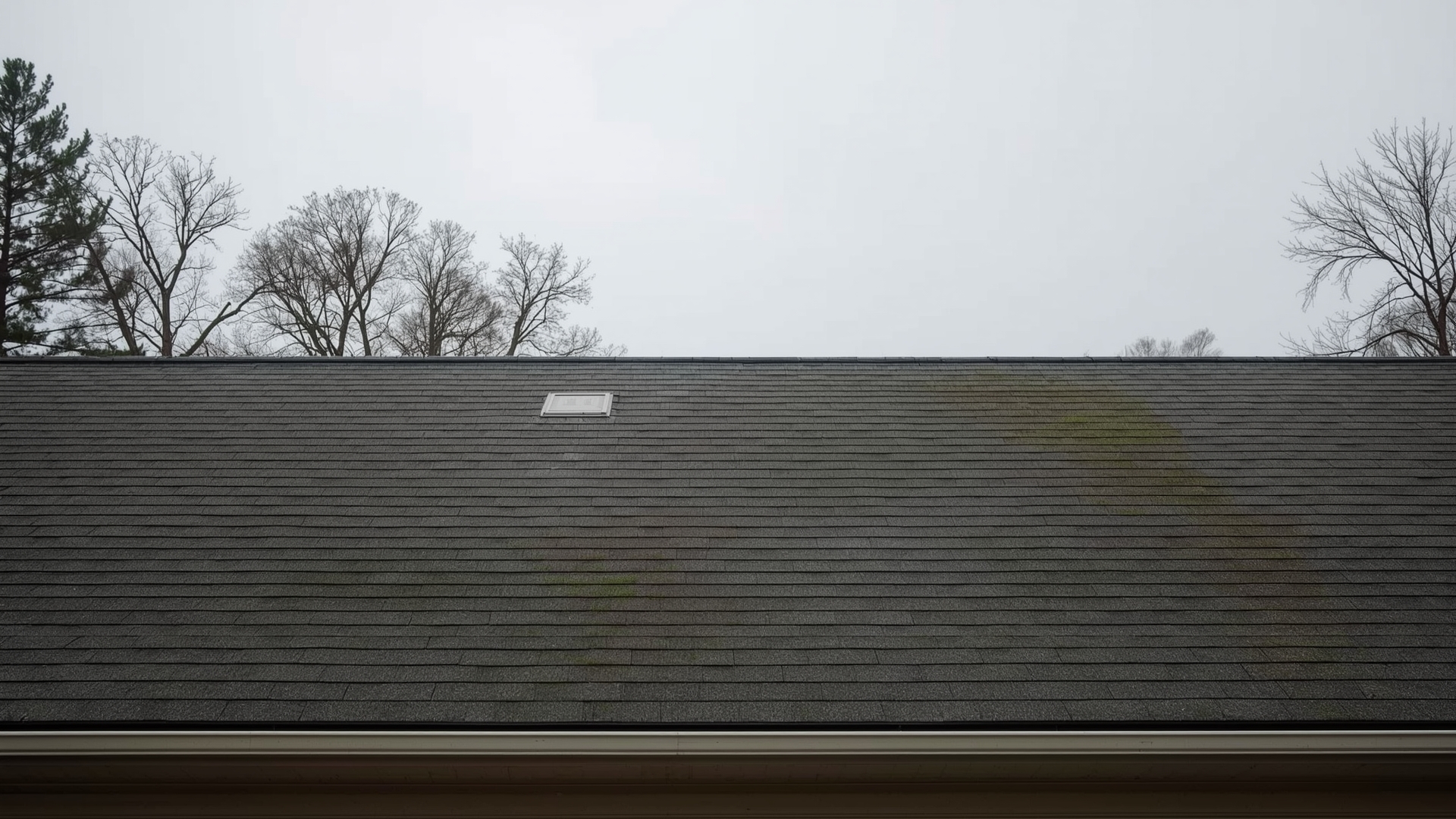
Quick Answer: A sagging roof means the decking, rafters, or structural supports underneath have been weakened, usually by long-term moisture damage. This is a structural failure, not a cosmetic issue. A sagging roof can collapse under heavy snow or rain load and needs immediate professional evaluation.
A sagging roofline is the most urgent sign on this list. Don’t wait to address it.
You can often spot a sag from the street. Stand back and look at your roofline straight on. It should be flat and straight from end to end. Any visible dip, wave, or bow in the roofline is cause for concern.
Common Causes of Roof Sagging
- Rotted roof decking: The plywood or OSB (oriented strand board) sheets that form the base of your roof absorb water over time if shingles or flashing fail. Once wet wood rots, it loses its load-bearing capacity.
- Damaged rafters or trusses: The wooden frame supporting your roof can crack, split, or rot. This is common in older homes and in areas with heavy snow loads.
- Too many shingle layers: Some homes have been re-roofed two or three times without removing old shingles first. The added weight stresses the structure over time.
- Long-term water infiltration: A slow, hidden leak that went undetected for years can silently rot structural components from the inside.
If you see sagging, don’t climb onto the roof yourself. Contact a licensed roofing contractor immediately for a structural assessment.
What Do Water Stains on My Ceiling Mean for My Roof?
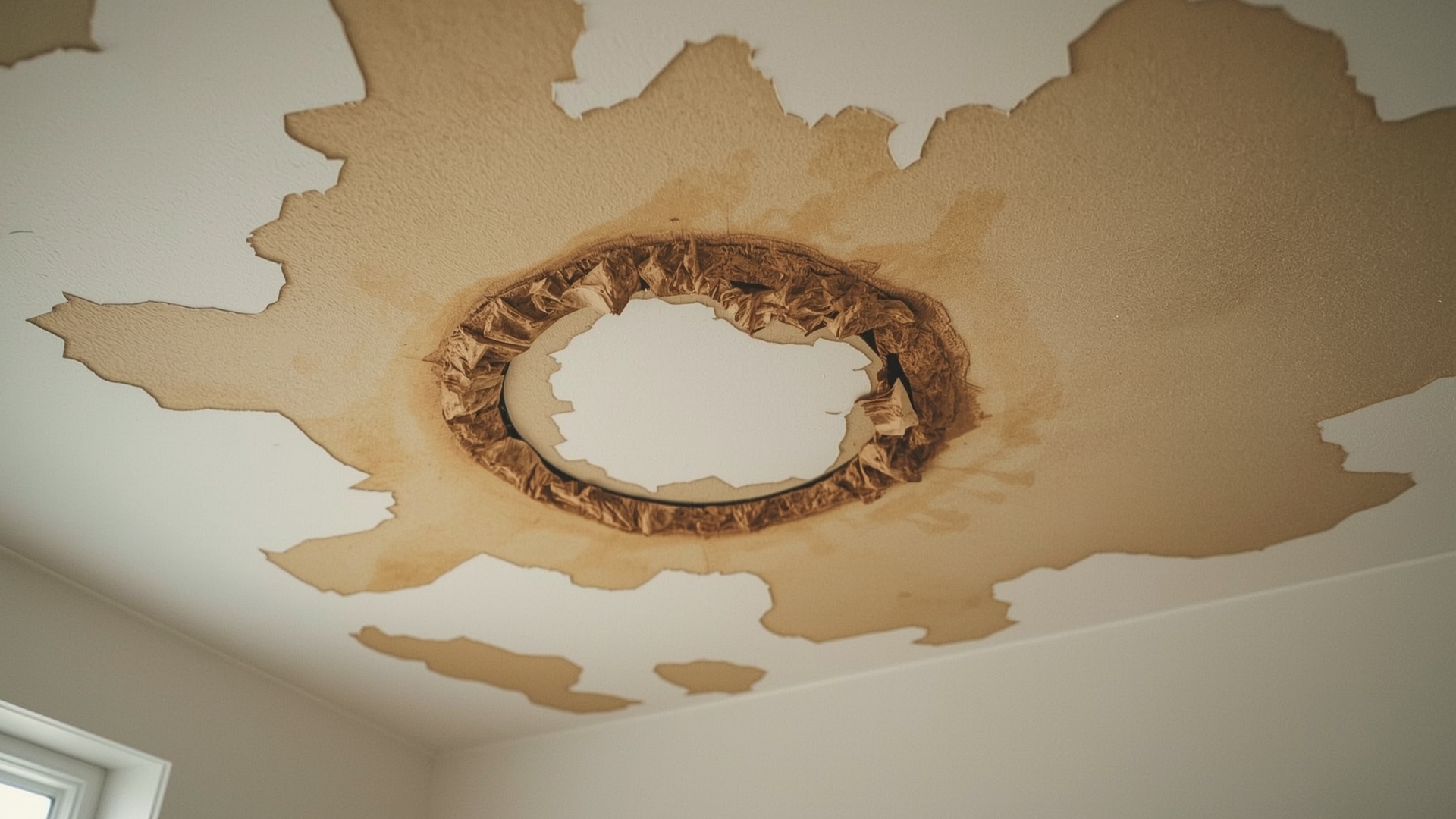
Quick Answer: Ceiling water stains mean water is actively getting through your roof system. The stain’s location doesn’t always match where the leak started — water travels along rafters and decking before dripping down. A roofing professional needs to trace the source to find the actual entry point.
Brown or yellow rings on your ceiling are one of the most common reasons homeowners call a roofer. They’re also easy to misread.
The stain you see in the middle of your living room might be caused by a flashing failure near your chimney on the other side of the roof. Water follows the path of least resistance, which means it can travel several feet before dropping through your ceiling.
Interior Water Damage Warning Signs
- Brown or yellow stains on ceilings or upper walls
- Peeling paint on walls near the ceiling line
- Mold or mildew smell in the attic
- Daylight visible through the attic floor decking
- Wet or damp insulation in the attic
- Rust stains around attic nails (a sign of moisture condensation)
Your attic is the first place to look when you suspect a roof leak. Grab a flashlight and look for dark water stains on the decking, wet insulation, and any spots where outside light is visible.
How Do Flashing Problems Lead to Roof Failure?
Quick Answer: Roof flashing is thin metal (usually galvanized steel or aluminum) that seals joints around chimneys, vents, skylights, and valleys. When flashing cracks, lifts, or corrodes, water enters the roof system at those seams. Flashing failures are a leading cause of recurring leaks even on otherwise healthy roofs.
Flashing is often the weak point on roofs that are otherwise in decent shape. It’s exposed to extreme temperature changes, and over time the sealant around it dries out and cracks.
On older homes, you may find roof cement used as a substitute for proper metal flashing. Roof cement works short-term, but it dries, cracks, and fails much faster than correctly installed metal flashing.
Flashing Condition Assessment
| Flashing Location | Failure Sign | Risk Level | Typical Fix |
|---|---|---|---|
| Chimney base | Lifted, cracked, or missing metal | High | Re-flash with step flashing + counter flashing |
| Roof valleys | Rust, gaps, exposed underlayment | High | Full valley flashing replacement |
| Skylights | Sealant cracking, frame separation | Medium–High | Reseal or replace flashing kit |
| Pipe boots/vents | Cracked rubber collar | Medium | Replace rubber boot seal |
| Roof-to-wall joints | Separation, rust streaks | High | Re-flash with step flashing |
Can Poor Roof Ventilation Shorten Roof Life?
Quick Answer: Yes. Poor attic ventilation traps heat and moisture. Heat buildup warps and blisters shingles from underneath. Trapped moisture causes mold, rot, and insulation damage. The U.S. building code standard is 1 square foot of ventilation for every 150 square feet of attic floor space.
Most homeowners don’t think about ventilation until they’re already dealing with premature shingle failure or a mold problem. Ventilation problems are invisible from outside the home, which makes them easy to miss.
Signs of ventilation failure include ice dams in winter (ridges of ice forming at the roof edge), unusually high energy bills in summer, and shingle blistering that appears even on a newer roof.
Signs of Attic Ventilation Problems
- Ice dams forming along the eaves in winter
- Attic temperature exceeding outdoor temperature by more than 10–15°F
- Frost or condensation on attic decking in cold months
- Shingle blistering on a roof under 10 years old
- Compressed or damp attic insulation
- Mold growth on attic wood surfaces
What Should I Check on My Roof After a Major Storm?
Quick Answer: After a major storm, look for missing shingles, dented or cracked shingles from hail, debris damage, displaced flashing, and clogged gutters. Do this inspection from the ground using binoculars. If you see any damage, get a professional inspection within 48 to 72 hours before further weather exposure worsens it.
Storm damage doesn’t always look dramatic. A hailstorm can leave dozens of small impact craters on shingles that are invisible from the street but knock loose the granules that protect them. Over the next few years, those unprotected spots deteriorate rapidly.
Wind damage is more obvious. You may find shingles in your yard or see lifted tabs on the roof surface. Even if a shingle wasn’t completely removed, wind can break the adhesive seal that holds it flat, leaving it vulnerable to the next storm.
Storm Damage Checklist by Cause
| Storm Type | Damage to Look For | Inspection Method | Urgency Level |
|---|---|---|---|
| Hail | Circular dents, granule loss, cracked tiles | Professional inspection + binoculars | High within 48–72 hours |
| High Winds (50+ mph) | Missing/lifted shingles, displaced flashing | Ground-level visual + gutter check | Immediate if shingles missing |
| Heavy Snow/Ice | Sagging, ice dams, gutter pull-away | Roofline inspection from street | High during/after storm |
| Fallen Debris/Tree | Punctures, broken decking, crushed shingles | Visible inspection, attic check | Immediate |
Should I Repair or Replace My Roof?
Quick Answer: Repair when damage is isolated to a small area, the roof is under 15 years old, and the rest of the system is in good shape. Replace when damage covers more than 30% of the roof surface, the roof is past its expected lifespan, or you’ve had the same leak repaired more than twice.
This is the most important decision in the whole process. Getting it wrong in either direction costs you money.
A repair on a roof that should be replaced is just delaying the inevitable. You pay a repair bill now, then pay a full replacement bill in a year or two anyway. On the other hand, replacing a roof that only needed a targeted repair wastes thousands of dollars unnecessarily.
Repair vs. Replacement Decision Criteria
| Factor | Lean Toward Repair | Lean Toward Replacement |
|---|---|---|
| Roof age | Under 15 years | Over 20 years (asphalt) |
| Damage coverage | Less than 30% of surface | More than 30% of surface |
| Leak history | First occurrence | Same area repaired 2+ times |
| Granule loss | Isolated to one section | Widespread across entire roof |
| Decking condition | Solid, dry, no rot | Soft spots, rot, visible damage |
| Shingle layers | Single layer only | Two or more existing layers |
A good contractor will show you photos from their inspection and explain exactly what they found. If a contractor pushes for replacement without showing you documentation of widespread damage, get a second opinion.
How Do I Find a Trustworthy Roofing Contractor?
Quick Answer: Look for a licensed, insured contractor with verifiable local references and a physical business address. Avoid any contractor who shows up unsolicited after a storm, asks for full payment upfront, or won’t provide a written contract. Check their license status through your state contractor licensing board.
Roofing scams spike after major storms. Storm chasers, which are traveling contractors who follow severe weather events, often do low-quality work and disappear before you can file a warranty claim.
A legitimate contractor will carry general liability insurance (minimum $1 million per occurrence) and workers’ compensation insurance. Ask for certificates before any work begins. If they can’t produce those documents, move on.
What to Look for in a Roofing Estimate
- Itemized scope of work: The estimate should list materials, labor, tear-off costs, disposal fees, and any structural repairs separately.
- Material specifications: It should name the exact shingle brand, product line, and color. “Standard shingles” is not acceptable.
- Warranty terms: Both the manufacturer warranty (covering materials) and the workmanship warranty (covering installation) should be listed with specific durations.
- Project timeline: A start date and estimated completion date should be in writing.
- Payment schedule: A reasonable deposit is 10–25% upfront. Full payment before completion is a red flag.
What Happens During a Professional Roof Inspection?
Quick Answer: A professional roof inspection covers the shingle surface, flashing, gutters, fascia, soffit, attic ventilation, and interior ceiling. A thorough inspection takes 45 to 90 minutes. Most roofing contractors offer free inspections, and a licensed inspector typically charges $150 to $400 for a standalone inspection report.
A professional inspection gives you documented proof of your roof’s condition. That documentation matters a lot if you plan to file an insurance claim or if you’re buying or selling a home.
During the inspection, the contractor will walk the roof surface (if it’s safe to do so), check the attic from inside, photograph damage, and give you a written report. That report should include photos with descriptions of every problem area.
What a Roof Inspection Covers
- Shingle condition across the entire surface
- All flashing points (chimney, vents, valleys, walls)
- Gutters and downspouts for blockage and attachment
- Fascia boards and soffit panels for rot or damage
- Ridge cap and hip shingles
- Attic insulation, ventilation, and decking condition
- Interior ceilings for stain patterns
Frequently Asked Questions
Can I see roof damage from the ground without climbing up?
Yes. Most visible roof damage can be spotted from the ground using binoculars. Look for missing shingles, dark patches of granule loss, curling edges, and any areas where the roofline looks uneven or depressed. Save the close-up inspection for a licensed professional with fall protection equipment.
How much does a full roof replacement typically cost?
For a standard single-family home, asphalt shingle roof replacement ranges from $8,000 to $25,000 depending on roof size, pitch, material grade, and local labor rates. A 2,000-square-foot roof with architectural shingles typically falls between $10,000 and $16,000 installed. Metal and tile roofs cost significantly more.
Does homeowners insurance cover roof replacement?
Homeowners insurance typically covers sudden damage from covered perils like hail, wind, and fire. It generally does not cover replacement due to normal wear and age. Your policy’s payout may depend on whether you have replacement cost value (RCV) coverage or actual cash value (ACV) coverage, which subtracts depreciation.
What is a roof’s underlayment and why does it matter?
Underlayment is a water-resistant or waterproof layer installed directly on the roof decking, beneath the shingles. It’s your secondary defense if shingles are damaged or lifted. Modern underlayments use synthetic materials that resist tearing and moisture better than the older felt paper versions. Failing underlayment turns minor shingle damage into major leaks.
How long does a roof replacement take to complete?
Most residential roof replacements take one to three days. The timeline depends on roof size, complexity (number of valleys, chimneys, and penetrations), weather conditions, and whether the decking needs to be replaced. A simple ranch-style roof can be completed in a single day by an experienced crew.
What is the best time of year to replace a roof?
Late spring through early fall offers the best conditions for roof replacement. Temperatures between 45°F and 85°F allow shingle adhesives to seal properly. Winter installations are possible but require special handling. Scheduling in late summer or early fall often avoids peak demand and may reduce wait times and contractor pricing.